




















































Bringing a puppy home comes with a long shopping list, and insurance is the item that’s easiest to put off and hardest to buy well later. Puppy insurance prices vary far more than most owners expect: on a typical lifetime policy, from around £14 a month for a crossbreed to as much as £65 for a French Bulldog. Looking at UK pet insurance prices by breed and cover type, rather than one national average, gives a far more realistic picture of what to budget in the first year and beyond.

How Much Is Pet Insurance for a Puppy? The Realistic 2026 Ranges
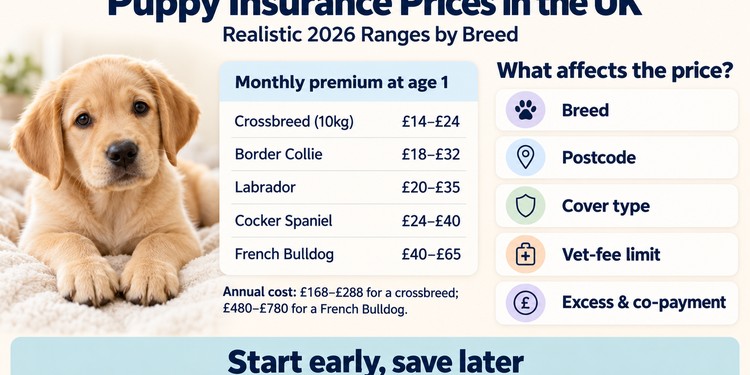
Owners who ask how much is pet insurance for a puppy usually get an average back, and averages hide a wide spread. The Association of British Insurers’ 2025 figures put the average annual dog premium at £436 and the average claim at £848. For a healthy puppy on the kind of cover most vets would suggest, lifetime with a vet-fee limit of £7,000 or more, a modest excess and no co-payment, PetCoverPro’s own 2026 price tracking across 16 UK insurers gives these monthly ranges at age one:


| Breed | Monthly premium at age 1 |
| Crossbreed (10kg) | £14 to £24 |
| Border Collie | £18 to £32 |
| Labrador | £20 to £35 |
| Cocker Spaniel | £24 to £40 |
| French Bulldog | £40 to £65 |
That works out at roughly £168 to £288 a year for a crossbreed and £480 to £780 for a French Bulldog. The lower end of each range comes from rural northern postcodes, the upper end from London.
What happens to the price as your puppy grows
The age-one figure is a starting point, not a fixed price. For a Labrador, PetCoverPro’s tracking shows £20 to £35 a month at age one, £35 to £55 at age five and £70 to £120 at age ten, or roughly £240 to £420, £420 to £660 and £840 to £1,440 a year. For a French Bulldog the same three ages run £40 to £65, £80 to £120 and £150 to £220 a month. Insuring early does not freeze the price, but it keeps the cover in place while those increases arrive.
Pet Insurance Cost UK: What Pushes a Puppy’s Quote Up or Down
The pet insurance cost UK owners see on a quote is driven mainly by five things:
- Breed: flat-faced breeds such as French Bulldogs, Pugs and Bulldogs cost roughly twice the all-breed average.
- Postcode: London and major city addresses typically pay 20% to 40% more than rural ones.
- Cover type: with lifetime cover at £7,000 per condition indexed at 100, time-limited cover at £4,000 sits around 45 and accident-only around 25.
- Vet-fee limit: doubling it, say from £4,000 to £8,000, usually adds 30% to 50% to the premium rather than 100%.
- Excess and co-payment: a higher excess plus a 20% co-payment can trim around 30% off the headline price, but it leaves you exposed to a large bill on a big claim.
Puppy Dog Insurance: Why Starting Early Matters
Puppy dog insurance is cheapest, in cover terms, when it starts before anything goes wrong. PDSA’s pet insurance guide notes that most policies exclude pre-existing illnesses and injuries, meaning anything already diagnosed by a vet or known to the owner, which is why vets recommend insuring a pet while it is young. Some insurers let owners start a policy at eight weeks old; PDSA’s own scheme, for example, does.
The same guide explains how lifetime cover works: it sets a financial limit for all new accidents and illnesses combined each year, and that limit is reinstated at renewal as long as there are no breaks in cover and premiums are kept up to date. A time-limited policy, by contrast, pays for each condition for 12 months from when it starts. For a puppy who may live a decade or more, that difference outweighs a few pounds a month.
How to Keep Puppy Insurance Prices Down Without Gutting the Cover
Insurance is only one puppy cost among several. Battersea’s annual breakdown lists typical insurance at £20 to £60 a month, alongside around £70 for initial puppy vaccinations. Within that, a few levers lower the price without hollowing out the policy:
- Pay annually where possible, since monthly payments typically add 5% to 10%.
- Insure more than one pet with the same provider, which can take 5% to 15% off each policy.
- Choose a £150 excess instead of £75, which saves around 15%.
Remember what insurance usually leaves out, too. PDSA notes that most policies do not cover preventive treatment, so routine care needs its own budget; Battersea puts routine healthcare at around £312 a year, on top of the one-off puppy vaccinations.
Budget for the climb as well. According to PetCoverPro’s analysis, a £30-a-month policy in year one commonly becomes £100 to £140 a month by year ten, even with no claims, so a price that feels comfortable now is not the price you will be paying later.
Best Pet Insurance for UK Puppies: A Short Checklist
There is no single best pet insurance for UK puppies; the right policy depends on breed, postcode and budget. A few checks apply to nearly everyone. Compare like for like by fixing the vet-fee limit, excess and co-payment across every quote, because a £20-a-month gap usually reflects different cover rather than a better deal. Ask whether the limit reinstates each year, and how hereditary and congenital conditions are handled. Finally, confirm that the insurer is authorised on the Financial Conduct Authority register.
Final Thoughts
Puppy insurance prices look modest in year one, but they mark the start of a long commitment. Pricing by breed, choosing lifetime cover early and comparing quotes on identical terms matter more than the lowest monthly figure.

David Prior
David Prior is the editor of Today News, responsible for the overall editorial strategy. He is an NCTJ-qualified journalist with over 20 years’ experience, and is also editor of the award-winning hyperlocal news title Altrincham Today. His LinkedIn profile is here.