


















































The Claddagh ring has barely changed in 300 years. Two hands, a heart and a crown: love, friendship and loyalty, held together in one small band. What has changed is the choice of metal. Today you can find Claddagh rings in sterling silver, yellow gold, white gold, rose gold and even titanium, and the metal you pick affects everything from price and durability to how the ring will look in twenty years’ time.
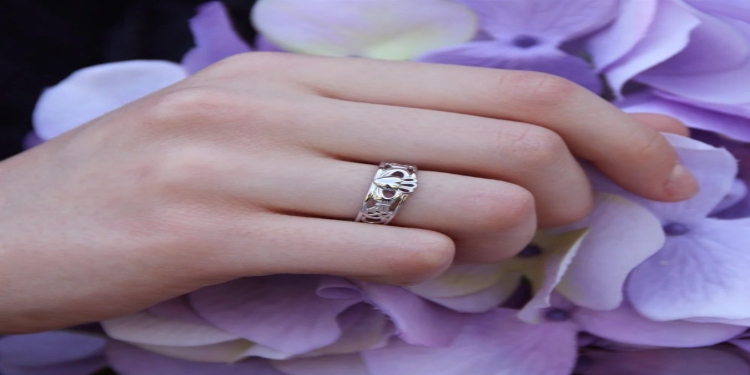
Silver Claddagh Rings: Classic, Affordable and Easy to Wear
Most people’s first Claddagh is sterling silver, and for good reason.


What it is. Sterling silver is 92.5% pure silver mixed with a small amount of other metal, usually copper, for strength. In the UK and Ireland it’s hallmarked “925”.
Why people love it.
- Price. A well-made silver Claddagh costs a fraction of its gold equivalent, which makes it an ideal first ring, a teenager’s gift or a souvenir of a trip to Ireland.
- Look. Silver’s bright, cool shine shows off the fine detail of the hands and crown beautifully.
- Versatility. It sits comfortably alongside everyday silver jewellery and suits both casual and smart outfits.
What to keep in mind. Silver is softer than gold, so it will pick up small scratches over time, and it tarnishes when exposed to air, perfume and chlorine. Neither is a real problem: a silver polishing cloth brings the shine straight back, and many people love the soft patina an older silver Claddagh develops. Just take it off before swimming or cleaning with household chemicals.
Best for: first Claddagh rings, gifts for younger wearers, everyday rings worn on the right hand, and anyone who prefers a cooler tone.
Gold Claddagh Rings: Heirloom Quality
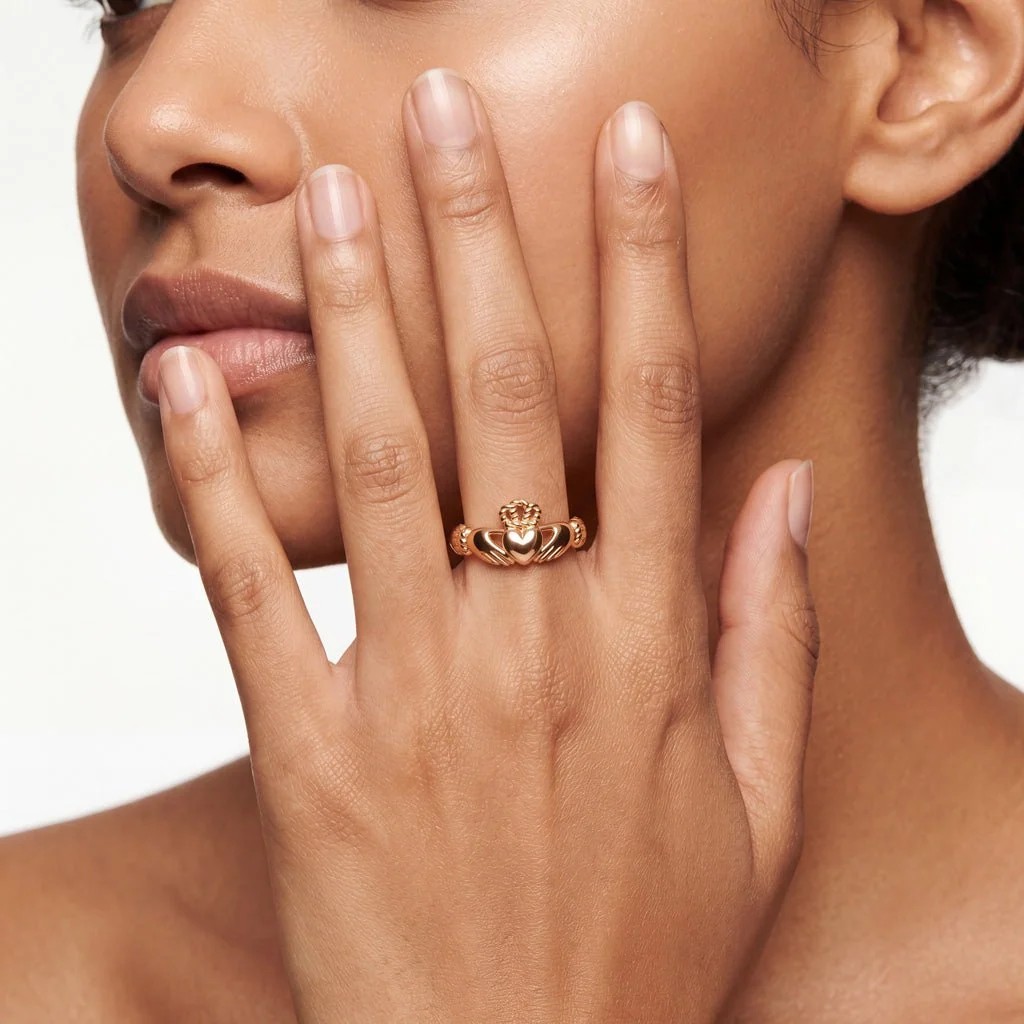
Gold is the traditional choice for engagement rings, wedding bands and Claddaghs intended to be passed down.
What it is. Pure gold (24 carat) is too soft for jewellery, so it’s alloyed with other metals. The carat tells you how much gold is in the mix:
- 9ct gold is 37.5% gold (hallmarked 375). It’s the most affordable and the hardest-wearing, and very popular in the UK and Ireland.
- 14ct gold is 58.5% gold (585). It’s the most common choice in the United States and offers a good balance of richness and strength.
- 18ct gold is 75% gold (750). It has a deeper colour and a more luxurious feel, at a higher price.
In Ireland, gold and silver jewellery is tested and hallmarked by the Assay Office Ireland at Dublin Castle, and many traditional Claddagh makers still have their rings stamped there.
Why people love it.
- It doesn’t tarnish. Gold keeps its colour for decades with very little care.
- It lasts. A gold Claddagh is designed to be worn every day for a lifetime, and then handed on.
- It feels special. For engagements, weddings and milestone birthdays, gold signals that the ring is meant to be kept.
Best for: engagement rings, Claddagh wedding bands, anniversary gifts and family heirlooms.
Yellow, White or Rose Gold?
Once you’ve decided on gold, there’s a second choice to make.
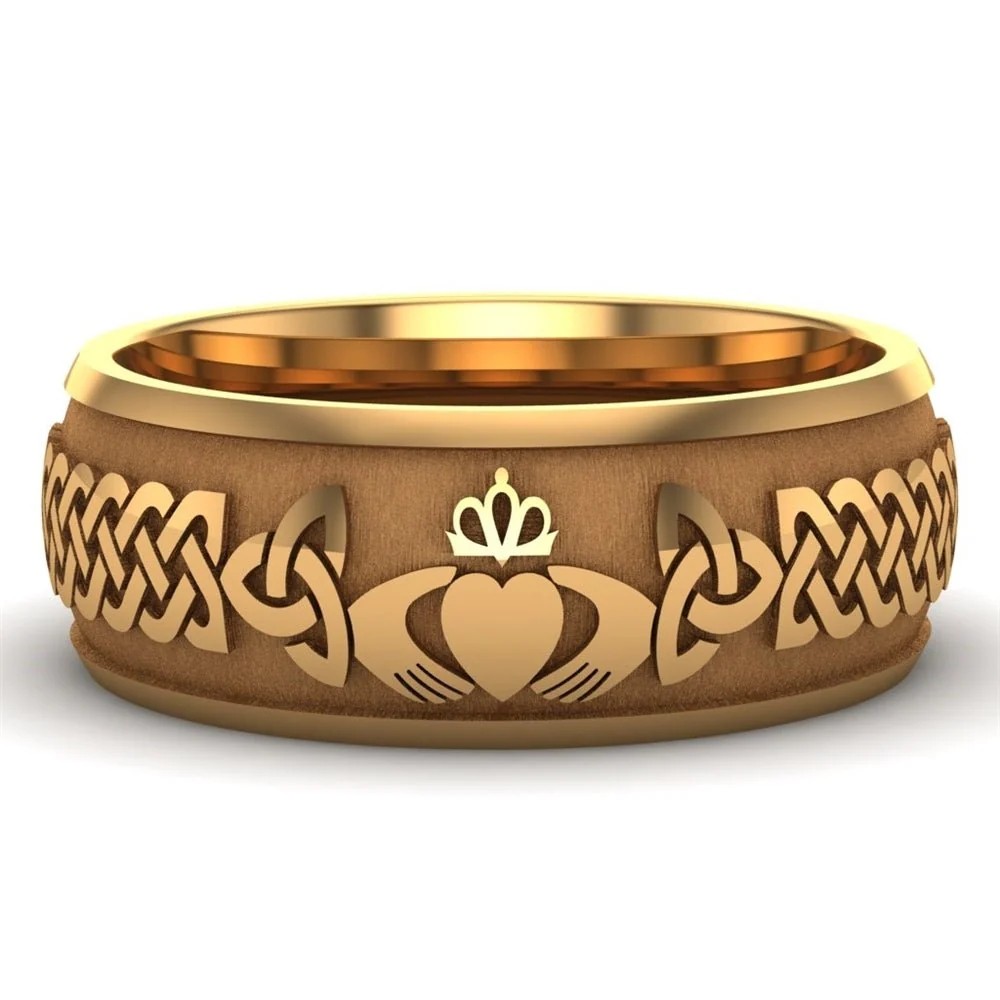
Yellow gold is the most traditional. It’s the colour most people picture when they think of an Irish Claddagh, and it suits warmer skin tones particularly well.
White gold is gold alloyed with white metals and usually plated with rhodium for a bright finish. It gives the look of silver with the durability of gold, and it pairs well with diamonds. The plating may need refreshing every few years to keep it bright.
Rose gold gets its warm pink tone from a higher proportion of copper. It’s a more modern take on the Claddagh and has become a popular choice for engagement rings.
Gold vs Silver at a Glance
| Sterling silver | Gold | |
| Price | Lower | Higher (rises with carat) |
| Tarnish | Yes, easily polished | No |
| Scratch resistance | Lower | Higher (9ct is hardest) |
| Typical use | Everyday, first rings, gifts | Engagement, wedding, heirloom |
| Lifespan | Many years with care | Generations |
Which Should You Choose?
A few quick questions usually settle it:
- What is the ring for? If it’s a friendship ring, a souvenir or a first Claddagh, silver is perfect. If it marks an engagement, a wedding or a milestone, gold is the traditional choice.
- How often will it be worn? Rings worn every day, especially on a working hand, benefit from the toughness of gold.
- What does the wearer already own? Match the metal to the jewellery they wear most, so the ring feels like part of their style.
- What’s the budget? A beautifully made silver Claddagh is always a better gift than a poorly made gold one. Look at the craftsmanship first.
Check the Craftsmanship, Whatever the Metal
Whichever metal you choose, look closely at the detail. The fingers on the hands should be clearly defined, the crown should be in proportion, and the heart should sit centrally and smoothly. Check for a hallmark, and ask whether the ring is cast or handmade.
claddaghring.com makes it easy to compare the same design across silver, yellow gold, white gold and rose gold side by side, which is often the quickest way to see which one feels right.
The Meaning Stays the Same
Silver or gold, the message of the Claddagh doesn’t change. Whatever you spend, you’re wearing or giving the same promise of love, friendship and loyalty that has been passed between people in Galway for more than three centuries. The metal is simply how you choose to carry it.

David Prior
David Prior is the editor of Today News, responsible for the overall editorial strategy. He is an NCTJ-qualified journalist with over 20 years’ experience, and is also editor of the award-winning hyperlocal news title Altrincham Today. His LinkedIn profile is here.