


















































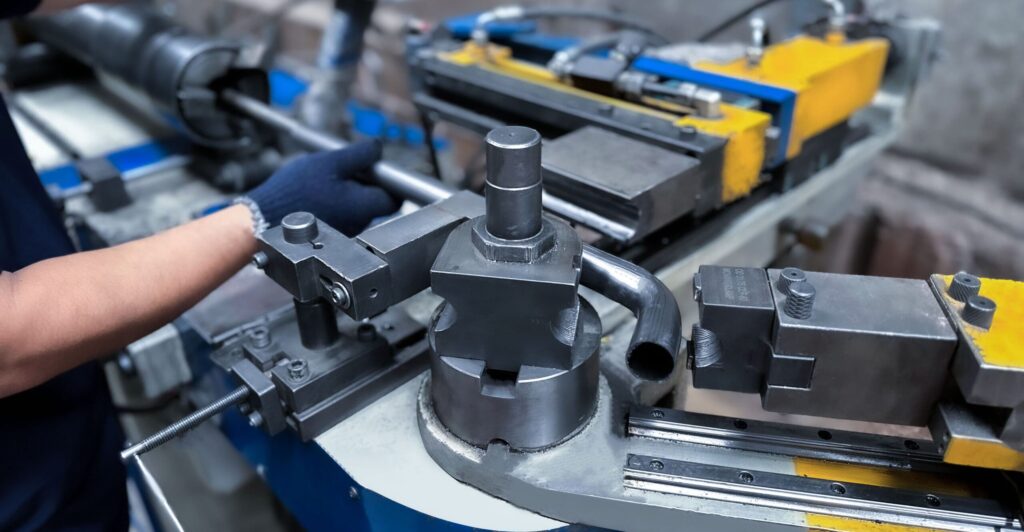
A tube-bending quotation can appear cheaper because it leaves more work for the buyer. Quote comparison needs to expose those omissions before purchasing commits to a machine: sample validation, mandrel tooling, multi-layer molds and program management all deserve a defined place in the offer. The comparison becomes useful when each supplier is answering the same part requirement.
Start with the intended production work. A headline capacity or an attractive machine photograph does not explain which tube drawings, materials and tool sets were considered, which trial work is included, or who will supply the handling equipment around the bender. Those gaps can survive several rounds of price negotiation if nobody asks about them directly.


Give every bidder the same part package
Send a controlled drawing set with material condition, tube dimensions, bend radii and the inspection requirements. Identify the intended part family and distinguish current work from possible future work. Procurement should not expect a supplier to price an undefined future range as though its suitability had already been established.
Zhuoran Machinery’s CNC product guidance identifies tube capacity, axis arrangement, tooling, automation and inspection needs as quotation factors. It asks buyers to review the drawing, material, bend sequence and acceptance criteria when evaluating a machine and its sample validation route.
Use the same information request for competing offers, including a request to state exclusions. A bidder should identify the parts covered by the proposed tooling and the assumptions behind any recommendation involving a mandrel or multi-layer molds. If the assumptions differ, return the offers for clarification before ranking them by price.
Keep revisions visible. A changed drawing sent only to a preferred supplier can make the final comparison look competitive while the offers actually describe different work.
Price the tooling that makes the part possible
Ask for tooling scope by component or agreed part family. A line item called bending tooling leaves open which radii, clamp arrangements and support tools are included, and whether the buyer will need more tooling before the planned range can run. The price comparison should expose that uncertainty instead of burying it inside a general accessory allowance.
The Fabricator explains that close bend spacing can complicate clamping and sometimes calls for tooling shaped to grip an already bent section. It also describes mandrel support within the tube and external tooling as parts of controlling deformation during rotary draw bending.
That is why tooling is a production requirement rather than a minor accessory. In discussions with Zhuoran Machinery, request a clear description of the proposed mandrel, wiper die and radius tooling for the submitted drawings, with any unresolved suitability question linked to the planned trial.
For multi-layer molds, ask which part changes the arrangement is expected to accommodate and what setup work remains. The manufacturer’s guidance presents these as selected options that may reduce changeover requirements; it does not establish that every proposed part family can run without a tooling change.
Define what a sample has to prove
Sample validation needs a written acceptance basis. Decide who supplies representative tube material, which drawing revision governs the trial, what features will be inspected and how the results will be reported. Receiving a photograph of a bent tube is not equivalent to receiving evidence against those requirements.
A useful trial record connects the sample with its program and tooling, including the mandrel arrangement and any multi-layer molds used, so that a buyer reviewing a successful part can establish whether it was produced by the same setup included in the quotation or by an arrangement still outside the offer.
Inspect the agreed released geometry, cross section and surface condition as appropriate to the drawing. Where downstream assembly matters, define how fit will be assessed. Do not leave the acceptance method to be invented after the sample arrives; disagreement at that stage can turn a technical question into a commercial dispute.
Specify the treatment of an unsuccessful trial as well. Ask who reviews the result, how revised tooling or setup work would be proposed and what remains conditional until acceptance. A clear trial scope makes the quoted price more meaningful, even before the outcome is known.
Find the boundary hidden inside automatic operation
Zhuoran Machinery describes loading, unloading, cutting, transfer, inspection and sorting as activities that can be configured around production flow and factory layout. Its CNC guidance also allows evaluation of integration with tube end forming equipment.
Draw the boundary of the quoted system. Identify where material enters, how it is positioned, how finished parts leave and where rejected parts are handled. Then ask who supplies each device, who connects its controls and which manual interventions remain. Automatic bending does not answer those questions by itself.
Check the exception path. A line concept should explain the intended response to a part that is not accepted, a material supply interruption or a required tooling change, while leaving the exact machine procedures to the supplier’s approved instructions. Otherwise the offer describes only an uninterrupted cycle.
Keep integration work separate from unsupported savings claims. The buyer needs a defined scope to assess labour and production implications in its own factory; a general automation label cannot establish that fewer operators, faster output or lower unit cost will result.
Include the work required after a program is saved
Program management is a purchasing question because the production team must identify, retrieve and maintain the correct job after installation. Ask the supplier to demonstrate the relevant functions on the proposed control system and explain how they fit the buyer’s revision process. Menu names alone do not describe the handover.
The CNC guidance from Zhuoran Machinery states that program storage, access control and production records depend on the selected control system. It also asks buyers to confirm programming and simulation features for the specific machine model.
Make the handover concrete: identify the approved program, the drawing it belongs to, the tooling used during acceptance and the records the buyer will receive. If the controller does not provide a proposed function, agree how the production team will manage that task outside it. Do not describe an external procedure as a built-in feature.
Spare tooling and maintenance access also deserve discussion. The accepted mandrel arrangement and multi-layer molds may be familiar to the supplier’s trial team, but the buyer still needs a practical way to identify replacement items and understand the setup requirements after the machine arrives.
Use a comparison sheet that preserves unresolved items
Keep commercial offers beside a scope checklist. This should show what is included, what is excluded and what still requires evidence; it should not convert a blank response into an assumed inclusion.
- Confirm the drawings and materials covered by the machine recommendation.
- Record the mandrel and other tooling supplied for each agreed application.
- Check the proposed role of multi-layer molds and the changes still required between jobs.
- Define sample validation materials, inspection methods and acceptance responsibilities.
- Identify loading, unloading and inspection boundaries in the automation scope.
- Compare program management functions and the records included in handover.
- Ask suppliers to price or explain exclusions before treating offers as equivalent.
Keep a separate note for optional future work. Combining an immediate requirement with a speculative expansion can obscure the cost of the system the factory actually needs today, while giving a misleading impression that every future part has already been assessed.
Make the purchase decision traceable to accepted scope
The lowest comparable offer is meaningful only after the offers are comparable. Purchasing should be able to explain which part package, tooling, trial work and integration boundary it is buying, with engineering able to identify the evidence supporting acceptance.
Where a question remains open, name it. A conditional recommendation is clearer than an unconditional purchase built on an untested assumption. Once the scope is settled, price negotiation can focus on the same defined production task, and the eventual handover can be checked against something more useful than the original machine headline.