


















































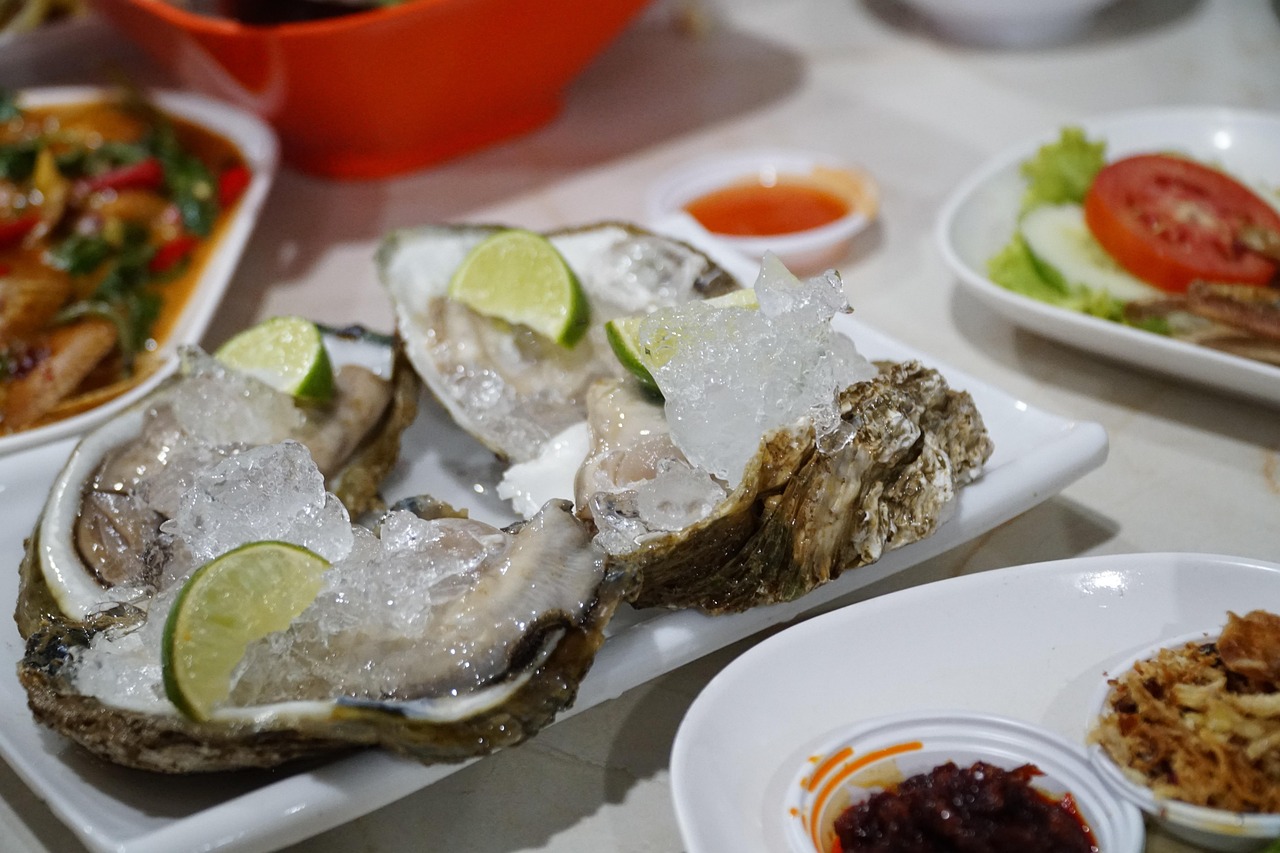
Not long ago, oysters were something you ate out. A dozen at the bar, a glass of something cold, and the pleasant feeling that someone else had done the difficult bit. That is changing. British oyster farms from Cornwall to the west coast of Scotland now sell direct, fishmongers will happily shuck for you if you ask nicely, and a plate of oysters has become one of the smartest ways to open a dinner at home: it looks generous, it takes almost no cooking, and it gives your guests something to talk about before the main course has even left the kitchen.
The trick is that oysters reward a little ceremony. Get the temperature, the timing and the table right and they feel like a treat. Get them wrong and you have a puddle of brine and a nervous guest. Here is how to do it properly.


Buying and storing: cold, closed and quick
Buy from a fishmonger or farm you trust and ask when they were landed; two or three days is fine if they have been kept cold. Native oysters (the flat, round Ostrea edulis) are in season from September to April, which is why the old rule about months with an “r” still holds. Rock oysters, the deeper, more elongated kind farmed around most of the UK coast, are available all year and are gentler on beginners.
At home, keep them in the fridge, cupped side down, under a damp tea towel, never in water and never sealed in plastic. They should be tightly closed. Any that are open and do not shut when tapped, or that have a cracked shell, go in the bin. Plan to shuck as close to serving as you can.
Shucking without drama
You need an oyster knife (short, stout blade, rounded tip) and a folded cloth. Hold the oyster in the cloth, cupped side down, hinge towards you. Work the tip of the knife into the hinge, twist rather than push until you feel the shell give, then slide the blade along the inside of the top shell to cut the muscle. Lift off the top, run the knife under the oyster to free it, and pick out any shell fragments with the point of the knife. Do not rinse: you will wash away the liquor, which is half the flavour.
Six per person is the classic first-course portion. Twelve if oysters are the dinner.
The plate does the work
This is where most home cooks improvise, and where a little equipment makes a disproportionate difference. A shucked oyster on a flat plate tips, slides and empties itself. Restaurants solve this with a bed of crushed ice, which is wonderful for a sharing platter but messy for plated service.
The traditional answer is a dedicated oyster plate: a porcelain or majolica plate with five or six shell-shaped wells around the rim and a small central well for sauce or lemon. The form flourished in the nineteenth century, when Minton’s colourful majolica and Haviland’s Limoges porcelain turned a practical object into a small work of art, and antique examples are now collected in their own right. Modern versions do the same job with less fuss. Whether antique or new, they keep each oyster upright and its liquor in the shell, and they hold the cold beautifully if you chill them for half an hour beforehand. If you are thinking of investing in a set of oyster plates for a formal table, it is worth understanding how the wells and the centre are designed to be used, and how to care for older pieces that were never meant for a dishwasher.
No oyster plates? Use small, deep-rimmed plates with a spoonful of coarse sea salt or crushed ice in the centre to steady the shells. It is not as elegant, but it works.
Accompaniments: less is more
Oysters do not want a buffet of sauces. Offer three things and stop:
- Lemon, in wedges, ideally wrapped in a square of muslin so the pips stay put.
- Shallot mignonette: a finely diced shallot, a few tablespoons of good red wine vinegar, a pinch of sugar, cracked black pepper. Make it an hour ahead so the shallot softens.
- Brown bread and butter, thinly sliced. Rye or a dense wholemeal is traditional in Britain and Ireland.
Tabasco and horseradish are fine if your guests are that way inclined; keep them on the side rather than on the plate.
What to drink
Champagne is the classic partner, and the drier the better: a blanc de blancs or an extra brut has the acidity to cut through the brine without fighting it. English sparkling wine from Sussex or Kent does the same job with a certain local pride. Among still whites, Muscadet and Chablis are the textbook choices; a bone-dry fino sherry is the sommelier’s choice and costs a fraction of the price. Whatever you pour, pour it properly cold, and pour it before the oysters arrive so nobody is waiting with a shell in hand.
If you want to build a whole evening around that first course, FEAST’s guide to hosting the perfect dinner party covers the rest: how to store and serve the wine, checking dietary requirements in advance, and why bringing out the good dinnerware changes the mood of the table. Oysters are the opening line; the rest of the menu has to keep the promise.
At the table
Oysters are served as the first course, before soup, and the plate sits on the charger if you are using one. The oyster fork, small, three-tined, slightly curved, is the one piece of cutlery that traditionally goes to the right of the knives, resting against the soup spoon. Guests loosen the oyster with the fork, add a drop of mignonette or lemon if they like, and tip the shell to eat oyster and liquor together in one go. Drinking the last of the liquor straight from the shell is perfectly acceptable at any table that isn’t a state banquet. Empty shells go back in their wells; a spare bowl in the middle of the table saves the plates from becoming a shell heap.
A word on safety
Raw shellfish carries a genuine risk, and a good host knows it. A contaminated oyster looks, smells and tastes exactly like a good one, and neither lemon juice nor Tabasco nor a glass of Champagne kills the bacteria involved. So: buy from a certified supplier, keep the cold chain unbroken, discard anything open or cracked, and ask quietly in advance whether anyone is pregnant, elderly or immunocompromised. For those guests, grilled oysters with garlic butter, served on exactly the same plates, are a generous alternative and no less festive.
Five mistakes to avoid
- Shucking too early. An hour in the fridge, shucked, and they have lost their sparkle. Thirty minutes is the limit.
- Rinsing the oysters. You are pouring the flavour down the sink.
- Warm plates. Chill them. Porcelain holds the cold for the whole course.
- Too many sauces. Lemon, mignonette, bread. That’s the list.
- Serving them last. Oysters are a beginning, not an end. Open with them and the rest of the evening follows.
Done well, an oyster course takes fifteen minutes of work, almost no cooking and a small amount of the right equipment. In return it gives you the one thing every host wants: a table where people sit up, lean in and start talking.