



















































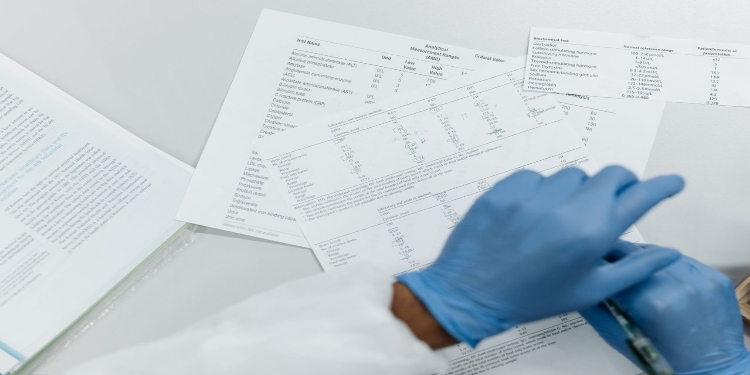
A bottle labelled “lab-tested” may sound reassuring, but the phrase alone does not tell you what was tested or what the results showed. The useful detail is in the report itself: the sample identified, the substances measured and the values recorded. Learning to read those elements helps you distinguish a specific laboratory result from a broad claim about a product.
Why “Lab-Tested” Alone Doesn’t Tell You Much
A laboratory report is evidence about a particular sample and the tests listed in that report. If it measures cannabinoids, it can help show which cannabinoids were detected and in what amounts. It does not automatically establish that the product was checked for pesticides, heavy metals, residual solvents or microbes. Those are separate tests, and a report should name the substances or categories covered before you assume they were included.

The same care applies when shopping. A buyer considering CBD Oil should look beyond a badge or short product description and see whether an accessible report explains the measurement. “Tested” is a starting point for a question, not a conclusion about overall quality, safety or effectiveness.
Also check whether the report clearly identifies the product or sample it concerns. A result is less useful if you cannot tell which formulation it represents. Even a detailed document should be read within its stated scope: laboratory measurements do not prove that CBD will produce a particular effect for an individual.
What a Certificate of Analysis Actually Shows
A Certificate of Analysis (CoA) usually presents results for specified analytes—the substances the laboratory was asked to measure. In a cannabinoid profile, entries may include CBD and other cannabinoids such as CBG or CBC. Some reports also show acidic precursor forms, such as CBDA, separately from their neutral forms. The list matters: a value can only answer a question about a compound if that compound was included in the analysis.
Read the units alongside each result. A concentration may be expressed as milligrams per millilitre (mg/mL), a percentage by weight, or another unit. These are not interchangeable without knowing the product and the basis of measurement. Compare like with like, and do not treat a number on a report as a serving amount unless the document and product label make that connection clear.
The profile can help describe a product’s measured cannabinoid composition and indicate its spectrum from the cannabinoids detected, but it does not, on its own, establish comprehensive product safety or substantiate a health claim. Those conclusions go beyond a cannabinoid measurement and should not be inferred from a CoA.
The UK Rules Behind the Label
CBD products sold as foods or supplements sit within the UK novel-food framework. The Food Standards Agency (FSA) publishes consumer advice and recommendations concerning CBD, including a provisional acceptable daily intake (ADI) of 10 mg per day for healthy adults. The FSA also recommends warnings for under-18s; people who are pregnant, breastfeeding or trying to conceive; and people who are taking medication or are immunosuppressed. Its current recommendations can be read in the FSA’s CBD novel-food recommendations.
These are regulatory and consumer-safety considerations, not fields that every individual laboratory report will resolve. An ADI is not a measure of the CBD concentration in a bottle; it is a daily-intake recommendation for the stated population. Likewise, a cannabinoid profile should not be presented as proof that a product meets every applicable legal requirement. The FSA has recommended strict specifications for delta-9-THC and other controlled cannabinoids in the authorisation process, but a reader should not assume that a cannabinoid result alone establishes the legal status of a product.
If you take medication or have a relevant health concern, the FSA advises seeking medical advice before using CBD. The report-reading exercise is about understanding measured information, not replacing professional advice or regulatory guidance.
A Simple Checklist Before You Trust a CBD Report
Take a moment to compare the document with the product page and label. These checks can help you understand what the report supports—and where its limits are:
- Identify the sample. Check the product name, formulation and any sample or batch identifier shown. Do not assume a report for one product applies to every product in a range.
- Check the report date. A date helps you judge how current the document is, but does not by itself prove that the sample matches the product currently offered.
- Read the analyte list. Note which cannabinoids or other substances were actually measured. Do not infer a contaminant test from a cannabinoid-only profile.
- Compare values and units. Match the report’s concentration and units with the label’s stated strength. If the units or basis differ, do not compare the figures as if they were identical.
- Read the THC result in context. Check whether it is reported, the unit used and what the test says. A single number without method, sample and applicable criteria may not answer every compliance question.
A clear report makes its scope and measurements understandable. If an essential detail is missing or the figures are difficult to reconcile, that is a reason to ask the seller a specific question rather than to guess. The checklist is a way to evaluate transparency, not a shortcut to declaring a product safe or unsafe.
What This Looks Like in Practice
Bristol CBD, a Bristol-based CBD brand trading since 2017, provides information about laboratory testing on its website. When examining any product, a report that identifies the sample and lists the cannabinoids measured can show a measured profile rather than a single unqualified assurance.
Information about laboratory testing does not, on its own, confirm wider contaminant testing or batch-specific results for a bottle bought today; readers should still apply the checklist above when reviewing any individual report, whichever brand they are considering. The value of a report lies in being able to see the underlying data, rather than relying solely on marketing language.
Buying With More Confidence
Before buying a CBD oil, it is worth viewing the product page, the label and the related laboratory report together rather than in isolation. If a concentration, unit or cannabinoid name on the label does not clearly match anything in the report, that is worth asking the seller about directly. If you are taking medication, are pregnant, breastfeeding, or otherwise fall into one of the groups the FSA highlights, speak to a doctor or pharmacist before use rather than relying on a lab report to answer that question.
None of this requires expert chemistry knowledge. It mainly means treating a laboratory report as a specific, limited document: a record of what was measured, for which sample, under which method. Read that way, a CBD certificate of analysis becomes a genuinely useful tool for comparing products, rather than a label you take on trust.

David Prior
David Prior is the editor of Today News, responsible for the overall editorial strategy. He is an NCTJ-qualified journalist with over 20 years’ experience, and is also editor of the award-winning hyperlocal news title Altrincham Today. His LinkedIn profile is here.