



















































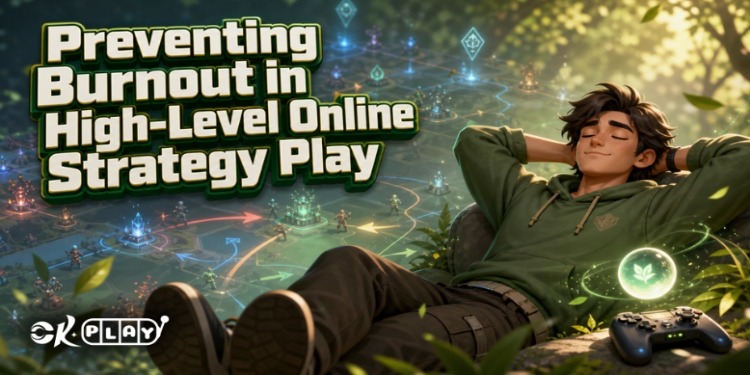
In strategy games, burnout occurs when your brain can no longer think effectively, usually after making decisions continually for extended periods of time. The answer is easy: just include real breaks, vary activities and let your gaming community do the rest.
Noticing When Enjoyment Disappears
It’s that time when every serious strategy player knows. You have a good plan and are well into a match, but something doesn’t feel quite right. Every deft motion used to fascinate me, but now it seems like a job. Maybe you’re still winning, but it doesn’t seem that way.


It’s not that you don’t enjoy the game anymore. Your brain is saying that it’s been busy and it hasn’t been given a good restful charge. Playing strategy games requires a lot of mental effort. All games are a problem which has to be solved in real time, and puzzles, of course, are fun but they do, at some point, exhaust the part of your brain that has to do all the hard work.
The Real Reason Strategy Games Wear You Out
Reflexes are crucial in speedy games. Split second decisions, recognising patterns and ongoing mental arithmetic are more important in strategy games as they accumulate round after round. All the while, you are forecasting, modifying, and recalculating.
This type of thinking is similar to how your brain works while you’re studying hard or solving complicated problems at work. If it “clicks”, it’s satisfying, but mental energy is quickly used up. The issue is, strategy games are designed to feel rewarding enough to not know you’re tired until you are in the middle of a game, when you must be hyper-focused.
Also, there is an emotional component added to this. When a well-thought-out plan fails, competitive strategy play can cause tension, suspense, and occasionally frustration. The amount of energy expended in that emotional swing is unrelated to what the actual reasoning is. As the two are combined, it should be obvious why even hardcore gamers can grow tired for no apparent reason.
The Vanishing Pause Between Matches
There was a lobby room in earlier strategy games. Players were forced to halt between matches whether they wanted to or not due to clumsier interfaces, slower matchmaking, and loading screens. That was all taken out by technology without anyone knowing. Players can now transition from one match to another without having to wait for a natural break, thanks to faster load speeds, quick matchmaking, and seamless connectivity.
It is exciting at the outset, but at the same time it removes those little accidental mental breaks that we had. This is made even more intense by ranked systems, which give every game a sense of importance and force players to re-queue right away after a loss in order to make up for it.
These days, players just assume that any game that’s digitized should feel fast, smooth, and accessible as soon as they open the package. This desire for speed and instant access is evident in digital entertainment all around today, including the loading and response time of an online mobile casino.
But on top of all that, there’s constant notifications, which add to the stress. The subtle use of event timers, seasonal content and ranking resets bring a sense of urgency to make the players want to keep playing after they have started to lose focus.
The Healing Power of Your Gaming Circle
This is something that many players miss. It’s not always possible to completely step away from the game to avoid strategic burnout. It’s just the way that you communicate with it. When you’re talking about a challenging encounter with your peers, you’re using a different part of your brain when you’re talking about strategy in a group chat or you’re just laughing about a match that went sour. This is a form of interaction that does not seem stressful.
This is the same when you’re observing other players play. It’s evident that solving problems match by match, by yourself is very different to watching another player do the same. With passive observing, you can enjoy the game’s tactical genius without the mental commitment of playing it, which can often reignite the passion that continuous solo play can dull.
It’s the very essence of a strategy game community. What could easily feel like a drudgery is transformed into a shared passion as players discuss strategies, exchange ideas, and applaud good plays. Most players are not aware of how much this change from individual competition to group enjoyment will help them in the long run.
Little Changes That Maintain the Spark
It is rarely necessary to take drastic measures to regain your excitement. Sometimes it’s as easy as taking a ten-minute break after hard exercises to allow your mind to calm down before returning. Sometimes the best way to clear your head is to take a completely different approach, change up your typical strategy, or play a few casual matches rather than ranked ones.
More than most people realise, it’s important to pay attention to how a session feels. If, after a match, it feels more like a pressure match than a fun match, then it’s time to call them off. It’s better to hear that signal early than late, as it makes the whole thing lighter.
This has a huge impact on keeping social connections throughout all of this. Game discussion with other players, rather than grinding alone, will improve the mental effort and keep players engaged for longer and more enjoyably.
The Next Big Thing in Competitive Gaming
As strategy games evolve in sophistication with ever-quickening technology and growing competition, mental energy will become as crucial as the mechanics of the game. Players who find it hard to keep their excitement under control aren’t able to have a balance with intensity or recovery will play less and less for as long as they play.
The point of slowing down the excitement of top-tier play was never intended. Just to be safe. Sharp brains and sincerity are essential for strategy games, and the players who manage their energy as well as their in-game manoeuvres are typically the ones who survive.
Soon, the smartest types of tempo games could start to recognize these trends and adjust their own tempo naturally, or give some breathing space before exhaustion sets in. Up until that point, it is mostly the players’ obligation to be mindful of their own limitations while still pursuing the excitement of outwitting a deserving opponent, one deft, well-timed move at a time.

David Prior
David Prior is the editor of Today News, responsible for the overall editorial strategy. He is an NCTJ-qualified journalist with over 20 years’ experience, and is also editor of the award-winning hyperlocal news title Altrincham Today. His LinkedIn profile is here.