




















































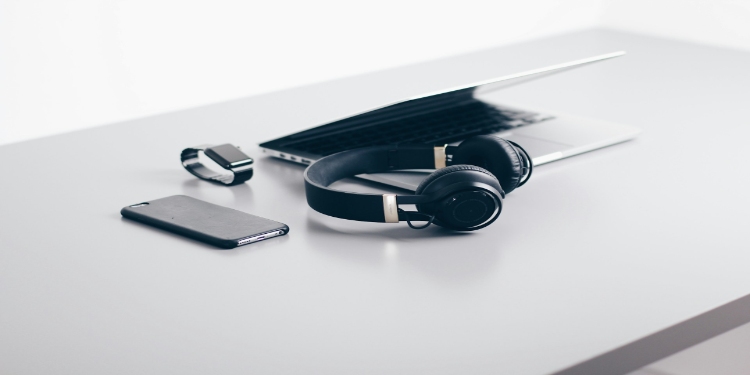
You didn’t need a new phone. You knew that. But your friend pulled out that sleek folding display at dinner and suddenly your perfectly functional device felt like a relic from a different era.
Here’s the uncomfortable truth nobody wants to say out loud: most tech purchases in 2026 have almost nothing to do with technology. Nearly 78% of gadget purchases this year are driven by social factors rather than any genuine functional need. Not features. Not specs. Social positioning. That’s the actual engine running beneath all the glossy product launches and midnight queuing outside stores.


Status anxiety — and let’s actually name it properly instead of dressing it up — is the single biggest purchase driver in consumer tech right now. A premium gadget sitting on a coffee table or clipped to a bag strap functions as a visible marker of economic capability and cultural awareness. It’s not subtle and it was never meant to be. The dopamine hit isn’t from the device working well. It’s from someone noticing it. That’s a crucial distinction most buyers never consciously make, which is exactly why the cycle keeps spinning.
Why Your Brain Treats “Old Tech” Like a Personal Insult
While cutting-edge entertainment platforms like CapycasCasino leverage state-of-the-art web technology to deliver smooth, high-definition experiences across virtually any generation of hardware, consumer device marketing often creates an artificial urge to upgrade.
The upgrade cycle has compressed dramatically. What used to be a comfortable 3–4 year refresh rhythm has collapsed to somewhere between 18 and 24 months, driven almost entirely by fear rather than capability gaps. Your current device probably does everything you need. Probably more, honestly. But the moment a newer version exists, the old one starts feeling like a liability.
This is loss aversion doing what it does best — which is catastrophising. The brain doesn’t process “slightly older tech” neutrally. It registers it as falling behind. As losing ground. Scarcity bias layered on top of artificial obsolescence cycles means manufacturers don’t actually need to build dramatically better products. They just need to build newer ones and let social comparison do the rest of the work.
The average consumer checks peer tech setups on social platforms around 14 times per week. Fourteen. That’s not passive scrolling — that’s active benchmarking. And each check recalibrates what feels “normal” or “acceptable” upward, never downward. Owning outdated gadgets stops being a neutral fact and starts triggering something more uncomfortable — an implicit concern that if your tech looks outdated, you might too.
“I upgraded my laptop six months after buying it because everyone at the agency had the newer model,” says Marcus T., a freelance designer. “I told myself it was about performance. It wasn’t. Not even slightly.”
The Unboxing Ritual Is Not About the Product
Unboxing content generates 340% higher engagement on social media than standard product reviews. Read that again slowly. Not reviews of the product in use. Not long-term reliability tests. The unwrapping. The reveal. The performance of receiving something new and expensive in front of an audience.
The unboxing ritual has evolved into a full impression management behaviour — a curated performance that reinforces purchase habits through immediate social feedback. The gadget itself almost becomes secondary to the social validation loop it triggers. And platforms are perfectly engineered to amplify exactly this. Algorithms reward novelty and exclusivity signals, which means high-end tech content gets pushed harder and seen wider, making ownership feel more culturally mandatory than it actually is.
Several platforms — sites like CapycasCasino — actually understand this reward psychology well enough to build engagement loops around it, tapping the same dopamine cycle that makes unboxing feel addictive. The mechanism is identical: anticipation, reveal, social reaction, repeat.
‘I watched seventeen unboxing videos before buying my AR glasses,” admits Priya S., a content creator based in London. “By the time I bought them I’d already mentally lived the experience. The actual unboxing felt almost anticlimactic.”
That post-purchase flatness has a name — hedonic adaptation. The emotional high from new tech fades fast. Faster than most buyers expect. Which is precisely why the upgrade impulse resurfaces so reliably. The satisfaction isn’t stored. It evaporates. And then you’re benchmarking again, checking feeds again, feeling the gap again.
Social-influenced tech buyers report 62% higher dissatisfaction post-purchase once the reality gap between expectation and experience closes in. That’s not a small number. That’s the majority of social-driven buyers experiencing buyer’s regret — yet the cycle continues because the next purchase promises to feel different. It doesn’t. But the promise is convincing.
What the Peer Comparison Trap Actually Looks Like Up Close
Social proof works through cascading conformity. One person in a friend group adopts a new gadget — say, a spatial audio headset or a biometric ring — and suddenly the group norm shifts. It’s not aggressive peer pressure. It’s quieter and more effective than that. It’s just the slow redefinition of what “normal” equipment looks like within that specific circle.
The most common gadgets fuelling status comparison in 2026 tend to cluster in these categories:
- Wearables — smart rings, biometric bands, AR-light glasses that sit right on the face where everyone can see them
- Spatial audio devices (over-ear, obviously, because earbuds stopped being interesting to brag about)
- Foldable and rollable display devices — because pulling one out at a table is theatre, full stop
- AI-integrated personal devices with visible companion interfaces
- High-visibility accessories — bags, cases and clips that signal the tier of device inside without needing to show the device
The psychology behind each category follows a consistent pattern. Visibility matters more than capability. If a feature can’t be observed by others, it carries almost zero social signalling value — which explains why internal performance upgrades generate far less purchase urgency than aesthetic redesigns.
Here’s a breakdown of how the key psychological drivers stack against each other in real purchase behaviour:
| Psychological Driver | How It Shows Up in Real Life | Honest Assessment |
| Status anxiety | Feeling visibly uncomfortable using last year’s device around peers | Primary trigger — usually the one buyers deny the hardest |
| Fear of missing out | Watching 14+ peer tech posts per week and recalibrating upward each time | Relentless and cumulative — it doesn’t reset |
| Scarcity bias | Treating “limited edition” or “first wave” as a genuine urgency signal | Manufactured almost entirely by marketing — effective anyway |
| Hedonic adaptation | Satisfaction fades within weeks, upgrade impulse returns on schedule | The treadmill that never turns off |
| Social proof | Group norm shifts when one member upgrades — others follow without direct pressure | Quiet, invisible, devastatingly effective |
The rationalisation layer sits on top of all of this, of course. Buyers don’t walk into a purchase telling themselves “I want my friends to think I’m successful.” They construct practical justifications — productivity, compatibility, battery life. Real reasons that are technically true but were never actually the deciding factor. And platforms like CapycasCasino have refined the art of making desire feel like logic, presenting options in ways that feel like informed decisions while the actual driver sits a few psychological layers deeper.
“Everyone in my team upgraded to the new ambient computing setup,” says Daniel R., a product lead at a mid-size tech firm. “I held out for three months telling myself I didn’t care. Then I cared. Obviously.”
Knowing the mechanism doesn’t switch it off. That’s the uncomfortable part. You can read exactly how loss aversion and social proof are manipulating your purchase decisions and still feel the pull. Still open the product page. Still check the delivery window. The awareness adds a layer of self-consciousness but rarely adds brakes.
The gadget you buy to impress your friends will impress them for approximately one dinner. Then it becomes furniture. And the cycle resets.

David Prior
David Prior is the editor of Today News, responsible for the overall editorial strategy. He is an NCTJ-qualified journalist with over 20 years’ experience, and is also editor of the award-winning hyperlocal news title Altrincham Today. His LinkedIn profile is here.