


















































Outbuildings offer valuable storage space but are often vulnerable to break-ins. Effective security involves more than just selecting a sturdy lock; it depends on the interplay between hardware, fittings, and ongoing maintenance. Taking the right approach can reduce risks and protect important possessions stored outside the main property.
Garden sheds, garages, and similar outbuildings frequently attract unauthorised attention due to their isolation, lighter construction, and lower visibility compared to the main home. Padlocks, when selected and used appropriately, are an integral component in securing these outbuildings against theft and vandalism. Understanding the points of vulnerability and how different attack methods can be applied helps in making informed choices about protecting outdoor storage. Focusing on the security of each component—hardware, lock system, and installation—strengthens the deterrent against break-ins.


Common vulnerabilities in outdoor storage structures
Unlike homes, outbuildings are often located in less visible parts of a property, such as gardens or boundaries, with limited natural surveillance. Many are built with lighter materials, such as timber or thin metal, which can be easier for unauthorised individuals to breach. These factors mean break-ins may go unnoticed for longer periods.
Opportunistic thieves often target sheds and garages seeking tools, bicycles, or gardening equipment commonly kept inside. Weak panels, inadequate locking devices, and loose or poorly fitted hardware all increase the risk of unauthorised entry. Intruders typically look for the most accessible point of entry, frequently exploiting weak spots rather than attempting to force the strongest sections.
Attack techniques and physical security considerations
Methods used to force entry are often straightforward but effective. This can include levering weak doors or panels, cutting through substandard fittings, or targeting exposed or poorly fitted lock hasps. Even a strong lock can be defeated if the mounting hardware is not secure or reinforced.
Misaligned doors or frames provide opportunities for tools to pry them open. Exposed screws or bolts can allow intruders to dismantle or bypass locking mechanisms. Ensuring that both hardware and installation are robust and correctly aligned is vital for an effective security measure for outbuildings.
Choosing and installing reliable locking systems
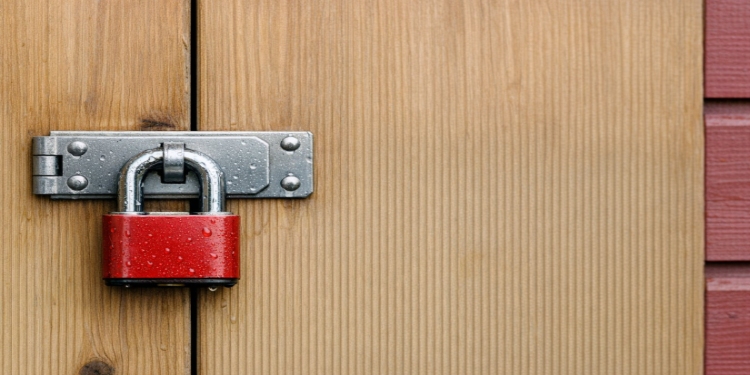
When securing outdoor storage, it is important to consider both deterrence and practical resistance to attack. Padlocks made from hardened materials and with minimal shackle exposure are more resistant to cutting or prying. Locks that are weather-resistant and suitable for outdoor use will also function more reliably over time.
For best performance, pair strong padlocks with high-quality hasp-and-staple fittings. Using concealed screws, reinforced mounting points, and reliable fixings makes forced entry more challenging. The protective value of padlocks is maximised only when paired with equally robust fittings. In some cases, chains, cables, or additional restraints may help protect larger valuables or add extra layers of security inside the outbuilding.
Environmental factors, maintenance, and common pitfalls
Outdoor security hardware faces challenges such as rain, frost, grit, and fluctuations in temperature, all of which can cause corrosion or mechanical failure. Choosing hardware specifically rated for exterior use is important, as is maintaining it regularly. Lubricating moving parts, checking for alignment, and replacing worn components are key steps to keeping a security system reliable and resistant to tampering or damage.
Failing to conduct regular checks or secure outbuildings after use reduces the effectiveness of installed hardware. Exposed fasteners, lightweight hasps, or unsuitable padlocks make structures more vulnerable. Industry advice often stresses that each part of the system—door, frame, lock, and fittings—needs to work together to ensure reliable protection.
Adding deterrents and improving recovery chances
In addition to physical security, using deterrents such as outdoor lighting, alarms, or visible warning signs can help reduce the likelihood of attempted break-ins by increasing risk for intruders. Marking and documenting valuables can also improve the chances of recovery if theft occurs.
Consistent key management and always locking up after use help maintain stable security. Relying on a single measure, like a lock without a strong anchor point, is a common error. By combining several effective solutions, you increase the resistance outbuildings have to both opportunistic and more determined intruders.

David Prior
David Prior is the editor of Today News, responsible for the overall editorial strategy. He is an NCTJ-qualified journalist with over 20 years’ experience, and is also editor of the award-winning hyperlocal news title Altrincham Today. His LinkedIn profile is here.