




















































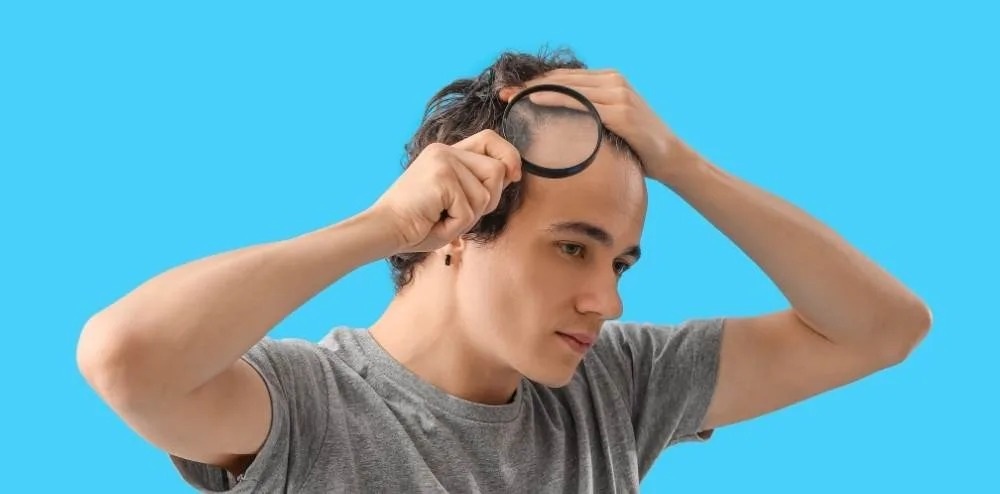
Thyroid disorders affect approximately 2% of the UK population, with hair loss being one of the most distressing symptoms. According to the British Thyroid Foundation, both underactive (hypothyroidism) and overactive (hyperthyroidism) thyroid conditions disrupt the hair growth cycle, creating distinct patterns that help differentiate between these conditions. Understanding these patterns is essential for proper diagnosis and treatment.
Understanding Thyroid Hormones and Hair Follicle Function
Thyroid hormones T3 (triiodothyronine) and T4 (thyroxine) play crucial roles in regulating hair follicle activity. According to research published in the Journal of Clinical Endocrinology & Metabolism, these hormones directly influence multiple hair biology parameters, from follicle cycling to pigmentation.

Hair follicles contain deiodinase enzymes (D2 and D3) that convert T4 into active T3, allowing local hormone regulation within the follicle itself. This is not simply systemic hormone deficiency affecting hair, the follicles themselves are responsive endocrine organs that require proper thyroid signaling.
Thyroid hormones regulate three critical follicle functions:
- Anagen prolongation: T4 extends the growth phase duration, allowing hair to reach longer lengths before transitioning to rest
- Keratinocyte proliferation: Both T3 and T4 stimulate division of hair matrix cells that form the hair shaft
- Melanin synthesis: Thyroid hormones promote pigment production within follicles, affecting hair color intensity
When thyroid hormone levels become imbalanced, these functions are disrupted, leading to characteristic hair loss patterns.
| Thyroid Parameter | Normal Range | Hair Follicle Impact |
|---|---|---|
| TSH (Thyroid Stimulating Hormone) | 0.4-4.0 mIU/L | Elevated TSH signals hypothyroidism; suppressed TSH indicates hyperthyroidism |
| Free T4 (Thyroxine) | 0.8-1.8 ng/dL | Extends anagen phase and promotes keratinocyte proliferation |
| Free T3 (Triiodothyronine) | 2.3-4.2 pg/mL | Reduces apoptosis in hair matrix cells and supports pigmentation |
| Hair Growth Phase Duration | Anagen: 2-7 years | Shortened in hypothyroidism; destabilized in hyperthyroidism |
Hypothyroidism Hair Loss Patterns: Gradual Diffuse Thinning
Hypothyroidism, characterized by insufficient thyroid hormone production, creates a distinctive pattern of hair loss that develops gradually over months. The British Thyroid Foundation notes that this is the most common form of thyroid-related alopecia, particularly affecting women over 40.
Characteristic features of hypothyroid hair loss include:
- Diffuse scalp thinning: Uniform hair loss across the entire scalp rather than localized patches
- Outer eyebrow loss: A telltale sign where the outer third of eyebrows becomes sparse or disappears completely
- Dry, brittle texture: Hair becomes coarse, lacks luster, and breaks easily
- Slow growth: New hair grows more slowly than normal shedding, creating progressive thinning
- Body hair reduction: Loss extends beyond the scalp to affect pubic, axillary, and limb hair
According to research in Clinical, Cosmetic and Investigational Dermatology, hypothyroidism impedes the division of epidermal cells and skin appendages, leading to premature catagen phase entry and delayed telogen hair re-entry into anagen. This is not increased shedding but rather inadequate replacement of naturally shed hairs.
Hypothyroidism is characterized by gradual thinning, but it is not pattern baldness with recession at temples or crown.
| Hypothyroidism Hair Loss | Male/Female Pattern Baldness |
|---|---|
| Diffuse thinning across entire scalp | Specific pattern (receding hairline, crown in men; widening part in women) |
| Affects eyebrows and body hair | Limited to scalp |
| Dry, brittle, coarse texture | Normal texture maintained |
| Reversible with thyroid treatment | Progressive without DHT-blocking treatment |
| Equal density loss throughout | Miniaturization in pattern-specific zones |
Hyperthyroidism Hair Loss Patterns: Sudden Fine Hair Shedding
Hyperthyroidism, caused by excessive thyroid hormone production, triggers a different pattern of hair loss that often appears more suddenly. According to Cleveland Clinic endocrinologists, patients frequently notice increased shedding during hair washing or brushing.
Distinctive features of hyperthyroid hair loss include:
- Sudden onset telogen effluvium: Accelerated shedding that becomes noticeable within weeks
- Fine, silky texture: Hair becomes uniformly thin and delicate rather than dry and brittle
- Reduced tensile strength: Individual hair shafts break more easily under normal styling stress
- Uniform scalp thinning: Diffuse loss without the characteristic eyebrow changes seen in hypothyroidism
- Scalp-focused pattern: Body hair typically remains less affected compared to hypothyroidism
Research published in Skin Appendage Disorders explains that hyperthyroidism stimulates reactive oxygen species (ROS) production, resulting in oxidative damage, lipid peroxidation, and increased free radical formation in mitochondria. This oxidative stress weakens hair shafts and destabilizes the anagen-telogen transition.
Hyperthyroidism is characterized by sudden shedding with fine texture, not gradual thinning with coarse, dry hair.
Clinical Differences Between Hypothyroid and Hyperthyroid Alopecia
While both thyroid disorders cause diffuse hair loss, several clinical distinctions help differentiate between them. According to medical guidance from thyroid specialists, these differences are critical for proper diagnosis.
Key differentiating characteristics:
| Feature | Hypothyroidism | Hyperthyroidism |
|---|---|---|
| Onset speed | Gradual (months) | Sudden (weeks) |
| Hair texture | Dry, coarse, brittle | Fine, silky, soft |
| Eyebrow pattern | Outer third loss (Hertoghe’s sign) | Usually preserved |
| Body hair | Significantly affected | Minimally affected |
| Scalp appearance | May be dry with flaking | Usually normal |
| Growth rate | Markedly slowed | May be accelerated initially |
| Shedding intensity | Moderate, persistent | Intense, episodic |
According to the British Thyroid Foundation, the hair loss from hypothyroidism tends to be more gradual and widespread, while hyperthyroidism is associated with more sudden and noticeable shedding on the scalp. Additionally, hypothyroidism often makes hair dry and brittle, while hyperthyroidism makes it fine and silky.
The timing and texture provide critical diagnostic clues that distinguish thyroid-related hair loss from other conditions.
Diagnosing Thyroid-Related Hair Loss: Laboratory Testing
Proper diagnosis requires comprehensive thyroid function testing beyond standard screening. According to endocrinology best practices, single TSH measurements are insufficient for diagnosing thyroid-related alopecia.
Comprehensive thyroid panel includes:
- TSH (Thyroid Stimulating Hormone): Primary screening test that signals pituitary response to thyroid hormones
- Free T4 (Thyroxine): Measures unbound, biologically active T4 circulating in blood
- Free T3 (Triiodothyronine): Assesses active thyroid hormone available to tissues, including hair follicles
- Thyroid antibodies: TPO and TG antibodies identify autoimmune thyroid disease (Hashimoto’s or Graves’ disease)
- Ferritin levels: Iron deficiency commonly coexists with thyroid disorders and independently causes hair loss
According to research, hair follicles can respond to borderline thyroid dysfunction even when TSH remains within normal range. Some patients experience hair loss with subclinical hypothyroidism (TSH 4.5-10 mIU/L with normal T4) or subclinical hyperthyroidism (suppressed TSH with normal free T4 and T3).
Testing should occur after at least three months of persistent shedding, as temporary telogen effluvium from stress or illness can mimic thyroid hair loss patterns.
Treatment Approaches and Hair Regrowth Timeline
Hair loss caused by thyroid disorders can grow back once hormone levels are balanced, though recovery requires patience. According to the British Thyroid Foundation, regrowth typically takes several months after achieving hormonal stability.
Treatment protocol for thyroid-related hair loss:
For hypothyroidism:
- Levothyroxine (synthetic T4) replacement, typically starting at 50-100 mcg daily
- Gradual dose titration based on TSH levels checked every 6-8 weeks
- Target TSH: 0.5-2.5 mIU/L for optimal hair follicle function
- Iron and vitamin D supplementation if deficient (common in hypothyroidism)
For hyperthyroidism:
- Antithyroid medications (methimazole or propylthiouracil) to reduce hormone production
- Beta-blockers for symptom management during treatment initiation
- Radioactive iodine or surgery for definitive treatment in appropriate cases
- Regular monitoring to prevent overcorrection into hypothyroidism
Hair regrowth timeline expectations:
- 0-3 months: Continued shedding as follicles respond to treatment; this is normal and expected
- 3-6 months: Shedding slows; new anagen hairs begin emerging as fine “baby hairs”
- 6-12 months: Progressive thickening as new growth cycles mature and shaft diameter increases
- 12-18 months: Maximum regrowth achieved; density and texture approach pre-disease baseline
According to dermatology research, approximately 85-90% of patients with thyroid-related hair loss experience substantial regrowth once thyroid function normalizes. However, those with prolonged untreated thyroid disease may experience incomplete recovery due to follicle miniaturization.
When Thyroid Hair Loss Does Not Fully Recover
While most thyroid-related alopecia improves with hormone correction, some patients experience persistent thinning despite normalized TSH levels. According to research, several factors contribute to incomplete recovery.
Reasons for incomplete hair regrowth:
- Prolonged thyroid dysfunction: Years of untreated disease can cause permanent follicle miniaturization
- Coexisting conditions: Androgenetic alopecia, iron deficiency, or autoimmune alopecia areata may compound loss
- Age-related changes: Patients over 50 have naturally reduced follicle regenerative capacity
- Autoimmune damage: Hashimoto’s thyroiditis may involve follicle-specific autoantibodies
- Medication effects: Some thyroid medications temporarily worsen shedding during treatment initiation
For patients who do not achieve satisfactory regrowth after 18-24 months of optimized thyroid treatment, hair restoration solutions become appropriate considerations. Modern techniques like FUE (Follicular Unit Extraction) can restore density in areas affected by permanent thinning.
According to specialists at leading restoration clinics, thyroid patients must achieve hormonal stability for at least 12 months before undergoing hair transplant procedures, as unstable thyroid function increases surgical complications and compromises graft survival.
Complementary treatments that may support regrowth include:
- PRP (Platelet-Rich Plasma) therapy: Growth factors stimulate follicle regeneration
- Low-level laser therapy: Photobiomodulation enhances cellular metabolism in follicles
- Topical minoxidil: Prolongs anagen phase and increases blood flow to follicles
- Nutritional optimization: Adequate protein, iron, zinc, and biotin support keratin synthesis
Frequently Asked Questions
What is the difference between hypothyroidism and hyperthyroidism hair loss?
Hypothyroidism causes gradual, diffuse thinning with dry, brittle hair and characteristic eyebrow loss on the outer third. Hyperthyroidism triggers more sudden shedding with fine, silky hair that becomes uniformly thin across the scalp. Both conditions affect the hair follicle cycle differently, with hypothyroidism slowing growth and hyperthyroidism accelerating premature shedding.
Can thyroid hair loss be reversed?
Yes, thyroid-related hair loss can grow back once hormone levels are balanced through treatment. However, regrowth takes time, typically several months after achieving normal TSH, T3, and T4 levels. Some individuals may benefit from complementary treatments like PRP therapy alongside thyroid medication to support follicle recovery.
How do thyroid hormones affect hair follicles?
T3 and T4 thyroid hormones directly influence hair follicle function by regulating the anagen growth phase, keratinocyte proliferation, and melanin synthesis. Hair follicles contain deiodinase enzymes that convert T4 to active T3 locally. Low thyroid hormone levels shorten anagen and slow cell turnover, while excessive levels push follicles prematurely into the telogen shedding phase.
What TSH level causes hair loss?
Hair loss typically occurs when TSH levels fall outside the normal range of 0.4-4.0 mIU/L. Elevated TSH above 4.0 indicates hypothyroidism, while suppressed TSH below 0.4 suggests hyperthyroidism. However, hair follicle response varies individually, and some people experience hair loss even with borderline TSH levels, making comprehensive thyroid panel testing essential.
Is thyroid hair loss different from male or female pattern baldness?
Yes, thyroid-related hair loss presents as diffuse thinning across the entire scalp, unlike androgenetic alopecia which follows specific patterns (receding hairline and crown thinning in men, widening part in women). Thyroid hair loss also affects eyebrows, body hair, and pubic hair, while pattern baldness primarily targets scalp follicles sensitive to DHT hormones.