




















































Hair restoration treatments have advanced dramatically over the past decade, moving from surgical transplants to regenerative therapies that harness the body’s own healing mechanisms. While platelet-rich plasma (PRP) has become a mainstream option for treating hair loss, exosome therapy represents the next frontier in biological hair regeneration. Derived from stem cells, exosomes deliver targeted growth signals without the variability that limits PRP effectiveness.
What Exosomes Are and Why They Matter for Hair Growth
Exosomes are not cells themselves. They are microscopic vesicles—tiny bubble-like structures measuring 30-150 nanometers in diameter—that cells release to communicate with one another. These vesicles carry proteins, growth factors, and genetic material that can influence cell behavior and tissue repair.


In hair restoration, exosomes derived from mesenchymal stem cells (MSCs) deliver concentrated regenerative signals to dormant hair follicles. According to recent systematic reviews, these signals stimulate dermal papilla cells, activate hair follicle stem cells, and promote angiogenesis—the formation of new blood vessels that supply nutrients to growing hair.
Exosomes vs. PRP: Key Differences
| Feature | Exosomes | PRP |
| Source | Lab-cultured stem cells | Patient’s own blood |
| Growth factor concentration | Standardized, high | Variable, dependent on patient health |
| Batch consistency | Uniform across treatments | Varies by patient and preparation |
| Anti-inflammatory properties | Strong immunomodulatory effects | Moderate, platelet-dependent |
| Treatment variability | Minimal | High (affected by age, health, medications) |
Exosome therapy is not a replacement for established treatments like hair transplantation for advanced androgenetic alopecia. Rather, it represents a complementary approach that may benefit patients with early-stage hair thinning or inflammatory conditions like alopecia areata.
Clinical Evidence: What Research Shows About Effectiveness
The scientific foundation for exosome therapy in hair restoration has strengthened considerably between 2024 and 2026. A systematic review published in Clinical, Cosmetic and Investigational Dermatology identified eleven clinical studies evaluating exosomes for hair loss, including two randomized controlled trials.
All eleven studies demonstrated improvements in at least one hair parameter. The exosomes tested came from multiple tissue sources: adipose tissue, placenta, hair follicles, bone marrow, foreskin, and umbilical cord. This diversity of sources suggests that the regenerative effects are not tissue-specific but rather related to the growth factors and signaling molecules the exosomes carry.
According to a prospective study published in Aesthetic Plastic Surgery, patients with androgenetic alopecia reported decreased hair loss and improved growth at both the 4-week and 12-week marks following exosome injection. Hair density measurements supported these subjective reports, showing measurable increases in hair count per square centimeter.
Clinical Study Summary
| Study Type | Number of Studies | Key Findings |
| Randomized controlled trials | 2 | Improved hair density vs. control groups |
| Prospective single-arm studies | 3 | Decreased hair loss at 4 and 12 weeks |
| Retrospective studies | 3 | Consistent improvement across hair parameters |
| Case reports and series | 3 | Successful treatment of alopecia areata |
The safety profile across these studies has been reassuring. According to clinical trials analysis on PubMed, no significant adverse effects such as anaphylaxis have been reported in the trials reviewed. Five additional clinical trials registered on ClinicalTrials.gov are currently ongoing, suggesting that evidence will continue to expand through 2026 and beyond.
How Exosome Therapy Works: The Treatment Process
Exosome therapy for hair loss is a minimally invasive procedure typically performed in a clinical setting. The process differs fundamentally from PRP because exosomes are not derived from the patient’s blood but from laboratory-cultured stem cells that have been rigorously screened and processed.
The Treatment Protocol
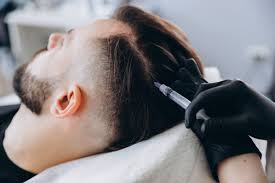
The procedure begins with scalp preparation. The treatment area is cleaned and a topical numbing agent is applied to minimize discomfort. The exosome solution—delivered in pre-filled syringes—is injected into the scalp using a fine needle or microneedling device. Injection depth targets the mid-dermis where hair follicles reside.
Treatment sessions typically last 30 to 45 minutes. Most protocols recommend an initial series of three treatments spaced four to six weeks apart, followed by maintenance sessions every three to six months depending on individual response.
What Exosomes Are Doing Beneath the Scalp
Once injected, exosomes do not remain static. They are taken up by nearby cells—dermal papilla cells, keratinocytes, and hair follicle stem cells—through a process called endocytosis. The cargo they carry (growth factors, microRNAs, and signaling proteins) then influences cellular behavior.
According to preclinical studies reviewed in PMC, exosomes promote hair regeneration through multiple pathways: they extend the anagen (growth) phase of the hair cycle, reduce inflammation around follicles, and improve local blood supply by stimulating new capillary formation. This multi-pathway approach is why exosomes may be effective across different types of hair loss, from androgenetic alopecia to immune-mediated conditions like alopecia areata.
Who Benefits Most: Candidate Selection Matters
Exosome therapy is not a universal solution for all types of hair loss. Patient selection significantly influences treatment outcomes.
Ideal Candidates
Early-stage androgenetic alopecia (male or female pattern hair loss) represents the most common indication. Patients in Norwood stages I-IV or Ludwig stages I-II—where follicles are miniaturized but not completely absent—tend to respond best. The therapy cannot regenerate hair from completely scarred or closed follicles.
Alopecia areata patients may also benefit, particularly when the condition is active but not long-standing. According to a case report in MDPI, a patient with alopecia areata due to psychological stress experienced complete hair regrowth and natural color restoration after exosome treatment with six-month follow-up.
Telogen effluvium—temporary hair shedding triggered by stress, surgery, or medications—may respond to exosomes by accelerating the return to normal hair cycling.
Poor Candidates
Advanced baldness with years of follicle dormancy is unlikely to respond. Once follicles have been inactive for several years, the stem cell niche may be too depleted for exosomes to reactivate growth. In these cases, surgical hair transplantation remains the gold standard.
Scarring alopecias (cicatricial alopecia) destroy follicles permanently, leaving no viable targets for regenerative therapy. Patients with active scalp infections or inflammatory conditions should delay treatment until these resolve.
Exosome Therapy Is Not:
- A replacement for hair transplant surgery in advanced baldness
- Effective for completely scarred follicles
- A permanent solution requiring no maintenance
Exosome Therapy Is:
- A regenerative treatment for early to moderate hair loss
- Effective at reducing shedding and improving hair density
- Supported by growing clinical evidence from controlled trials
Comparing Exosomes to Established Hair Loss Treatments
Understanding where exosome therapy fits within the broader landscape of hair restoration helps set realistic expectations.
Exosomes vs. Finasteride and Minoxidil
Finasteride (Propecia) and minoxidil (Rogaine) remain first-line medical therapies for androgenetic alopecia. Finasteride blocks DHT, the hormone that miniaturizes hair follicles in genetically susceptible individuals. Minoxidil improves scalp blood flow and prolongs the anagen phase. Both require daily use, and stopping either medication typically results in shedding of any hair regained.
Exosome therapy offers a different mechanism: it does not block hormones or require daily application. Instead, it delivers regenerative signals in periodic treatments. This makes it appealing for patients who cannot tolerate finasteride’s side effects or prefer not to use daily topical treatments.
However, exosomes are not a replacement for these medications. Many clinicians use exosomes alongside finasteride or minoxidil to enhance overall results. For comprehensive hair restoration strategies, patients may visit specialized clinics like Vinci Hair Clinic that offer multi-modal treatment plans.
Exosomes vs. PRP
PRP has been used for hair restoration since the early 2000s. It involves drawing the patient’s blood, centrifuging it to concentrate platelets, and injecting the platelet-rich plasma into the scalp. Platelets release growth factors that can stimulate hair follicles.
The key limitation of PRP is variability. Platelet count and growth factor levels differ based on patient age, health status, medications, and the specific centrifugation protocol used. A 60-year-old patient on blood thinners will produce PRP with different characteristics than a 30-year-old without medications.
Exosomes eliminate this variability. They are produced in controlled laboratory conditions from screened donor stem cells, ensuring consistent growth factor profiles across batches. According to clinical comparisons, exosomes deliver 100 to 1,000 times more growth factors per dose than PRP.
Treatment Comparison Table
| Treatment | Mechanism | Frequency | Key Advantage | Key Limitation |
| Finasteride | DHT blocker | Daily oral | Proven long-term efficacy | Potential sexual side effects |
| Minoxidil | Vasodilator, anagen extender | Twice daily topical | Over-the-counter availability | Scalp irritation, daily commitment |
| PRP | Platelet growth factors | Monthly (3-6 sessions) | Uses patient’s own blood | High variability, multiple sessions |
| Exosomes | Stem cell signaling molecules | Every 4-6 weeks (3 initial) | Standardized, high concentration | Limited long-term data, cost |
| Hair Transplant | Surgical follicle relocation | One-time procedure | Permanent results | Invasive, scarring, requires sufficient donor hair |
Safety Considerations and Realistic Expectations
Exosome therapy benefits from a favorable safety profile in published trials, but patients should understand what to expect—and what remains unknown.
Reported Side Effects
The most common side effects are mild and transient: temporary redness, swelling, or tenderness at injection sites lasting one to three days. Some patients report a sensation of tightness across the scalp immediately after treatment.
According to systematic reviews of clinical studies, no serious adverse events have been documented in hair restoration trials. Importantly, no cases of anaphylaxis—severe allergic reaction—have occurred, which distinguishes exosomes from some biologic therapies.
Long-Term Safety: What We Don’t Know
Most published studies follow patients for 3 to 12 months. Long-term effects beyond one year remain under investigation. Five ongoing clinical trials will provide additional safety data through 2026 and 2027.
Regulatory status varies by country. In the United States, exosome products are not FDA-approved for hair loss and are typically offered under institutional review board oversight or as off-label use. Patients should verify that their provider sources exosomes from accredited laboratories that follow good manufacturing practices (GMP).
Setting Realistic Expectations
Exosome therapy does not produce overnight results. Hair growth follows a biological timeline: follicles must transition from telogen (resting) to anagen (growth), a process that takes 8 to 12 weeks. Visible improvements typically emerge three to four months after the initial treatment series.
Results are also incremental. Patients may see 10% to 30% improvement in hair density—a meaningful change but not a complete reversal of baldness. For those with significant hair loss, combining exosomes with other therapies such as medication or surgical restoration may yield better outcomes. Clinics like Vinci Hair Clinic often design personalized treatment plans that integrate multiple approaches.
What to Expect vs. What Not to Expect
| Realistic Expectation | Unrealistic Expectation |
| 10-30% increase in hair density over 6 months | Complete reversal of advanced baldness |
| Reduced shedding and thicker hair shafts | Overnight visible growth |
| Need for maintenance treatments every 3-6 months | One-time permanent solution |
| Safe, minimal downtime procedure | No cost or time commitment |
Frequently Asked Questions
How long do results from exosome therapy last?
Results vary by individual, but most patients require maintenance treatments every three to six months to sustain improvements. Hair growth cycles continue to be influenced by genetics and hormones, so without ongoing intervention—whether exosomes, medications, or other therapies—hair loss can resume.
Is exosome therapy painful?
Most patients describe the procedure as minimally uncomfortable. Topical numbing cream is applied before injections, which reduces sensation. The fine needles used for exosome delivery cause less discomfort than those used for some PRP protocols. Post-treatment tenderness typically resolves within 48 hours.
Can exosomes be combined with other hair loss treatments?
Yes, and many clinicians recommend combination approaches. Exosomes can be used alongside minoxidil, finasteride, low-level laser therapy, or even after hair transplant surgery to improve graft survival and stimulate surrounding follicles. There are no known contraindications to combining exosomes with standard medical or surgical hair restoration methods.
How much does exosome therapy cost?
Pricing varies by geographic location and provider, but a typical initial series of three treatments ranges from £1,500 to £3,000 in the UK and $2,000 to $5,000 in the United States. Maintenance sessions cost less per treatment. Exosome therapy is generally more expensive than PRP but less costly than surgical hair transplantation.
Are there any restrictions after exosome treatment?
Patients should avoid washing their hair for 24 hours post-treatment to allow the exosomes to integrate into the tissue. Strenuous exercise, saunas, and swimming should be avoided for 48 hours. Most patients return to normal activities immediately after the procedure with no visible signs of treatment beyond mild redness.