






















































Software rarely fails from one catastrophic defect. Instead, small quality gaps accumulate across releases – invisible at first, devastating later. When QA is treated as a final checkpoint rather than a continuous practice, hidden risks compound until something breaks in production. Smart organizations embed QA processes directly into how software is built, released, and improved at every stage of the lifecycle — especially for cloud migration services, where every deployment, integration, and configuration change can silently introduce new failure points if quality isn’t engineered in from day one.
Strong integration of quality testing into the delivery lifecycle helps teams detect risks early and keep releases stable. When continuous testing and structured feedback loops run throughout development, teams ship faster without sacrificing quality. Releases remain stable while ensuring predictable delivery outcomes for every product update.


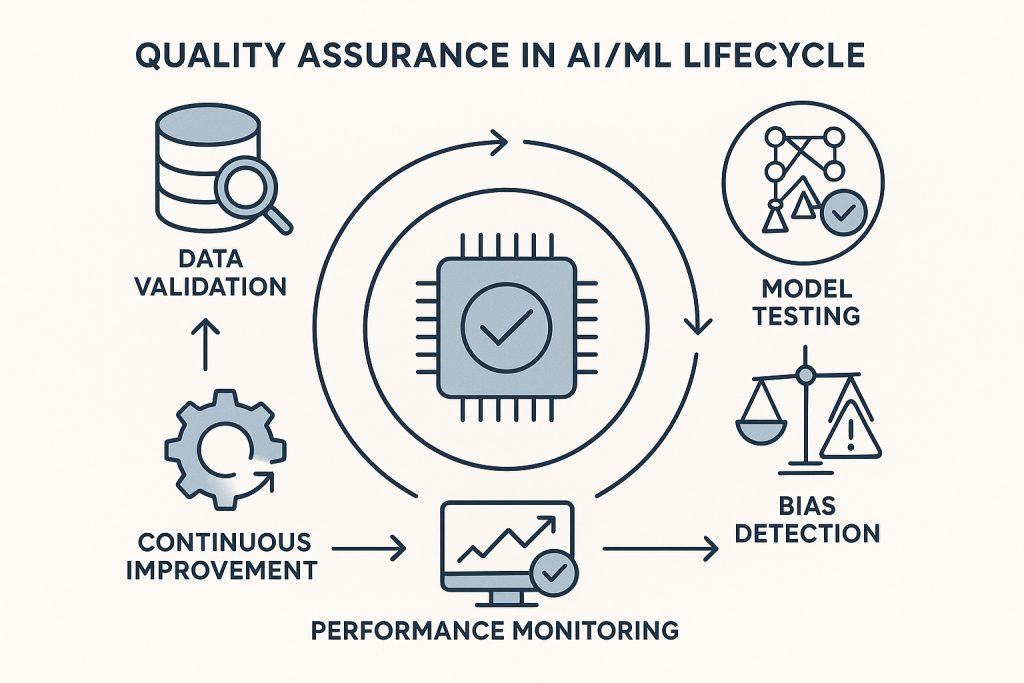
How to implement continuous testing and feedback loops
Continuous testing depends on visibility and fast learning cycles. Structured feedback and rapid loops allow teams to validate changes during development, not just before release. Modern DevOps pipelines combine automated validation, telemetry signals, and user-driven feedback. This model improves product decisions and supports maintaining stable software behavior across releases.
According to a 2024 State of DevOps Report, elite performers with mature continuous testing practices deploy 182 times more frequently and recover from incidents 2,293 times faster than low performers. The difference lies in integration, not just technology adoption.
The importance of automated testing in maintaining software quality
Automated testing is critical for scaling quality control. Manual testing alone cannot support modern delivery speed. As release cycles shorten, automated validation protects software reliability and strengthens integration between systems. Industry research shows structured QA processes detect up to 90% of defects before release.
Before selecting tools, teams align around several core practices. These practices support stable DevOps, reliable Agile delivery, and predictable quality outcomes:
- Embedding automated testing into DevOps pipelines and release processes
- Prioritizing high-risk software modules across the lifecycle
- Aligning QA, Agile, and DevOps teams around shared quality metrics
- Using feedback loops to improve continuous testing coverage
These actions strengthen system integration and support stable product releases. Automation reduces human error and helps in maintaining consistency.

Best practices for integrating QA into Agile and DevOps methodologies
In Agile and DevOps environments, QA operates as a shared responsibility embedded in the delivery culture. Successful organizations align QA strategy with sprint planning, release cycles, and infrastructure automation.
Effective DevOps integration includes automated test execution inside CI/CD pipelines, shared quality metrics, and cross-functional collaboration. When QA processes align with Agile delivery and DevOps automation, teams maintain speed while ensuring stable releases. The key is balance: moving fast without breaking things.
Ensuring quality assurance at every stage of the product lifecycle
True resilience comes from building quality into every stage.
Early validation protects architecture decisions. Mid-stage testing protects core workflows. Post-release monitoring supports continuous testing, long-term quality, and stable software performance.
Organizations ensuring QA across every phase consistently improve performance and customer trust.

Conclusion: QA integration as a core software strategy
Integration of QA processes into modern delivery requires a structured approach, strong continuous testing, reliable automated validation, and fast feedback loops. Organizations combining Agile, DevOps, and quality-driven culture consistently improve delivery speed and software quality.
Quality embedded across the lifecycle delivers stable products, improves efficiency, and maintains customer confidence while scaling innovation.

David Prior
David Prior is the editor of Today News, responsible for the overall editorial strategy. He is an NCTJ-qualified journalist with over 20 years’ experience, and is also editor of the award-winning hyperlocal news title Altrincham Today. His LinkedIn profile is here.