



















































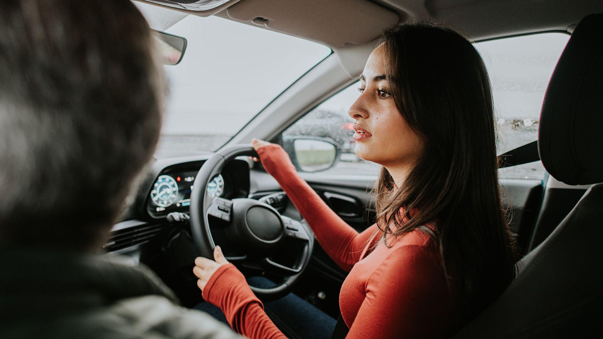
You booked your practical back in spring. The earliest slot your test centre could offer was five months out. Now your instructor says you’re ready, your parallel parking is solid, and you’re sitting on a date in November that you’d happily trade for one next fortnight.
That trade is possible. It’s called a swap, and since May 2026 it’s an official DVSA process with its own published guidance. It is also the only legitimate way left for another person to be involved in moving your test date, because almost everything else that used to happen behind the scenes is now illegal.


Here’s how it used to work, what the rules are today, and how to find someone to swap with.
The way it used to be
Anyone who booked a test before 2026 will remember a system with a lot more give in it.
You could change your booking up to six times. Your instructor could book the test for you through DVSA’s business service, and could go in and move it whenever a better slot appeared. Cancellation-checker apps ran constantly in the background, refreshing the booking service and pinging you the second a slot opened up at your centre. You could move your test to any test centre in the country, which meant people would book wherever there was availability, sometimes two hundred miles away, and quietly shuffle it closer later.
Swapping happened too, just not officially. Facebook groups and WhatsApp threads were full of learners trying to pair up. Two people would agree, and then either their instructors would move both tests through the business service, or the pair would attempt the old cancel-and-catch manoeuvre: one person cancels at an agreed minute while the other sits refreshing the page, hoping to grab the slot before a bot does. It worked sometimes. Often it didn’t, and someone lost a test date and got nothing back.
Underneath all of this sat a genuine problem. Automated software was hoovering up appointments faster than any human could book them, and those slots were being resold. A weekday car test costs £62. Learners were reported paying several hundred pounds for the same appointment. Average waiting times stretched to around 22 weeks, against roughly five weeks before the pandemic.
That’s the system DVSA set about dismantling.
What changed, and when
The reforms came in stages across 2026, and all of them apply to car driving tests in England, Scotland and Wales.
31 March 2026 – the change limit dropped from six to two. You can now make two changes to a booking. Changing the date, changing the time, changing the test centre, or swapping with another learner each count as one change. Doing several at once still counts as one. Once both are used, your only option is to cancel and book afresh, which resets the counter but puts you back in the open queue.
12 May 2026 – learner-only booking. It became against the law for anyone other than the learner to book, change, swap or cancel a car driving test. Not your instructor, not your parent, not a booking service. The instructor business booking route closed on the same day. Instructors can still set their availability so the system knows when they’re free, and they can still tell you whether you’re ready, but they cannot touch your booking.
12 May 2026 – cancellation finders banned. Using an unofficial service that scans the DVSA booking service for appointments is no longer permitted under the terms and conditions. If DVSA spots booking activity that breaks those terms, it can suspend your online access so you can only manage your test by phone, or cancel the booking outright.
9 June 2026 – the location rule. You can now only move your test to one of the three nearest centres to where it’s currently booked, or back to the centre you first booked on that booking. The cross-country slot-hoarding is over.
One older rule still matters: you need at least 10 full working days’ notice to change or cancel without losing your fee. Monday to Saturday count. Sundays and bank holidays don’t.
Some things deliberately don’t count against your two changes. Updating your address, phone number or email is free. Adding or removing your instructor’s reference number is free. And if DVSA moves your test itself, say because of snow or an examiner shortage, you aren’t penalised for it, and your two changes reset.
The current rules for swapping a driving test
DVSA published dedicated swap guidance on 5 May 2026. A swap is not the same as a change of date. You aren’t going into the booking system looking for a new slot. You and another learner are exchanging the bookings you each already hold, in full, exactly as they stand.
Five conditions have to be met, and if any of them fails, the swap gets refused on the call.
You both need a change left. A swap burns one of your two changes, and one of theirs. If either of you has used both, it can’t go ahead.
Timing. The request has to be made at least 10 full working days before whichever of the two tests comes first. Not your test. The earlier of the two.
Location. The other learner’s test must be at your test centre, one of the three nearest centres to yours, or the centre you originally booked on your current booking. The rule has to work in both directions, for both of you. GOV.UK publishes a list of which centres sit nearest to which, and it’s worth checking before you agree to anything.
Same type of test. You can only swap like for like on the fee band. A £62 weekday test can only swap with another £62 weekday test. A £75 evening, weekend or bank holiday test swaps only with the same. Tests booked with extra time for a disability, health condition or learning difficulty swap only with the same, and extended tests for disqualified drivers likewise. No money changes hands in a swap, so the fee category has to match.
Both instructors on board. Before you commit, check your instructor agrees you’ll be ready for the new date and is free to take you at that time and centre. There’s no point winning an earlier slot you can’t get a car to.
How the swap call actually works
Swaps are done by telephone only. Not online, not by email, not by webchat, not through DVSA’s WhatsApp or social media accounts. If a service tells you it can process the swap for you, it’s wrong, and following its advice risks your booking.
Before you ring, check that your booking has your correct mobile number and email address on it. DVSA uses those details to verify you, and if the number is wrong the swap will fail. You can update them by signing in to the booking service with your licence number and booking reference, and it doesn’t cost you a change.
Have ready: your driving licence number, your booking reference number, the card details you used to pay, the date, time and centre of your current test, the date, time and centre you’re swapping to, and details of any previous tests you’ve taken.
You’ll also need one thing from the other learner: their driving test booking reference number. That’s it. You should never hand over, or ask for, a licence number, theory test certificate number, home address, phone number, email address or card details. DVSA won’t ask you for the other person’s name or contact details either, and it will never ask for your full card number or security code.
Then:
- One of you rings DVSA on 0300 200 1122, selects option 2, Monday to Friday between 8am and 5pm. You both need to be free at that moment, though you don’t need to be in the same room.
- DVSA runs security checks with whoever called and takes their agreement to the swap.
- You give the other learner’s booking reference number.
- You’re put on hold while DVSA phones the other learner, using only the number recorded on their booking. It won’t accept a different number from you.
- DVSA runs security checks with them and takes their agreement.
- DVSA comes back to you and completes the swap.
If the other person doesn’t pick up, or has the wrong number on their booking, nothing happens and both tests stay exactly as they were. Nobody loses anything.
Afterwards you keep your booking reference, your payment details and any special requirements you’d added. You won’t get a confirmation email, so write the new date, time and centre down while you’re still on the call. Your next test reminder from DVSA will show the new details.
The bit DVSA doesn’t do
There’s a gap in all of this, and DVSA has been open about it. It will process a swap between two learners, but it will not list tests or match people up. Finding the person who wants your date, and happens to hold one you want, is entirely on you.
Which is fine if you know someone at the same centre in the opposite situation. Most people don’t. That leaves Facebook groups and forums, where you’re scrolling through hundreds of posts, most of them at the wrong centre, most of them stale, and a fair few of them from resellers.
Finding your match with SwapTest
SwapTest exists to close exactly that gap. It’s a matching board for learners who want to trade dates, built around the rules above.
Step one: list your test. Enter your test centre, your current date, and whether you want to go earlier or later. It takes about half a minute. Pick the direction you genuinely need, because it sets which way the search runs.
Step two: get matched. SwapTest looks through the tests other learners have listed, at your centre and the three nearby centres DVSA permits you to move to, for someone heading the opposite way. Every match it shows is one that can actually go ahead under the location rule, in both directions. It’s reading its own list of listings, not the DVSA booking service.
Step three: agree and call. Once a match appears, the other person has two days to respond before it expires and your listing goes back into the pool. When you both agree, you exchange what you need to arrange the call, then contact DVSA together and complete the swap the official way.
It’s worth being precise about what SwapTest is not. It never touches the DVSA booking service, so there are no bots and no bulk bookings. It doesn’t hold, buy or sell appointments, and no money passes between learners. You keep the booking you made yourself, and you make your own call to DVSA. SwapTest is independent and isn’t affiliated with DVSA or GOV.UK.
If a site ever offers to sell you a test appointment, or asks for more than the official DVSA fee to secure one, you can report it through GOV.UK.
Mistakes worth avoiding
Don’t cancel first. A swap works precisely because neither test is cancelled. Give up your slot before anything is agreed and you’ve lost it.
Don’t leave it late. Ten full working days before the earlier of the two tests is a hard cutoff. Count Saturdays in, leave Sundays and bank holidays out, and give yourself a few days of margin.
Don’t burn your changes casually. Two is not many. If you’ve already nudged your date once, a swap is your last move before you’d have to cancel and rebook.
Don’t overshare. Booking reference number only. Anyone asking for your licence number, theory certificate number or card details is not doing you a favour.
Don’t assume any centre will do. Check the three-nearest list before you agree, not after.
Before you swap, ask whether you should
A swap moves the date. It doesn’t change how ready you are. If your instructor thinks you need another six weeks on roundabouts and independent driving, an earlier slot is a fast route to a fail and a fresh wait.
Plenty of learners use SwapTest in the other direction for exactly this reason. They aren’t ready, they’d rather not waste the appointment, and they’d happily hand it to someone who is. That’s the whole idea. One person gets their test sooner, the other gets the practice time they wanted, and the slot doesn’t go to waste.
If that’s the trade you’re after, list your test and see who’s out there.
Rules correct as of September 2026 and based on DVSA guidance published on GOV.UK. Always check gov.uk/guidance/swapping-your-driving-test-with-another-learner-driver for the current position before making any changes to your booking.