



















































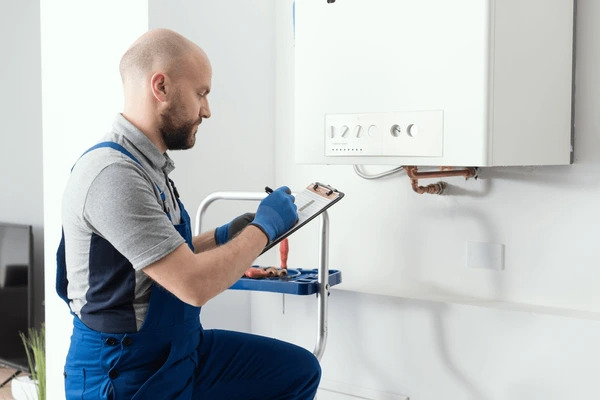
For most UK households, energy bills have become a constant background worry rather than an occasional surprise. As people hunt for the changes that make the biggest difference, attention keeps returning to one appliance that quietly runs for months on end: the boiler. Heating and hot water together account for well over half of the average home’s energy use, which makes the boiler the single largest energy consumer under most roofs. So when homeowners ask whether upgrading is really worth it, they’re asking a fair question. Heating specialists, including engineers at a Prime Time Boiler service, report a clear surge in upgrade enquiries as older units struggle through another winter. The short answer is that a boiler upgrade can move the efficiency needle considerably. The longer answer is worth understanding before you spend a penny.
Understanding Boiler Efficiency Ratings
Every boiler sold in the UK carries an ErP (Energy-related Products) label, ranking appliances on an A-to-G scale much like the labels on fridges and washing machines. That letter is shorthand for how much of the fuel you pay for actually becomes usable heat, rather than escaping up the flue.


The gap between old and new is larger than most people expect. A boiler installed 12 or 15 years ago may operate at just 60 to 70% efficiency, meaning roughly a third of your gas is effectively wasted. Modern condensing boilers, by contrast, routinely achieve 90% or higher. In practical terms, for every pound spent heating an older home, you can lose as much as 30 or 40 pence. That is money a modern unit largely keeps working for you.
How a Boiler Upgrade Improves Energy Efficiency
The efficiency leap doesn’t come from a single feature but from several working together.
Condensing technology is the headline change. Older boilers let hot exhaust gases escape without capturing their heat. Condensing models recover much of that warmth from the flue and feed it back into the system, so less energy simply disappears outside.
Better modulation is the quieter improvement. Older boilers tend to fire at full blast and then switch off, cycling on and off repeatedly. Modern units can adjust their output to match actual demand, running gently when only a little heat is needed instead of lurching between extremes.
Smart controls extend those gains further. Programmable thermostats, zoning, scheduling, and weather compensation mean you heat the rooms you’re using, when you need them, at temperatures that respond to outside conditions. Rooms that sit empty all day no longer draw the same energy as the living room.
Correct sizing underpins all of it. A boiler that’s too powerful for a property wastes fuel through short, inefficient cycles, while an undersized one struggles to keep up. Matching the unit to the home is where professional assessment earns its keep.
The Real-World Impact: Bills, Comfort and Carbon
The clearest benefit shows up on the bill. Swapping a G-rated boiler for an A-rated model can, according to figures published by the Energy Saving Trust, save a typical household a meaningful sum each year. The exact amount depends on your home’s size, insulation and habits, so it’s worth checking the latest published figures for your circumstances before assuming a number.
Savings aren’t the only reward. A modern system heats more evenly, warms up faster, and delivers hot water more reliably. These are the everyday comforts that an ageing boiler slowly stops providing. There’s an environmental dividend too. Because a more efficient boiler burns less gas to produce the same warmth, it lowers your household’s carbon footprint, aligning neatly with the UK’s wider push toward net-zero targets. For many homeowners, that combination of lower bills, better comfort and reduced emissions is what finally tips the decision.
Signs It’s Time to Upgrade Your Boiler
How do you know when the moment has arrived? A few reliable indicators tend to appear together:
- The boiler is more than 10 to 15 years old
- Repairs are becoming frequent and increasingly expensive
- Energy bills are climbing without a change in usage
- Some rooms never seem to warm up properly
- You notice odd noises, a yellow rather than blue flame, or persistent leaks
If you’re ticking several of those boxes, an upgrade will likely pay for itself faster than ongoing patch-up repairs. That’s why many homeowners across the region book a new boiler installation in Essex well before the cold snap, rather than waiting for a mid-winter breakdown when demand and waiting times peak. Getting ahead of the season also gives you time to choose the right system rather than rushing an emergency replacement.
Choosing the Right Boiler for Maximum Efficiency
The most efficient boiler on paper won’t deliver in practice if it’s the wrong type for your home. The three main options each suit different households:
- Combi boilers heat water on demand and suit smaller homes with one bathroom, saving space and avoiding a storage tank.
- System boilers work well for homes with higher hot-water demand and multiple bathrooms.
- Regular (heat-only) boilers often make sense in larger, older properties with traditional heating layouts.
Crucially, installation quality matters as much as the appliance itself. A high-efficiency boiler fitted poorly, or sized incorrectly, will never reach its rated performance. A professional survey ensures the unit matches your property’s demand, that pipework and controls are configured correctly, and that the system is set up to run at its optimum. Regular servicing then protects that efficiency over the years, keeping the boiler performing close to how it did on day one, and usually keeping the manufacturer’s warranty valid too.
Conclusion
Of all the changes a homeowner can make, upgrading an ageing boiler is among the highest-impact steps toward a more energy-efficient home. Moving from a worn, inefficient unit to a modern condensing model can reduce wasted fuel, trim bills, improve day-to-day comfort, and lower carbon emissions in one go. If your current boiler is showing its age, the sensible first step is a professional assessment. An honest look at your home’s needs will tell you exactly how much you stand to gain.