




















































Introduction
A hallway has to work harder than almost any other small area of the home. It is where shoes are removed, coats are dropped, bags accumulate and keys disappear. Because it is also the first space visitors see, even a modest amount of clutter can make the whole home feel less organised.
The most effective small hallway storage ideas for UK homes focus on everyday habits. Rather than filling the entrance with large furniture, choose a few well-proportioned pieces that give frequently used items a clear place. Good storage should make leaving and returning home easier while keeping the walkway comfortable.


Begin With a Clutter Audit
Before buying storage, remove everything from the hallway and divide it into daily, occasional and unnecessary items. Everyday shoes, coats and bags deserve the easiest-to-reach positions. Seasonal footwear and rarely used accessories can be stored elsewhere.
This step prevents the common mistake of buying furniture for clutter that does not need to remain in the entrance. Count the pairs of shoes normally used during a week and note the items that repeatedly land on the floor or console. Your storage plan should respond to those specific habits.
Measure the Walkway Carefully
Record the width and depth of the hallway, door swing and position of radiators, sockets and stairs. Mark the proposed furniture footprint with low-tack tape so you can test whether people can pass comfortably. In a very narrow entrance, a shallow unit is usually more valuable than one with maximum capacity.
Consider the furniture with doors or drawers fully open. A shoe cabinet may appear compact when closed but interrupt the walkway during use. Open racks avoid this issue, although they display their contents and require more regular tidying.
Choose the Right Shoe Storage
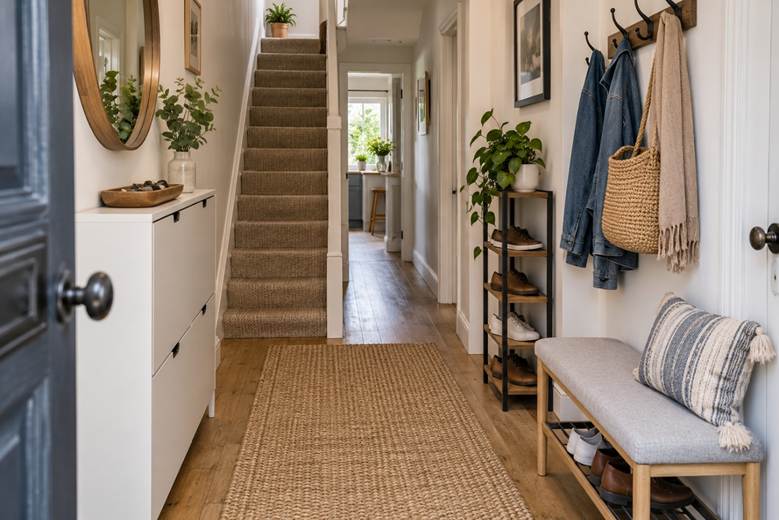
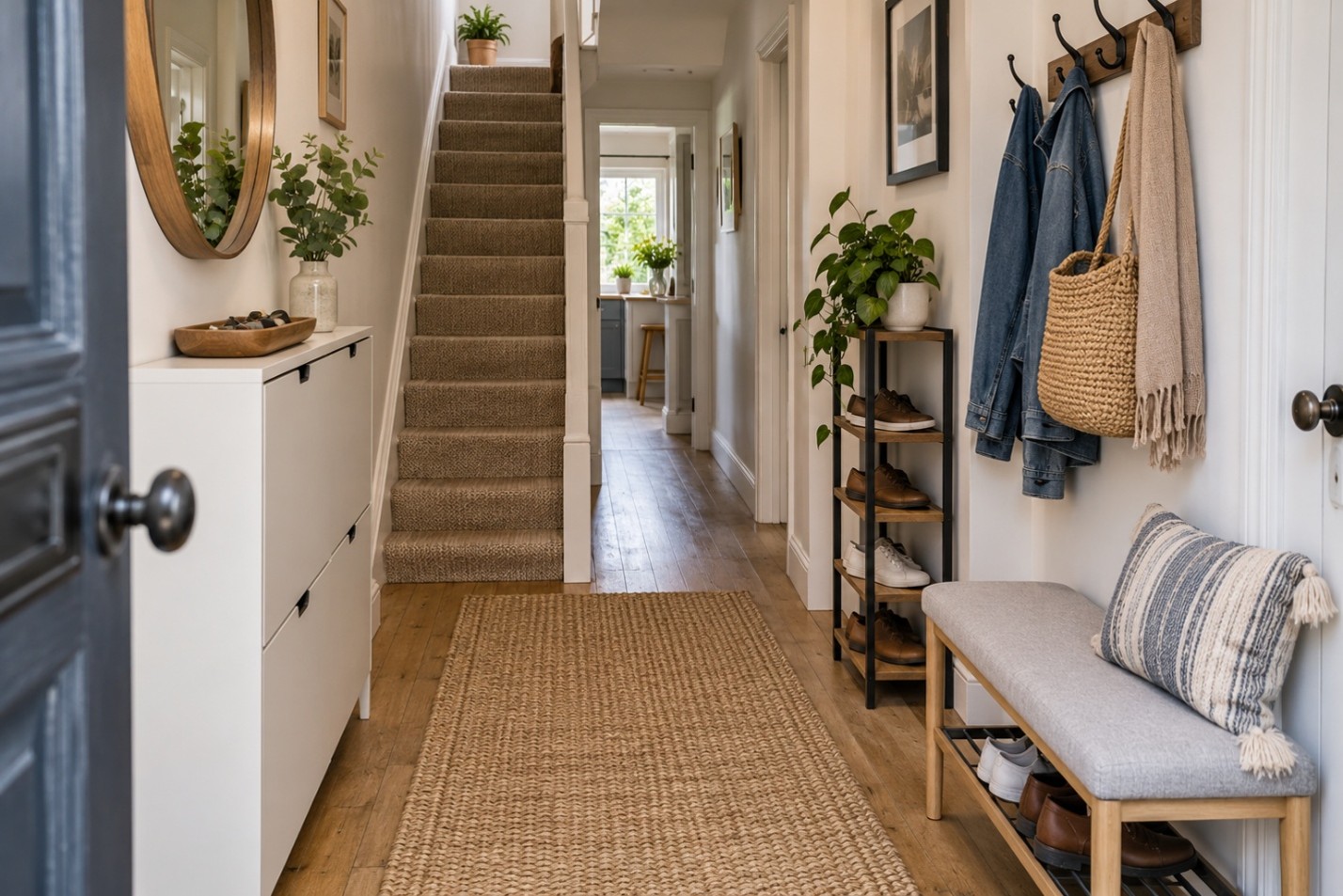
Shoes are often the largest source of hallway clutter. Open racks keep everyday pairs visible and allow air to circulate, making them practical for active households. Closed cabinets create a calmer appearance and can hide a larger mix of footwear, but internal dimensions should be checked for boots or larger sizes.
Stackable racks can grow with the household, while folding or extendable designs provide flexibility for renters. A bench with storage combines seating and organisation, which is useful for children or anyone who prefers to sit while putting on shoes. A carefully chosen hallway shoe storage solution should match the number and type of shoes used most often.
Use Vertical Space
When floor area is limited, walls can carry part of the workload. Hooks at different heights give adults and children accessible places for coats and bags. A narrow shelf above head height can hold baskets for seasonal accessories, while a wall-mounted organiser can keep post and keys from covering a console.
Avoid placing too many small items on open shelves. Repeated containers in a consistent material or colour create a more ordered appearance. Labelled baskets are particularly useful for gloves, hats, dog-walking equipment and reusable shopping bags.
Create a Simple Drop Zone
A drop zone is a small, deliberate place for items used when entering or leaving the home. It might include a tray for keys, a hook for a work bag and a container for post. The arrangement should be close to the door and easy to use with one hand.
A slim console table can support this routine where space allows. If the hallway is too narrow, a small wall shelf offers similar function without occupying much floor area. Keep decorative accessories limited so the surface remains useful.
Make the Hallway Feel Larger
Storage solves clutter, but visual choices can improve the sense of space. A mirror reflects light and provides a practical final check before leaving home. Consistent colours and closed storage reduce visual noise, while furniture raised on legs can make more of the floor visible.
Good lighting is equally important, particularly in entrances without a window. Combine a clear overhead light with warmer accent lighting where possible. Pale walls are not essential, but maintaining a simple palette can help separate the hallway from the objects stored within it.
Build a Routine That Keeps It Working
Even the best furniture will fail without a simple routine. Return shoes to their rack, empty the key tray and move post at a regular time. At the change of each season, rotate footwear and outerwear so the most useful items remain accessible.
A well-planned hallway does not need to be empty. It needs to make everyday movement easy and give essential belongings a reliable home. By measuring carefully and choosing storage around real habits, a small entrance can feel calmer, more welcoming and easier to maintain.
Frequently Asked Questions
What storage is best for a narrow hallway? Shallow shoe cabinets, slim racks, wall hooks and floating shelves preserve more of the walkway.
Is open or closed shoe storage better? Open storage offers visibility and ventilation; closed storage creates a tidier appearance. The best option depends on capacity, maintenance and available depth.
How can renters add hallway storage? Freestanding racks, over-door hooks, baskets and folding units can improve organisation without permanent alterations.
How often should hallway storage be reorganised? A quick weekly reset and a seasonal rotation usually prevent everyday items from building up.