




















































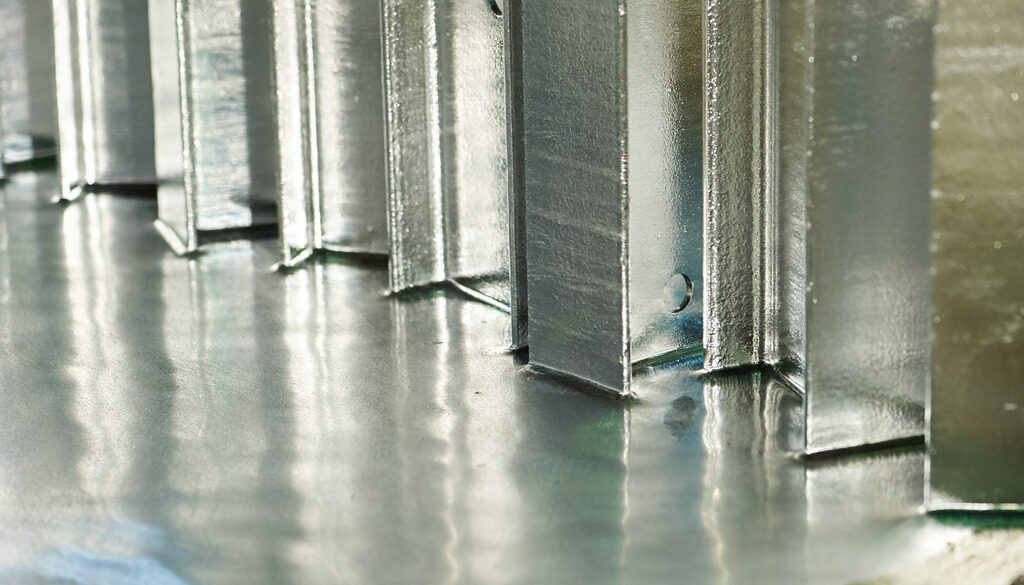
Steel becomes galvanized during the hot-dip galvanizing process, where it is coated with zinc to help prevent rust. It is used in various construction and industrial projects for its strength and corrosion resistance. However, not all galvanizing techniques are the same. Hot-Dipped Galvanized vs Galvanized should not be used interchangeably because the terms do not always describe the same process. These differences in technique can influence the coating thickness, durability, appearance, and even the price of each method.
Understanding the differences between Hot-Dipped Galvanized and Galvanized is extremely important in helping a buyer, designer, or manufacturer choose the proper protection for their steel.


Hot Dipped Galvanized vs Galvanized
What Is Galvanized Steel?
Galvanized steel is the same as regular steel with an added coating of zinc. Zinc is effective as a barrier between the steel and the surrounding environment, but it also protects the steel if the environment comes into contact with the steel and causes damage.
There are multiple methods of galvanizing steel, including hot-dip galvanizing, electro-galvanizing, and the application of other zinc coatings. For businesses looking for reliable galvanizing solutions, a Hot Dip Galvanizing Equipment manufacturer – Fukang can provide specialized equipment designed for efficient and consistent coating processes.
Because the term “galvanized” is a general term, identifying the process used for each method of galvanizing is important when comparing different galvanizing techniques.
What Is Hot-Dip Galvanizing?
The hot-dip galvanizing coating process involves cleaning steel, then submerging it in a bath of molten zinc at a high temperature. As the steel is submerged in the bath, the zinc is fused to the steel through a reaction with the iron.
A series of zinc iron alloy layers are produced in this process. An outer layer of pure zinc is created. This results in a very strong and durable coating.
There are typically several stages in the hot-dip galvanizing process. These include:
Steel is cleaned and grease is removed.
Rust and scale are removed by pickling.
The surface is prepared by fluxing.
Immersion in molten zinc.
Removal of excess zinc.
Cooling and inspection.
Good surface preparation is essential. Poor surface preparation can result in coating defects and weak areas.
What Does the Term “Galvanized” Mean?
Relative to what others may mean by “galvanized”, what does this term mean to you?
The term “galvanized” is relatively unspecific. Different processes can result in a steel part that has a zinc coating.
A term that is relatively synonymous is “electro-galvanized” where the zinc is applied to the base material by an electric current. This results in a thinner and more uniform coating than hot dip galvanizing.
Hot-Dipped vs Electro Galvanized: Key Differences
There are several differences such as coating process, durability, appearance, and typical application.
1. Coating Process
Coatings produced by hot-dip galvanizing are physically immersed in a bath of molten zinc.
Coatings produced by the electro-galvanizing process are produced by the application of an electric current and results in zinc being deposited on the steel surface.
2. Coating Thickness
Hot-dip galvanized coatings are generally much thicker than most electro galvanized coatings.
The required coating thickness depends on the type of steel, specification, and intended end use. Buyers should verify the standard and not only general descriptions.
3. Resistance to Corrosion
Hot-dip galvanized steel exhibits excellent resistance to corrosion. The coating provides excellent protection to steel in rain, humid, and other aggressive environments.
Smaller galvanized coatings can provide resistance to corrosion. These coatings can be useful in more controlled environments where heavy resistance to corrosion is not necessary.
4. Resistance to Aging
Hot-dip galvanized steel has a metallurgical bond with the steel substrate, which provides excellent resistance to aging and durability.
It can provide protection from abrasion that occurs during handling and service. As such, hot-dip galvanized steel is an excellent choice for high-performance and industrial applications.
5. Aesthetics
Hot-dip galvanized steel has a bright, textured zinc pattern, and electro-galvanized steel has a smooth, uniform appearance, and is also excellent for applications where a smooth finish and is important.
The appearance does not indicate quality of protection. Protection should be determined by the coating specification and its end use.
Comparison at a Glance
| Feature | Hot-Dip Galvanized | Other Galvanized Methods |
| Main process | Immersion in molten zinc | May use electrochemical or other methods |
| Coating | Usually thicker | Often thinner |
| Corrosion protection | Strong | Depends on coating type |
| Surface | May be textured or patterned | Often smoother |
| Durability | High for demanding applications | Varies by process |
| Typical use | Construction, infrastructure, industrial products | Indoor products, automotive parts, and other applications |
Where Is Hot-Dip Galvanized Steel Used?
Hot-dipped galvanized steel is used in situations where long-term protection from corrosion is required and includes the following examples.
Structural steel
Guardrails
Steel towers
Fencing
Bridges
Utility poles
and components
Outdoor equipment
Fasteners
Agricultural equipment
Industrial structures
When to Use Hot-Dip Galvanized Steel
Hot-dipped galvanized steel has many advantages. It provides a zinc coating with a longer service life and can protect more complex structures. The coating can also cover surfaces which are otherwise harder to paint.
There are of course drawbacks. Hot-dip galvanized steel is not always the perfect solution for every need. The drawbacks would of course include size, design, trade off between cost and protection, and the chemistry of the steel.
Choosing Galvanizing Equipment
For manufacturing companies who have their own galvanizing plant, having reliable equipment is the key. Equipment for hot-dip galvanizing would include a line with pretreatment tanks, heating, zinc kettles, flux, and cooling systems as well as other process controls.
Equipment attributes will impact efficiency of production, consistency of coatings, safety and operating cost. An important consideration for a new galvanizing line is the selection of an experienced supplier.
Fukang, a manufacturer specializing in Hot Dip Galvanizing Equipment, is able to construct equipment and produce solutions geared toward different types and specifications of steel.
How to Choose Galvanized Steel
When selecting a galvanized product, the environment the product will be in should be considered. Higher levels of corrosion protection are needed for products that are going to be outdoors and exposed to the elements.
Consideration should be made for the desired coating thickness, the required service life, appearance, mechanical requirements, and applicable standards.
The supplier should be asked what method of galvanizing is being used. The term galvanized indeed describes a process, but does not describe the quality or performance of the coating.
Conclusion
The main difference between hot-dipped galvanized and the rest of the galvanized steels is the process and performance of the coatings. Hot-dip galvanizing uses molten zinc and creates a thicker, more protective coating. The other methods of galvanizing result in thinner, smooth coatings and are better suited for different applications.
Hot-Dipped Galvanized versus Galvanized also does not have a one-size-fits-all answer for every situation. The best choice for the project is based on factors such as the Design, Budget, environment, appearance and level of corrosion protection required.
Hot-Dip Galvanizing is an excellent option for outdoor and industrial applications that require protection. The other Galvanizing methods become better alternatives for different requirements of coatings, appearance, etc. Understanding both options helps both manufacturers and buyers make a better technical decision.








![How Low is Bitcoin Expected to Drop? [Experts Predict]](https://todaynews.co.uk/wp-content/uploads/2022/06/bitcoin-1-120x86.jpg)