



















































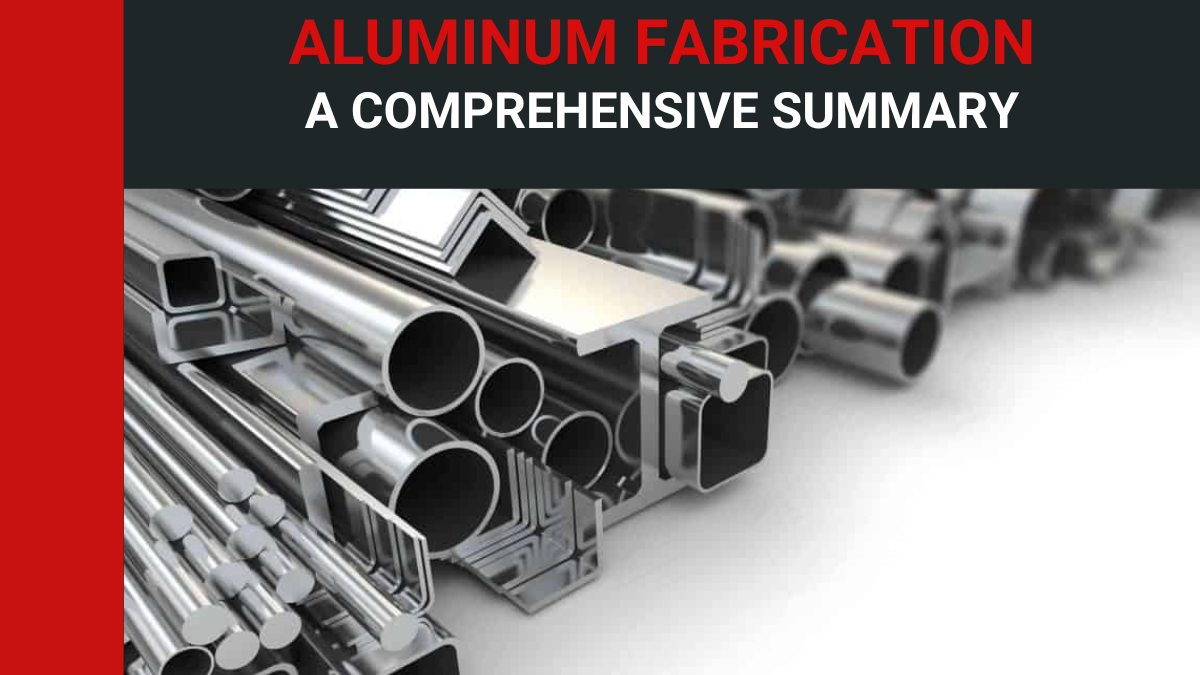
Aluminum fabrication cuts, shapes, forms, and assembles thin sheet aluminium into complete products or parts. A wide range of industries, including marine, aerospace, medical, and construction, use these parts for their high strength-to-weight ratio, corrosion resistance, recyclability, and workability.
Understanding why aluminum fabrication is so widely adopted and knowing the different options lays the foundation for optimizing this non-ferrous metal.


Read on for more details.
What is Aluminum Fabrication?
Aluminum fabrication is the application of cutting, forming, machining, and joining techniques to transform raw aluminum into finished items. This enables the use of aluminum’s excellent natural properties in various industries.
With advanced precision engineering and aluminum fabrication tools, sheet metal services produce parts of different forms, sizes, and shapes for various industries. As will be discussed shortly, they utilize several types of methods, often in combination.
The Advantages of Aluminum Fabrication
Aluminum’s high thermal conductivity, corrosion resistance, and strength-to-weight ratio are some of the reasons it finds use in so many areas. The aluminum sheet material is also very easy to work with, particularly considering its superior recyclability and machinability.
These properties translate to even more advantages, such as cost savings and minimal environmental impact.
The Limitations of Aluminum Fabrication
Fabricating aluminum and using its parts is undoubtedly a fulfilling experience, but challenges such as high raw material cost, relatively low tensile strength, and thermal expansion issues can make one have second thoughts.
An expert in aluminum fabrication services can always offer the necessary guidance for each project to ensure optimal benefits from different aluminum grades.
Is Aluminium Fabrication Expensive?
If you are comparing aluminum fabrication services with steel fabrication, in the short term, aluminum fabrication can be relatively expensive. However, the long-term costs tend to be lower due to corrosion resistance, low maintenance, and low weight.
The overall sheet aluminum cost depends on thickness, surface finish, grade, and complexity of the work.
Grades of Aluminum for Fabrication
The most popular grades for aluminum fabricated products are 2024, 6061, 6063, 7075, and 5052. Each of these grades has a unique combination of properties. Some may work for a certain project, but be undesirable for another one.
For instance, 6063 aluminum has the formability and surface finish characteristics required in architectural projects, while 6061 aluminum, with its corrosion resistance and high strength-to-weight ratio, suits automotive parts and frames.
Here is a rundown of reasons one may choose each of these grades for fabrication.
6063 aluminum: High corrosion resistance and smooth surface finish, ideal for architectural applications
6061 aluminum: Strong, corrosion-resistant, and weldable. It is suitable for automotive parts and structures.
2024 aluminum: Excellent fatigue resistance and high strength-to-weight ratio. The alloy is ideal for aerospace and precision engineering parts.
5052 aluminum: It is highly formable, corrosion-resistant, and strong, thus suitable for marine structures.
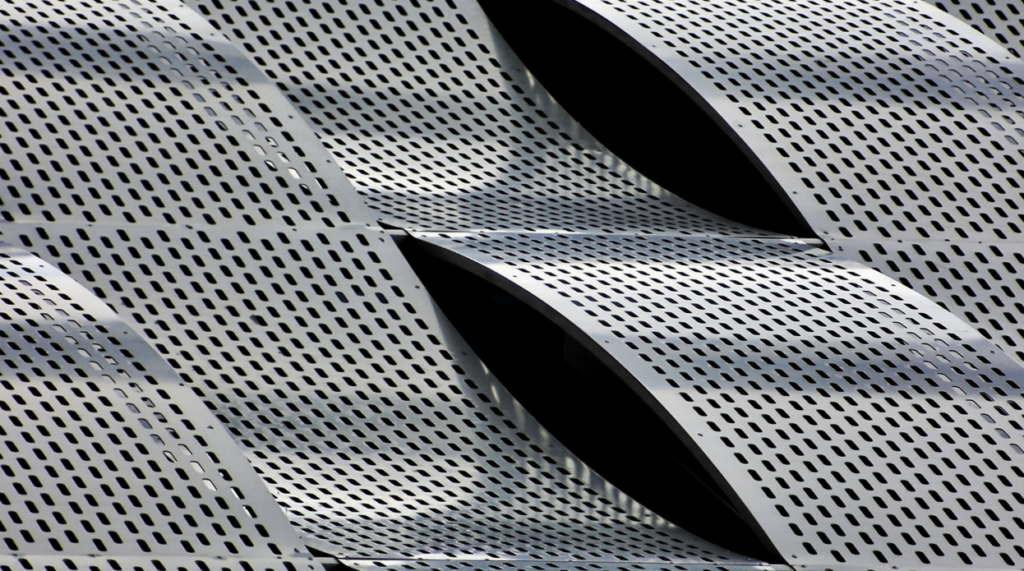
Formable 5052 aluminum sheets
7075 aluminum: The alloy offers fatigue resistance, strength, and hardness, making it suitable for aerospace and other high-performance areas.
The Main Methods of Aluminum Fabrication
Several fundamental manufacturing processes are applied in aluminum fabrication, and can be broadly classified as cutting, joining, forming, and surface finishing methods.
The most notable techniques include CNC machining, stamping, welding, and extrusion. Manufacturers have a wide range of technologies to choose from for the best aluminum fabricated products.
A key point is that each fabrication method has its pros and cons, which can greatly impact project results.
What is the Best Aluminum Fabrication Process for High-Precision Parts?
The best fabrication process for aluminum high-precision parts is CNC machining. The method’s consistency, accuracy, and smooth surfaces for different geometries is unbeatable. Aerospace, medical, and other core industries prefer this process for these reasons.
Aluminum Fabrication Steps
Aluminum fabrication starts with material preparation, followed by cutting, shaping, joining, assembly, and surface treatment. Quality control and packaging finalize the process before the aluminum fabricated products are sent to the customer.
Step 1: Material Preparation
Raw aluminum stock must be deburred and cleaned before the fabrication process can start. This step removes impurities and sharp edges on the stock.
Cleaning aluminum oxide is a critical part of this step, helping ensure quality bonding for coating and welding.
Step 2: Cutting and Shaping
Cutting the aluminum sheets into desired sizes and shaping them is an important step in preparation for welding and other joining methods. The cutting technologies can be categorized as thermal, hydraulic, and mechanical.
Sheet metal thickness aluminum is one of the major considerations when choosing a cutting technique.
Thermal Cutting Methods: Options are laser cutting, plasma cutting, and oxygen cutting
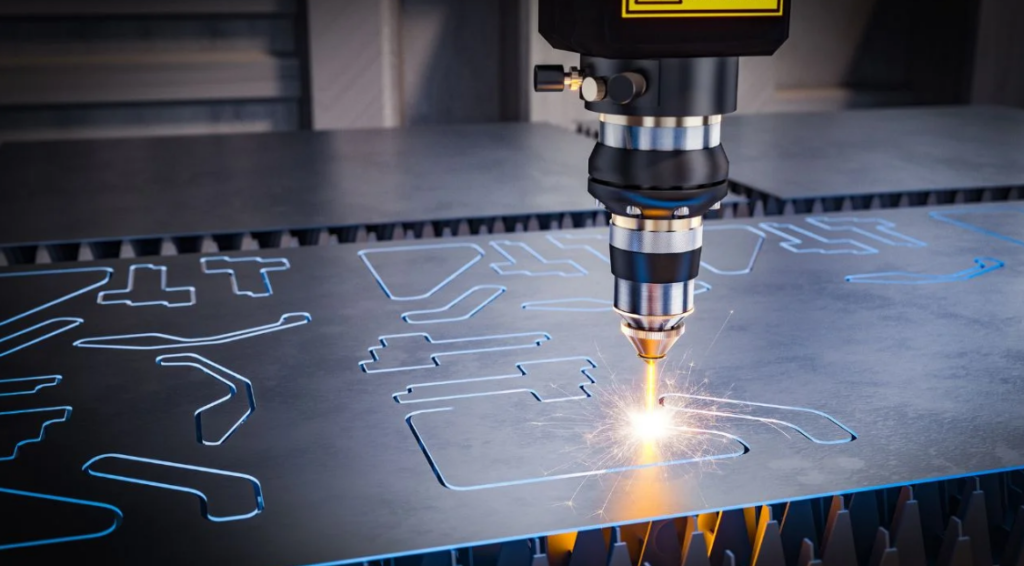
Laser cutting
Hydraulic Cutting Methods: Examples of these are water jet cutting and abrasive water jet cutting
Mechanical Cutting Methods: The list includes punching, shearing, sawing, and CNC machining
Step 3: Joining and Assembly
The third step of aluminum manufacturing entails joining and assembling the aluminum pieces to make robust components. Skilled workers using advanced machinery apply both permanent and non-permanent connections.
Permanent methods are mostly welding technologies such as spot welding, MIG welding, and TIG welding. Non-permanent techniques include bolts, screws, and rivets.
Step 4: Surface Treatment and Finishing
This step enhances the aesthetics, functionality, and protection of the fabricated product. The procedures applied here are powder coating, anodized coating, grinding, polishing, and others.
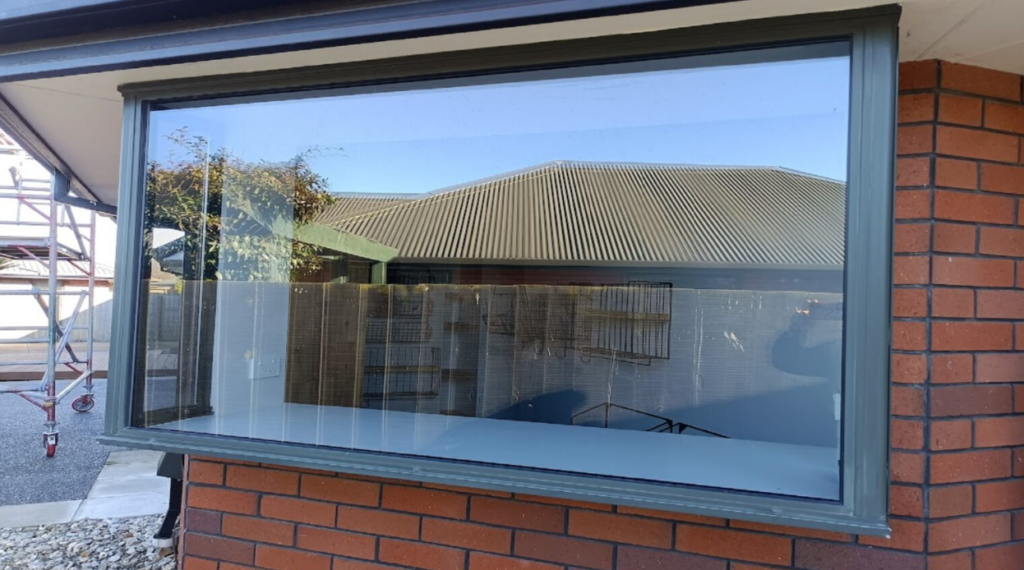
Powder-coated aluminum window frame
Step 5: Quality Control
Next, aluminum manufacturing involves thorough inspection and quality control, which are critical activities to ensure that the parts or assemblies comply with standards and customer requirements.
Step 6: Packaging
For packaging, the ready aluminum components are carefully wrapped for storage or transportation. Throughout these steps, the sheet metal services demonstrate accuracy, attention to detail, and customer-centricity.
Common Aluminum Fabrication Applications
The unique blend of corrosion resistance, strength-to-weight ratio, conductivity, and workability, among other properties, makes aluminum fabricated products popular in these and other areas.
- Automotive – Body panels, transmission housings, engine parts
- Aerospace – Landing gear, wings, frames
- Medical – Surgical equipment, imaging machines
- Electronics – Heat sinks, enclosures
- Consumer goods – Furniture, kitchenware
- Construction – Facade, handrails, walls, window frames
- Defense and military – Aircraft parts, vehicle parts, tactical gear
- Marine – Decks, hulls, masts
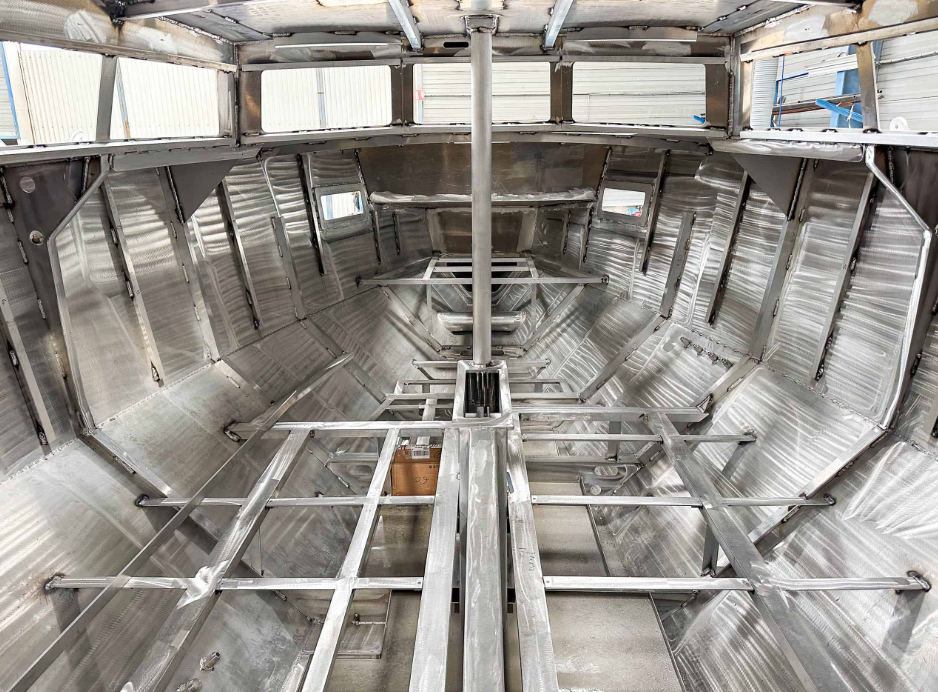
Aluminum boat hull
In Conclusion
Whether you are undertaking your first aluminum alloy fabrication project or finetuning what’s already in place, the preview provided here can make a big difference. Partnering with a seasoned aluminum fabrication services provider is the crowning touch.
Let ProleanTech bring your vision and aspirations to life.