



















































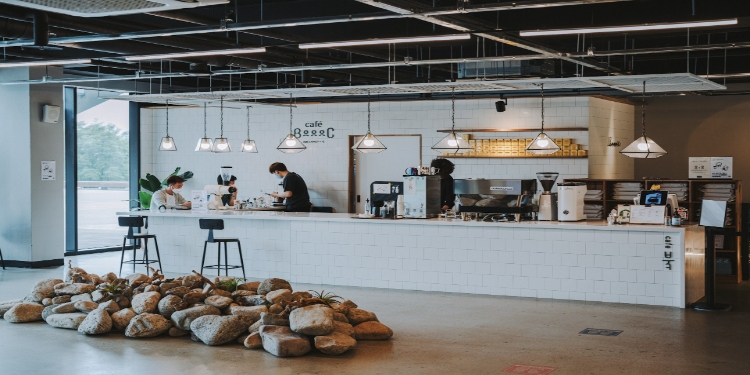
Running a busy coffee shop means every second at the counter counts, and the wrong POS system can quietly cost you more than you’d expect. The best POS systems for cafes do more than ring up orders. They tie together inventory, payment processing, and staff management without forcing you into expensive hardware upgrades every two years. After reviewing dozens of platforms across real operator feedback, pricing structures, and feature depth, this guide breaks down five options worth your attention.
The shortlist methodology


Each option was assessed using publicly available sources: user reviews, feature pages, product listings, and case studies pulled from review directories and official websites. Only platforms with a proven track record serving food and beverage or hospitality businesses made the final cut.
→ See the full research breakdown
- BLogic Systems – Best for integrated POS with built-in payment processing and offline reliability
- TouchBistro – Best for restaurants and cafes needing a customizable iPad-based POS
- Rezku – Best for independent coffee shops and bars wanting enterprise features at accessible pricing
- Epos Now – Best for multi-location cafe operators managing centralized reporting
- GloriaFood POS – Best for small to mid-sized food service businesses wanting transparent, low-cost pricing
Why POS Systems Are More Than a Line Item
Picking a POS system for your cafe feels like a one-time decision, but it shapes how your business runs every single day. The total cost of ownership, which includes hardware, software subscriptions, and per-transaction fees, adds up fast and often surprises operators who only compared the monthly sticker price.
Beyond cost, there’s the question of fit. A system that works fine for a 10-seat neighborhood cafe may struggle the moment you open a second location or add online ordering.
Getting this right from the start means faster checkout speeds, fewer system failures during your morning rush, and staff who actually know how to use the tools in front of them.
The platforms that consistently deliver are the ones built with hospitality operations in mind, not general-purpose tools updated to cover every industry at once.
Quick-Look Comparison: 5 Best POS Systems
Note: All data in this table is sourced from review platforms and the official websites of the listed companies.
| Company Name | Years Operating | Headquartered In |
| BLogic Systems | Since 2010 | San Jose, California, USA |
| TouchBistro | Since 2010 | Toronto, Canada |
| Rezku | Since 2012 | Sacramento, California |
| Epos Now | Since 2011 | Norwich, UK |
| GloriaFood POS | Since 2013 | Bucharest, Romania |
- BLogic Systems – Best for Integrated POS With Built-In Payment Processing
What Problems Does BLogic Systems Solve?
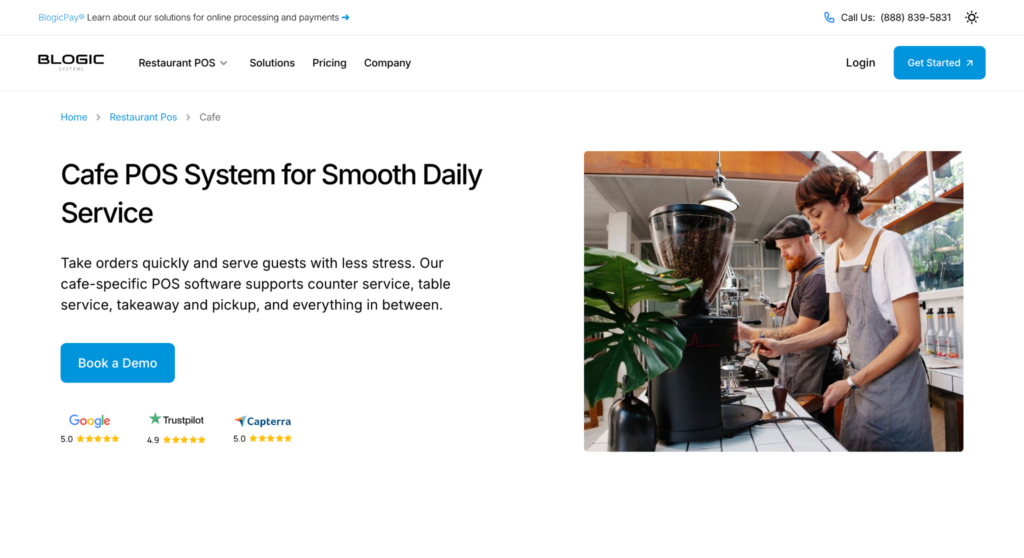
BLogic Systems tackles one of the most frustrating parts of running a cafe: managing a POS, a separate payment processor, and a delivery platform that don’t always talk to each other cleanly. Their platform rolls POS software, integrated payment processing through BlogicPay®, inventory management, employee scheduling, and delivery integrations into one dashboard. The offline capability is a real differentiator. Even when the internet goes down during a busy Saturday morning rush, the system keeps processing transactions without skipping a beat.
Where Does BLogic Systems Win for POS Systems?
BLogic Systems pulls everything under one roof, from payments to staff scheduling to delivery, which cuts out the real operational headache of juggling disconnected tools. Their optional 0% credit card fee program is the kind of detail that stands out for operators watching every margin closely (not many POS providers offer that, and it adds up).
Real-World User Take:
Operators consistently point to the 24/7 human support as the thing that keeps them loyal. Nobody wants to troubleshoot a frozen POS terminal on a Sunday morning with a chatbot. Dedicated support for getting started also comes up often in reviews, which suggests BLogic Systems puts real weight behind getting customers set up correctly, not just getting them signed up.
- TouchBistro – Best for Customizable iPad-Based Restaurant POS
What Problems Does TouchBistro Solve?
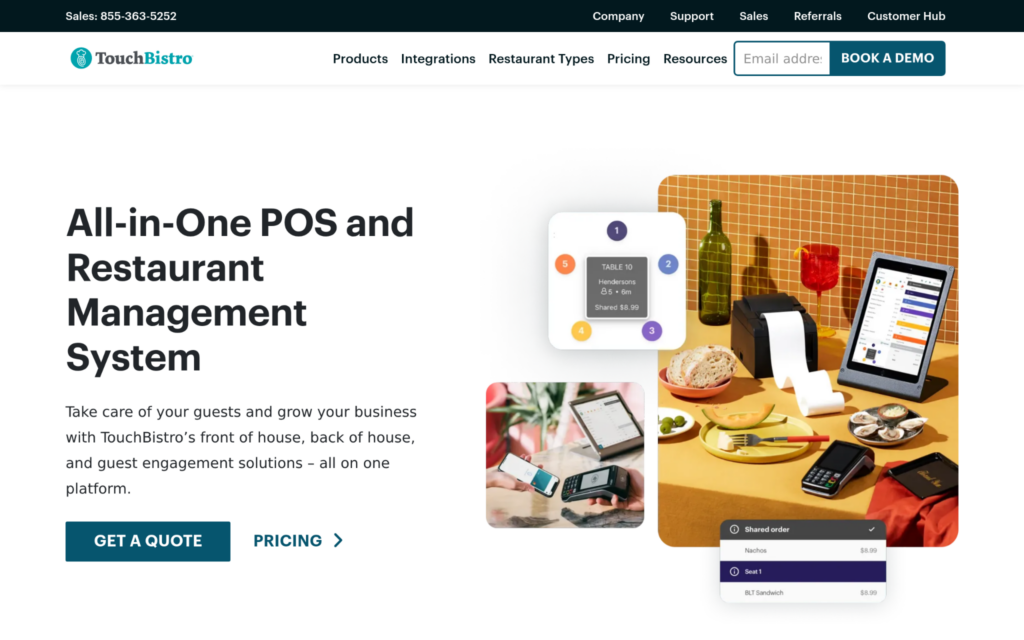
TouchBistro was built for food service, and that focus shows. The platform covers tableside ordering, payment processing, inventory management, labor tracking, online ordering, kitchen display systems, and reservations, all from an iPad setup that cafe staff tend to pick up quickly. The hybrid architecture is worth mentioning separately. Even if your internet connection drops, operations continue without interruption, which matters enormously for high-volume cafes where extended outages aren’t an option.
Where Does TouchBistro Win for POS Systems?
TouchBistro’s modular pricing model means cafes can start with the core POS (beginning around $69 per month) and add features as the business grows, without paying for tools they don’t need yet. That kind of flexibility is rare for a platform also serving 29,000+ restaurants across more than 100 countries.
Real-World User Take:
The consistent theme across reviews is how well the system handles customization. Operators mention being able to adjust menu layouts, payment flows, and reporting without needing technical help. The market-leader recognition is well-earned based on what real users describe, though some note the cost can climb once add-ons stack up (think enterprise pricing territory if you want the full suite).
- Rezku – Best for Independent Cafes Wanting Enterprise-Grade Features
What Problems Does Rezku Solve?
Rezku was founded by a restaurateur, which means the product was designed by someone who’s actually stood behind a counter during a lunch rush. The platform covers point of sale, online ordering, guest reservations, employee management, inventory tracking, and kitchen management tools. What separates Rezku from larger vendors is the pace of development. They ship over 300 new features annually, and everything, including development and customer service, stays in-house with US-based staff. That’s a meaningful commitment for independent operators who can’t afford slow support responses.
Where Does Rezku Win for POS Systems?
Rezku gives independent coffee shops and bars access to features that typically come with enterprise pricing, without the enterprise price tag or the enterprise wait times for support. The fully in-house operation means feedback from real operators actually reaches the people building the product.
Real-World User Take:
Rezku earns five-star reviews across multiple platforms, and their A+ BBB rating isn’t just a badge. Users frequently mention the quality of support and how quickly issues get resolved. The 2018 Rising Star Award reflects what early adopters already experienced: a team that moves fast and listens closely.
- Epos Now – Best for Multi-Location Cafe Operators
What Problems Does Epos Now Solve?
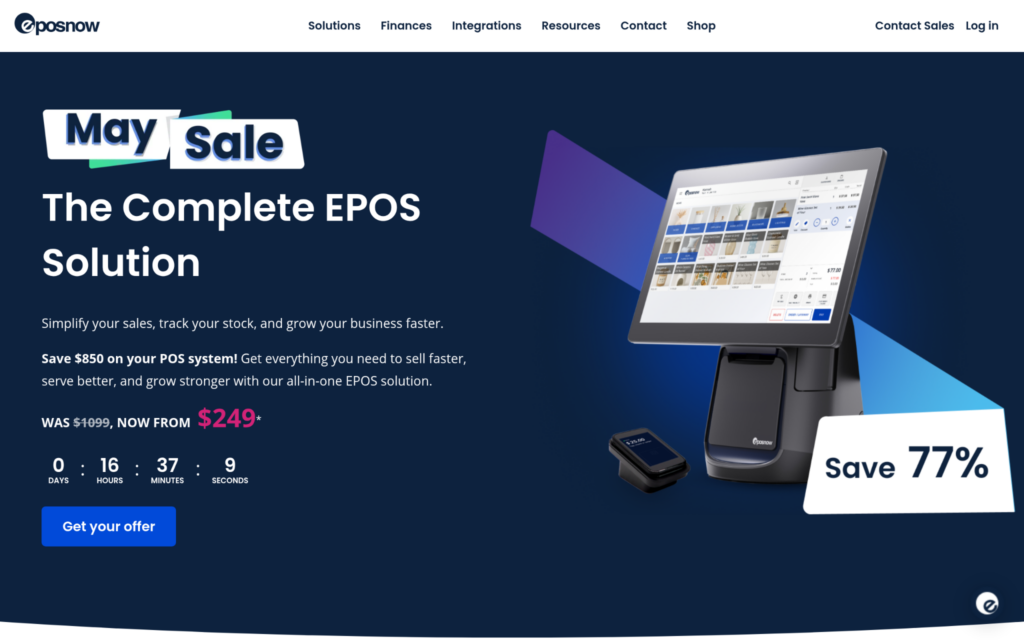
Epos Now handles the challenge that grows with your cafe business: managing multiple locations without losing visibility across all of them. Their platform gives operators remote access to sales data, inventory levels, and transaction records from anywhere. With over 90,000 merchant locations across 11 countries, they’ve proven the ability to scale. The app store with 130+ integrations means cafes can connect their existing accounting, payroll, or eCommerce tools without ripping everything out and starting over.
Where Does Epos Now Win for POS Systems?
For cafe groups expanding beyond a single location, Epos Now’s centralized management tools reduce the reporting headaches that come with running multiple terminals and staff teams. Their AI support agent, Sidekick, has reportedly cut support demand by up to 70%, which keeps day-to-day friction low.
Real-World User Take:
Users tend to point to the flexibility of the hardware compatibility and the breadth of integrations as the reasons they stay. Being named the 24th fastest-growing UK tech company in 2023 suggests momentum that usually translates into continued product investment (not cheap, but worth it for operators who need serious multi-site capability).
- GloriaFood POS – Best for Budget-Conscious Small Cafe Operators
What Problems Does GloriaFood POS Solve?
GloriaFood POS handles the full range of restaurant operations, including table service, quick service, bar operations, multiple payment types, online ordering, and analytics, at a price point that doesn’t punish smaller operators. At $49 per month with a free POS starter kit and no commission taken from online orders, the pricing model is unusually transparent. Oracle acquired the platform in 2021, which brings infrastructure-level reliability behind what still feels like an accessible, straightforward system.
Where Does GloriaFood POS Win for POS Systems?
The no-commission online ordering is where GloriaFood POS really earns attention for cafes that rely on pickup and delivery revenue. Pair that with built-in QR code ordering, website widgets, and offline mode, and you get a well-rounded system at a price that leaves margin intact.
Real-World User Take:
Customers who’ve used the platform for several years consistently point to reliability and cost-effectiveness as the top reasons they stick around. The ordering interface gets specific praise for being easy for customers to use, which directly reduces order errors and keeps ticket accuracy high (and that’s why long-term users mention it unprompted).
How the Top Contenders Were Selected
Establishing Your Starting Dataset
The research started by pulling together a broad list of POS platforms with demonstrated presence in the cafe and restaurant technology space. Sources included major software review directories, food service technology publications, and official product websites. The goal at this stage was quantity, capturing enough candidates to make meaningful comparisons rather than defaulting to the most-advertised names.
Qualifying Applications Through Evaluation
From that initial pool, options without verifiable track records or consistent reviews were removed. Review patterns were analyzed across multiple platforms rather than relying on ratings from a single source. Platforms that showed strong scores in one place but thin or inconsistent coverage elsewhere didn’t make the cut.
Claims Substantiated by Data
Every feature claim and case study referenced by a vendor was cross-checked against what actual operators described in reviews. When a company said their offline mode was reliable, that claim was checked against user accounts of real outages and real outcomes. Gaps between marketing language and operator experience were treated as red flags.
Awards, Mentions, and Industry Voice
Recognition from credible third-party sources carried weight during the evaluation. Awards, mentions in industry publications, and documented product achievements, like Rezku’s Rising Star Award or Epos Now’s Queen’s Awards for Enterprise Excellence, were factored in as signals of sustained quality. These weren’t treated as proof on their own, but they reinforced patterns already visible in the user data.
POS Systems Case Files
Each shortlisted company was evaluated for the depth of their food service-specific content, including dedicated cafe or restaurant service pages, documented operator results, and verified reviews from businesses that matched the target reader’s profile. Platforms with thin or generic content, regardless of overall reputation, were deprioritized in favor of those with clear, documented experience serving cafes and hospitality operators.
Decision Factors When Picking POS Systems
Choosing the right POS system for your cafe comes down to more than monthly price. The factors below are the ones that separate a system that supports your growth from one that just gets you through today’s orders.
- Industry and Domain Experience: Look for platforms built with food service in mind. General-purpose tools often miss the nuances of table turns, modifiers, and rush-hour transaction speeds.
- Features and Service: Inventory tracking, staff scheduling, kitchen display integration, and online ordering matter as much as the checkout screen itself. Match the feature set to how your cafe actually runs.
- Pricing Structure: Account for hardware, software, processing fees, and add-ons together. The monthly subscription price is rarely the full picture, and understanding total cost of ownership upfront avoids painful surprises later.
- Results Measurement: Good POS systems give you real data on sales trends, inventory shrinkage, and staff performance. If the reporting is too thin to act on, the system is working against you.
- Industry Knowledge and PCI DSS Compliance: Protecting customer payment data isn’t optional. Any platform under consideration should support PCI DSS compliance standards and handle payment security without putting that burden entirely on the operator.
The Takeaway
Cafes and coffee shops run on speed, reliability, and tight margins. The best POS systems close the gap between a smooth operation and a stressful one by handling payments, inventory, and staff management in one place. BLogic Systems, TouchBistro, Rezku, Epos Now, and GloriaFood POS each earn their place here for different reasons and different operator profiles. As contactless payments and online ordering keep growing, picking a platform built to grow with you matters more than ever.

David Prior
David Prior is the editor of Today News, responsible for the overall editorial strategy. He is an NCTJ-qualified journalist with over 20 years’ experience, and is also editor of the award-winning hyperlocal news title Altrincham Today. His LinkedIn profile is here.