


















































AI interior design promises a fully furnished room from a single phone photo. I pointed MeltFlex AI at my own beige rental, went in trying to catch it out, and walked away with a shopping list instead of a mistake.
By Hannah Whitfield, Consumer and Property, July 2026


Renting in Britain means you inherit somebody else’s magnolia walls, and furniture is more or less the only lever your tenancy agreement lets you pull. So before I spent anything on my flat, I ran it through MeltFlex AI, one of the new AI interior design apps that turns a photo of the room you already have into a photorealistic, fully furnished version in roughly twenty seconds. My test was narrow and a little hostile. Could it show me real furniture standing in my actual living room before the money ever left my account.
The timing is not accidental. The average person furnishing a first UK home now spends around £5,000, and even a bare one bedroom flat rarely comes in under £2,000 once you have covered a bed, a sofa and somewhere to eat. When the figure is that big, and you cannot repaint over a mistake or knock a wall through to fix a cramped layout, a render stops being decoration. It becomes the only dress rehearsal you get.
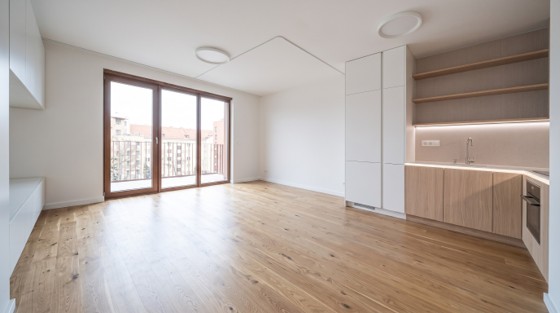
The starting point. A plain phone photo of my empty open plan flat, uploaded exactly as it came off the camera roll.
What it actually does
The tool is narrower than most AI apps, and I mean that as a compliment. You upload a photo of a space, empty or already furnished, tell it the room type, and pick a direction from a long list of styles. The usual suspects are there, modern, Scandinavian, industrial, coastal, mid century, and so are the trendier ones people genuinely search for, like Japandi and boho. A few seconds later the room comes back restyled.
What separated it from a generic image generator, in my testing, is that it mostly respects the room you gave it. My awkward radiator stayed exactly where the radiator is. The low sill under the window stayed put. The run of built in cupboards did not quietly disappear into somebody else’s flat. That is the whole difference between “here is a nice living room” and “here is your living room, redone,” and it is the only version of this that helps when you are about to spend real money on a space you are not allowed to renovate.
The same room after MeltFlex AI restyled it in a warm Scandinavian direction. Same window, same proportions, just furnished.
The sofa that quietly talked me down
Here is the feature I would actually mention to a friend. The furniture in the render is not dreamy AI stuff you can never track down. The pieces are tied to real products from shops like IKEA, Amazon and Wayfair, with prices and buy links attached. So the image is not a mood board. It is a shopping list with a photo of my own flat wrapped around it, and a running total at the bottom.
That total is what talked me out of the sofa I had half decided on. Dropped into my actual room, the big three seater I fancied looked bloated. It swallowed the floor and turned the space into a showroom. A lower, tighter modular piece sat far better and left room to actually walk past it. I would never have known that from a product page. I only knew because I could see the thing in the room it was going to live in. That is not a small point either. Industry figures put roughly 58 percent of furniture returns down to a single cause, the piece not fitting the space, and being able to see an item in context before buying cuts size related returns by around 71 percent. This kind of tool is built to kill exactly that mistake.
Where I stopped trusting it, honestly
My first upload was a lazy photo, taken at night under a yellow lamp with a drying rack still in shot. The render came back muddy, because the app could not cleanly tell the room from the clutter. Rubbish in, rubbish out is very real here. Once I reshot the space clean, straight on, in daylight, the quality jumped so much it felt like a different product. The problem is the app never warned me up front, and plenty of first time users will judge it on a weak render that was half their own bad photo.
The furniture matching comes with an asterisk too. The app is upfront that it shows you the exact piece “or a similar alternative,” so what you see is not always the precise item you can click and buy. It got me to the right kind of nightstand, not always to that nightstand. And the interface waves around a “4K” option, though the genuinely crisp output tops out closer to 2K in practice, with the sharper tier living on the paid plans. None of it is a dealbreaker, but I would rather the labels matched what actually lands on screen.
Because it is fast, you experiment. The same flat again, this time in a contemporary Italian direction, generated in seconds.
The measuring trap
It also takes small liberties with the space now and then, the kind of quiet inaccuracy that stings when you cannot easily return a bed frame. These renders are a genuinely good starting point for a direction. They are not a measured floor plan, and I still pulled out a tape measure before I ordered anything. Treat the picture as a mood, not a millimetre, and you will not get burned.
What it costs, and who should bother
You can start free, which is the honest way to try it, though the free allowance is thin, enough for a render or two rather than a whole project. Paid plans scale with how much you generate, running up to around £25 a month at the standard tier and roughly £50 for pro, with the higher plans unlocking the sharper renders. Prices shift by region, so check what shows up for you. If you are redoing one room exactly once, a monthly subscription is an awkward fit, and I wish there were a cleaner one and done option for people who just want a single project done well.
The verdict
After a week with it, my honest read is this. If you want a designer’s taste and someone to blame when the rug is wrong, MeltFlex AI does not replace that and never pretends to. But if you want to see your own rental in three styles before your tea goes cold, cheaply, with a real shopping list attached, it does that unusually well. AI interior design is quietly becoming a normal step before people furnish a home, and after using one properly I understand why. It did not decorate my flat for me. It stopped me from buying a sofa that would have made the room worse, and for a renter with one lever to pull, that turned out to be worth more than the render itself.
Written from a hands on test of MeltFlex AI on a private UK rental in July 2026. Cost figures were correct at the time of writing and vary by plan and region. Furniture return figures are drawn from published 2025 and 2026 ecommerce return studies.