

















































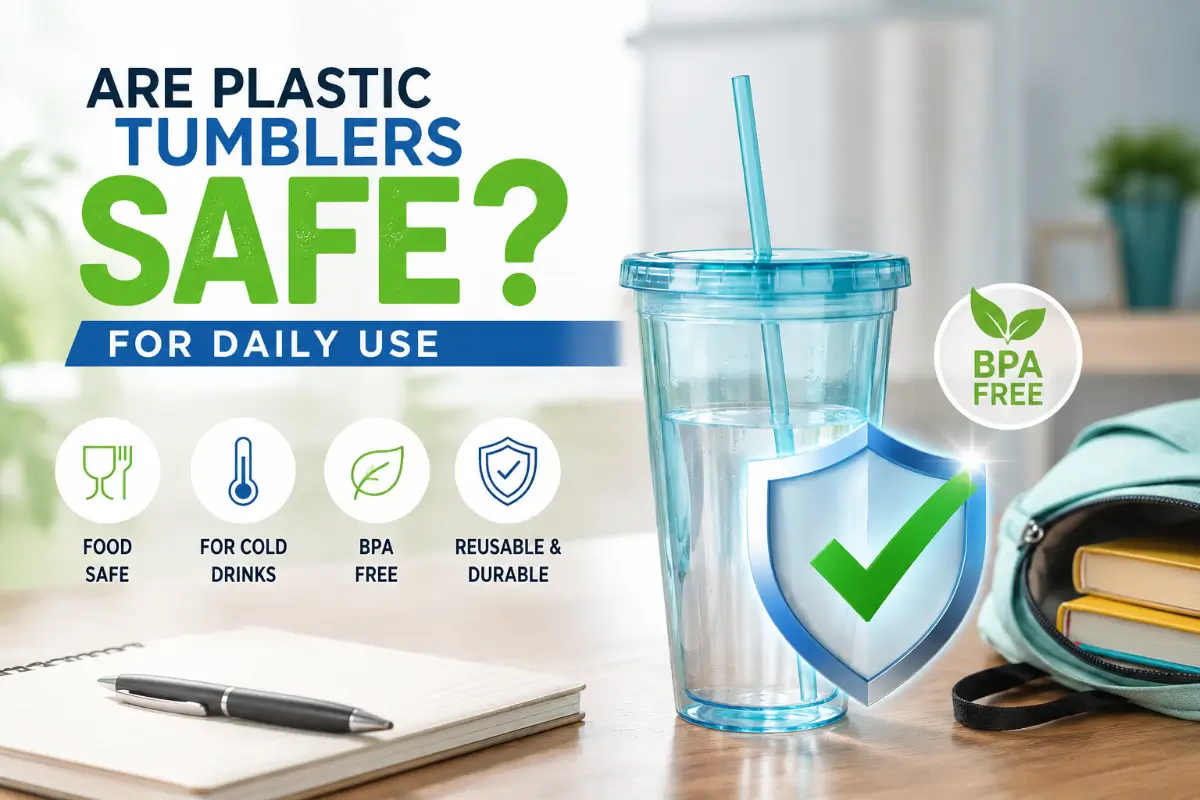
Plastic tumblers are commonly used in offices, schools, events, outdoor activities, and casual daily routines. They are lightweight, easy to carry, colorful, and often more affordable than many other drinkware options.
But one common question is: Are plastic tumblers safe for daily use?


The answer depends on the material, product quality, intended use, and how the tumbler is cleaned and maintained. Not all plastic drinkware is the same, so it is important to choose products designed for food-contact use and follow the supplier’s usage instructions.
Material safety matters because plastic tumblers come into direct contact with beverages. Food-contact materials are regulated differently by market. For example, the FDA states that its current perspective is that BPA is safe at the current levels occurring in foods for approved food-contact uses, while the European Commission adopted a ban on BPA in food-contact materials in December 2024.
Why Plastic Tumbler Safety Matters
Material safety is one of the first things people consider when choosing plastic drinkware. Since tumblers are used for water, juice, iced coffee, tea, or other drinks, the material should be suitable for drinking use.
For daily use, buyers often look for plastic tumblers that are:
- Made from food-contact materials
- BPA-free when required or preferred
- Suitable for the intended drink type
- Durable enough for repeated use
- Easy to clean
- Designed for the correct temperature range
This is especially important for businesses, schools, organizations, and event planners ordering drinkware in larger quantities.
What Makes a Plastic Tumbler Suitable for Daily Use
A plastic tumbler can be suitable for daily use when it is made with the right material and used as intended.
Good plastic tumblers should feel sturdy, not overly thin or fragile. They should be comfortable to hold, simple to clean, and suitable for the drinks they are designed to carry.
Some plastic tumblers are mainly intended for cold drinks, while others may support warmer beverages depending on the material and construction. The safest approach is to check product specifications before use, especially if the tumbler will be used for hot coffee, tea, or other warm drinks.
For businesses comparing different drinkware options, custom tumblers can include different materials and styles for daily use, events, gifting, and promotional needs.
Check Whether the Tumbler Is BPA-Free
BPA is one of the most common concerns around plastic drinkware. Many buyers prefer BPA-free plastic tumblers because they want added confidence when choosing products for daily drinking.
Regulatory positions can vary by region, so businesses should understand the market they are selling or distributing products in. In the U.S., FDA’s current public position supports the safety of BPA for currently approved uses in food containers and packaging; in the EU, the European Commission adopted a ban on BPA in food-contact materials following EFSA’s latest risk assessment.
For practical purchasing, many businesses still choose BPA-free drinkware to meet customer expectations and reduce concerns. When ordering plastic tumblers, it is helpful to ask the supplier about material details, food-contact suitability, and available product information.
Use Plastic Tumblers for the Right Drinks
Plastic tumblers are often used for cold drinks, iced coffee, water, juice, smoothies, and casual beverages. For these uses, they can be lightweight and convenient.
Hot drinks require more care. Not every plastic tumbler is designed for high-temperature liquids. If a tumbler is not intended for hot beverages, using it with very hot drinks may affect product performance, comfort, or shape.
Before using plastic tumblers for hot drinks, check:
- Temperature guidance
- Material type
- Lid design
- Whether the product is marked for hot beverage use
- Cleaning instructions
This is why stainless steel tumblers are often preferred for stronger insulation, while plastic tumblers are often chosen for lightweight and budget-friendly daily use.
Cleaning and Care Are Important
Even when the material is suitable for daily use, cleaning still matters. A tumbler that is not cleaned properly may develop odors, stains, or residue.
Before use, check whether the tumbler is dishwasher-safe or should be hand-washed. Lids and straws may need extra attention because small parts can collect residue.
Basic care tips include:
- Wash before first use
- Clean after each use
- Dry fully before storage
- Avoid using damaged or cracked tumblers
- Follow the supplier’s care instructions
- Replace the tumbler if it becomes heavily scratched or worn
Good care helps extend the product’s usable life and keeps it more suitable for daily routines.
When Plastic Tumblers Are a Practical Choice
Plastic tumblers are practical when lightweight handling, color options, affordability, and quantity matter.
They are especially suitable for:
- Schools and student activities
- Outdoor gatherings
- Community events
- Casual promotions
- Sports days
- Large-volume giveaways
- Budget-friendly drinkware programs
For businesses and organizations, custom plastic tumblers can be useful when the goal is lightweight, easy-to-distribute, and customizable drinkware for everyday or group use.
They may not be the best choice for every drinkware need, especially when strong insulation or a premium gift feel is required. But for casual daily use, cold drinks, and large-quantity distribution, plastic tumblers can be a practical option.
What Businesses Should Check Before Ordering Plastic Tumblers
For business orders, safety and usability should both be considered.
Before placing an order, businesses should check:
- Material information
- BPA-free options
- Food-contact suitability
- Intended drink temperature
- Lid and straw options
- Printing method
- Order quantity
- Cleaning guidance
- Target audience and use case
Plastic tumblers should be selected based on the actual use case rather than treated as a one-size-fits-all product. A school activity, outdoor gathering, office program, and casual giveaway may all require slightly different sizes, lids, colors, or printing methods.
Final Thoughts
Plastic tumblers can be safe and practical for daily use when they are made from suitable materials, used for the right beverages, and cleaned properly.
The most important points are to check material safety, confirm whether the tumbler is BPA-free if that matters to your audience, follow temperature guidance, and choose a product designed for repeated use.
For businesses, schools, events, and organizations, plastic tumblers can be a useful drinkware option when affordability, portability, color variety, and quantity are important.