



















































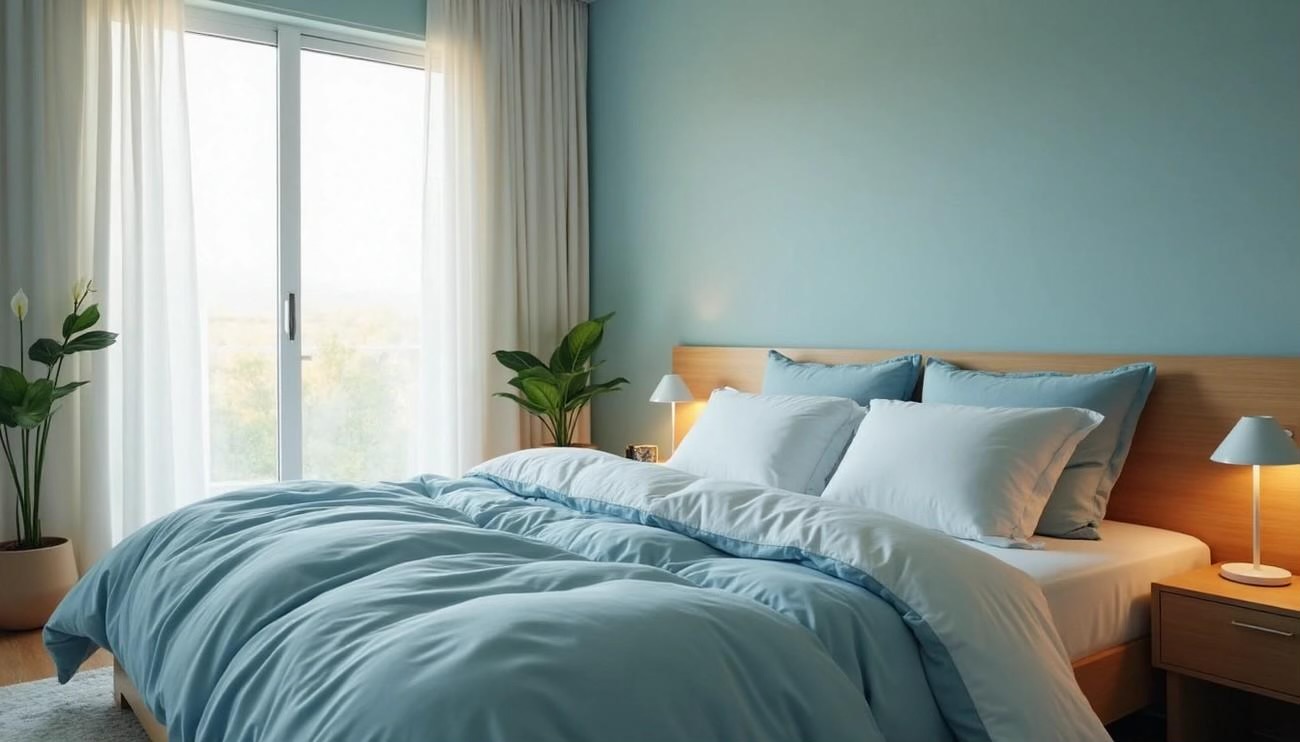
Could the colour of your bedroom walls be sabotaging your sleep? You might be surprised to learn that the best bedroom colours for sleep go far beyond looking pretty – they’re actually backed by science and can make or break your nightly rest.
Here’s something that might shock you: research shows that people with blue bedrooms enjoy the longest average sleep compared to those with other coloured rooms. Your brain makes snap judgements within just 90 seconds of entering any space, and colour influences a whopping 90% of that instant reaction.


Think about it – calming bedroom colours like soft blues, gentle greens, and subtle lavenders work like a gentle lullaby for your mind and body. They help you unwind and drift off naturally. But here’s the catch: bright colours such as neon yellow or deep red? They’re basically sending “wake up!” signals straight to your brain, which explains why you might find yourself tossing and turning.
Whether you’re planning a bedroom makeover or you’re simply curious about which colours might help you sleep like a baby, you’re in the right place. We’ll explore the fascinating science behind bedroom colours and discover exactly how they affect your sleep quality. From the most sleep-inducing shades to the colours you should definitely avoid in your personal sanctuary – we’ve got you covered.
How Bedroom Colours Affect Sleep and Mood
Here’s the thing – the colours surrounding you while you sleep do so much more than just make your room look good. Scientific studies have revealed something fascinating: your bedroom’s colour scheme actively influences your psychological state and can directly impact how well you sleep.
The link between colour and emotion
Colour psychology isn’t just some fancy theory – it’s real science that examines how different hues affect your behaviour and emotions. Our brains process visual input on both biological and emotional levels. You know that instant feeling when you walk into a room and immediately feel calm or energised? Well, colour likely plays a starring role in that reaction.
Your brain’s response to colour isn’t some random occurrence. It’s actually shaped by both instinctual reactions and cultural associations. Take blue, for instance – it triggers associations with calmness and tranquillity, potentially lowering your blood pressure and slowing your heart rate. Red, on the other hand, often evokes feelings of excitement, stimulation, and even aggression, which means it’s increasing your heart rate rather than helping you wind down.
What’s particularly interesting is that research shows certain colours can help you manage stress more effectively. Green environments, for example, allow people to cope better with stress factors. This explains why nature-inspired bedrooms often feel so restorative and peaceful.
How mood influences sleep quality
The connection between your emotional state and sleep quality is rock solid. Poor mood can seriously affect how well you rest. What’s more, experiencing emotionally distressing events during the day decreases both sleep efficiency and total sleep time.
Studies have identified specific emotional pathways through which bedroom colours affect sleep. The darkness of bedroom colours impacts sleep quality through the emotional experience of serenity, contentment, and peacefulness. This indirect effect provides important evidence for how emotional experiences influence your health and functioning.
Gratitude has been found to be a significant predictor of greater subjective sleep quality and sleep duration. On the flip side, after failure experiences, people are more likely to wake after sleep onset and experience longer awakening times.
Why calming colours matter
Your bedroom should evoke emotions that help you rest. While darkness is optimal during actual sleep, the colours you see before closing your eyes matter tremendously. The best bedroom colours for sleep create an environment that’s both visually appealing and emotionally conducive to rest.
Certain hues can actually lower your heart rate and reduce stress levels, making it much easier to drift off. Blue is particularly effective – it’s used to lower blood pressure whilst simultaneously slowing respiration and heart rate, making it perhaps the most effective colour for promoting sleep.
Beyond the physiological effects, calming bedroom colours also signal to your brain that it’s time to wind down. Cool tones like light blue, sage green, and soft greys are recognised as soothing colours that help lower blood pressure, steady heart rate, and relax muscles – precisely what you need before bed.
Rather than creating a bedroom that merely looks attractive, you should prioritise colours that actively contribute to your sleep routine by promoting feelings of tranquillity. The right colour scheme can transform your bedroom from a simple sleeping space into a sanctuary designed for optimal rest and recovery.
Which colours will help you sleep better?
Choosing the right bedroom colour can make all the difference to your nightly rest. Sleep studies have pinpointed several specific hues that work wonders for promoting quality sleep, each affecting your mind and body in unique ways.
Blue: The champion of sleep colours
Blue takes the crown as the ultimate sleep-inducing colour. People with blue bedrooms consistently report the longest sleep duration compared to any other bedroom colour. This isn’t just coincidence – blue actively works to reduce tension and slow your heart rate, creating perfect conditions for deep rest.
The science behind blue’s effectiveness is remarkable. Your eyes contain special receptors that are particularly sensitive to blue light, and these are directly linked to melatonin production. Blue also triggers powerful associations with words like ‘relaxed,’ ‘safe,’ ‘satisfied,’ and ‘secure’. Studies even show that blue exposure can reduce both heart rate and blood pressure – exactly the physical changes your body needs to drift off peacefully.
Green: Bring nature indoors
Green comes in as a close second for bedroom walls, and it’s easy to see why. As a cool colour with a short wavelength, green creates that restful atmosphere you’d find in natural environments. People consistently report that green has a relaxing effect, evoking feelings of comfort, peace, spaciousness, hope, and happiness.
The magic of green lies in its connection to nature. Your brain automatically links green with plants and the outdoors, triggering an instant calming response. Words commonly associated with green include ‘outdoors,’ ‘grateful,’ and ‘merry’. For the best results, opt for sage green or soft botanical hues that capture nature’s mood-boosting qualities.
White and light grey: Clean simplicity
White creates an incredibly peaceful backdrop for sleep, even though it’s technically not a colour but rather the combination of all visible light spectrum colours. White rooms support better sleep because they stimulate the brain far less than colourful spaces. This minimalist approach allows your mind to clear naturally before sleep.
Light grey works similarly, creating an elegant neutral backdrop that feels like early morning calm. Grey bedrooms offer a restful environment that’s both sophisticated and soothing. These colours work particularly well in smaller spaces, making bedrooms appear larger and more airy – perfect for avoiding any feelings of confinement that might cause restlessness.
Beige and cream: Cosy warmth
Warm neutrals like beige and cream create wonderfully inviting sleep environments. Unlike stark white, these softer shades add warmth whilst maintaining that peaceful neutrality. Beige excels at creating balance within a space, making it ideal for bedrooms where harmony supports rest.
These colours pair beautifully with natural materials, enhancing their calming effect. Combine beige or cream walls with wooden furniture elements, and you’ll create a naturally peaceful atmosphere. These versatile shades complement almost any decorative style, making them practical choices for most bedroom designs.
Soft pink and lavender: Gentle sophistication
Soft pink might surprise you as a sleep colour, but light pinks can be incredibly effective. Take Benjamin Moore’s “First Light” – described as “both delicate and soft, this rosy hue exudes a sense of calm, refreshment, and warmth“. Lavender strikes that perfect balance between warm and cool, creating spaces that feel both laid-back and gently lively.
Lavender specifically helps create a tranquil atmosphere that promotes relaxation and calmness. When lavender combines with pink tones, it creates an enchanting harmony that radiates warmth, making these gentle colours excellent choices for restful sanctuaries.
Remember, muted versions of these colours generally work best for sleep. Lighter tones typically offer the most calming effects, gently easing your mind towards peaceful slumber.
Colours to Avoid in a Sleep Space
Now that we’ve covered the sleep-friendly colours, let’s talk about the ones that could be sabotaging your rest. Some colours are sleep destroyers, and knowing which ones to avoid could be the difference between sweet dreams and restless nights.
Red: Your sleep’s worst enemy
Red is hands down the worst choice for bedroom walls if quality sleep is your goal. This intense colour has the longest wavelength on the visible light spectrum and triggers biological responses that are the complete opposite of relaxation. Research shows that red increases brain activity, boosts alertness, and even raises heart rate and blood pressure. The colour screams high energy, excitement, and stimulation – exactly what you don’t want when you’re trying to wind down.
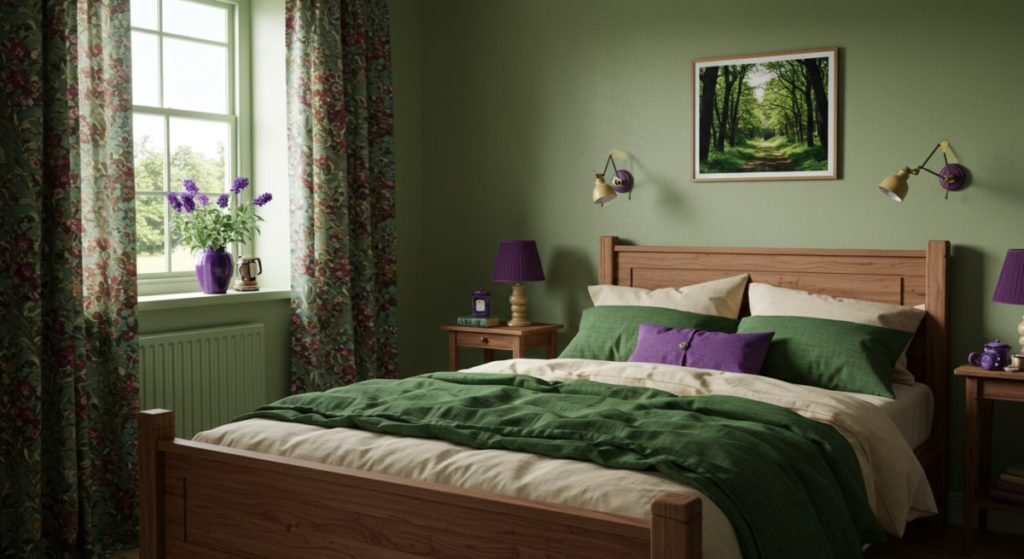
Pictured: Cottagecore bedroom decor, forest green, royal purple, wooden bed frame.
Even brief exposure to red light before bedtime can spell trouble, with studies indicating it might increase anxiety-like behaviours and negative emotional experiences. Love red? Save it for accent pieces rather than painting your walls with it.
Black: Heavy and oppressive
You might think darkness equals better sleep, but black walls can actually work against you. Black absorbs all wavelengths of light, making rooms feel smaller and potentially claustrophobic. Beyond the practical lighting problems, black carries heavy emotional baggage – it’s strongly linked to sadness, depression, and negative feelings.
People connect black with emotions like depression, sadness, anger, and fear. Instead of creating the cosy darkness that’s beneficial for sleep, black rooms often feel oppressive or heavy, potentially affecting your mood before you even hit the pillow.
Bright yellow and orange: Energy overload
Your brain connects bright yellow with daylight – making it particularly unhelpful in a space designed for rest. Yellow naturally grabs attention and lifts spirits, which sounds lovely but works against sleep induction. Studies even suggest that yellow can feel anxiety-inducing when used extensively in bedrooms.
Bright orange shares many of yellow’s wake-me-up properties. Orange is known to boost energy and enthusiasm – which explains why gyms and exercise spaces love these colours. If warm tones appeal to you, stick to muted, earthy versions rather than vibrant shades.
Purple: Mental stimulation central
Bright purple, especially with red undertones, can be surprisingly disruptive to your sleep routine. Research indicates that purple, particularly in its more vibrant forms, increases brain activity much like red does. The colour tends to stimulate creativity and mental activity – brilliant during the day but problematic when you’re trying to switch off.
Even colour experts admit that finding a restful purple for bedroom walls can be tricky, as many purples are “too bright, too dark, or too sickeningly sweet”. If purple speaks to you, consider very soft lavender tones with significant grey undertones instead of the brighter varieties.
Which brightness level works best for your bedroom?
Choosing the perfect colour is just the beginning – the brightness and shade you select can make or break your sleep sanctuary. The intensity of your chosen hue often matters just as much as the colour itself.
Light vs dark tones: the great debate
Sleep experts can’t seem to agree on this one. Light blue consistently wins the sleep quality awards, but some specialists argue that darker shades better support your natural sleep patterns. “Dark blues and soft magentas encourage sleepiness,” explains Stephen Light, noting that “the body’s circadian rhythm operates based on daytime-nighttime cues”.
But here’s where it gets interesting. Gregg Dean takes a different view, warning that “while too dark a room can cause stress to the body, too light a room will make the body feel like it should stay awake”. This highlights something crucial – neither extreme is perfect. Your bedroom needs to strike that sweet spot where you feel personally comfortable.
Brightness changes everything
Want to know something fascinating? Brightness levels dramatically influence how colours make you feel. Research shows that brighter colours typically spark more positive emotions than darker shades. Get this – even though yellow is considered happier than blue, light blue actually makes people feel more positive than dark yellow.
Your emotional response to brightness directly impacts your sleep quality. One study discovered that “people who were given access to dark colours were feeling less happy than those without any type of darkness present”. Since your mood affects how well you sleep, this emotional connection really matters.
Finding your perfect shade
Ready to choose the ideal brightness for your space? Consider these key factors:
Room orientation matters: North-facing bedrooms only get reflected daylight with a cool grey cast, whilst south-facing rooms enjoy warm afternoon sunlight. These natural lighting conditions will completely change how your chosen colour appears.
Size considerations: Bright, warm colours make objects appear closer and larger, while dark shades make rooms feel smaller but potentially heavier. Light colours create spaciousness – particularly valuable if you’re working with a compact bedroom.
Lighting type: Remember that “the lighting in that room will affect how the colour ultimately looks”. Natural light brings out colour vibrancy, whereas artificial lighting can dramatically alter what you see, potentially disrupting your sleep patterns.
Finding your perfect shade means balancing these practical considerations with what feels right for you. The most sleep-friendly bedroom creates an environment where you feel both protected and peaceful – ready for truly restorative rest.
Design Tips for a Calming Bedroom
Getting the right wall colour is just the beginning. Your bedroom needs to work as a complete sleep sanctuary, and every design choice you make can either support or sabotage your rest.
Match wall colours with bedding
Your bed is the star of the show, so your bedding choices matter more than you might think. Choose sheets and duvets in calming tones that work beautifully with your wall colours. Here’s a simple rule: pick bedding that’s slightly lighter or darker than your walls but stays within the same colour family. This creates lovely contrast without breaking the peaceful flow.
Interior designer Jen Dallas puts it perfectly: “A big design mistake is having the same exact colour for everything without variation in a room”.
Keep it simple – pair cool-toned walls (think blues and greens) with cool-toned bedding, and warm walls (like beiges and soft pinks) with similarly warm textiles. When everything flows together, your brain gets the message loud and clear: it’s time to wind down.
Pictured: Cottagecore bedroom decor, forest green, royal purple, wooden bed frame.
Use soft, warm lighting
Your lighting can make or break your sleep quality. For the best results, choose bulbs with a colour temperature between 2,700K and 3,000K – they give off that lovely soft, amber glow that’s perfect for unwinding. Whatever you do, steer clear of blue light and daylight bulbs. They’ll mess with your circadian rhythm and keep you wide awake when you should be drifting off.
Don’t rely on just one light source either. Layer your lighting by combining ambient ceiling lights with bedside lamps, and maybe add some accent lighting for good measure. Dimmer switches are absolute game-changers – bright enough for reading, soft enough for relaxation.
Keep the space clutter-free
Visual chaos creates mental chaos, and that’s the last thing you want in your bedroom. The Sleep Foundation explains it perfectly: “Disorganised items in your bedroom may reinforce the sensation of having too many ‘loose ends,’ generating anxious feelings that may make it harder to relax”.
Take a good look around your bedroom. What really belongs there? Everything else needs to go. Under-bed storage boxes and ottomans with hidden compartments are brilliant for keeping essentials close but out of sight.
Add natural elements like plants
Bringing a touch of nature into your bedroom works wonders for creating that serene atmosphere you’re after. Some plants actually improve your air quality whilst you sleep – Snake Plants and Kentia Plants are particularly clever, storing oxygen during the day and releasing it at night.
Natural materials like wooden furniture, cotton textiles, and stone accents add to this grounding effect. They help create that sense of calm and connection to nature that promotes deep, restful sleep.
Your Sleep Sanctuary Awaits
You now have all the tools to create a bedroom that actually helps you sleep better. The science is clear – your bedroom colours genuinely impact how well you rest each night. Blue remains the champion for quality sleep, but don’t forget about those other sleep-friendly options like soft greens, gentle greys, and warm neutrals.
Remember, it’s not just about picking any colour from the “good” list. The brightness and shade matter just as much as the colour itself. Your room’s natural light, size, and even which direction it faces will all influence how your chosen colour looks and feels.
Here’s what you should do next: test a few paint samples on your bedroom wall and live with them for a few days. Watch how they look in different lighting throughout the day. Trust your instincts – if a colour makes you feel calm and relaxed, it’s probably perfect for your space.
Don’t forget the finishing touches either. Your bedding, lighting, and overall room design all work together to create that perfect sleep environment. Keep things clutter-free, add some plants if you can, and choose soft, warm lighting for the evenings.
Most importantly, remember that your bedroom should feel like your personal retreat. Whilst the research gives us brilliant guidance, the colour that helps you sleep best is ultimately the one that makes you feel most at peace.
Creating your ideal sleep sanctuary doesn’t have to be complicated or expensive. Sometimes the simplest changes – like choosing the right wall colour – can make the biggest difference to your nightly rest. Sweet dreams await!
FAQs
Q1. What colour is scientifically proven to be the best for sleep? Blue is consistently ranked as the most effective colour for promoting quality sleep. Research shows that people with blue bedrooms tend to enjoy longer periods of sleep compared to those with other coloured bedrooms. Blue has a calming effect, reducing tension and slowing heart rate, which creates ideal conditions for rest.
Q2. Are there any colours that should be avoided in a bedroom? Yes, certain colours can disrupt sleep. Bright red, for instance, is too stimulating and can increase brain activity and heart rate. Black can feel heavy and gloomy, potentially affecting mood negatively. Bright yellow and orange are overly energising, while vibrant purple may trigger mental activity, making it difficult to wind down for sleep.
Q3. How does the brightness of bedroom colours affect sleep? The brightness of bedroom colours plays a crucial role in creating a sleep-supporting environment. While light colours generally evoke more positive emotions, excessively bright or dark rooms can disrupt sleep. It’s important to strike a balance that feels personally comforting and supports your natural sleep patterns.
Q4. Can bedroom colour choices impact mood and sleep quality? Absolutely. Bedroom colours can significantly influence both mood and sleep quality. Calming colours like soft blues, gentle greens, and subtle lavenders can facilitate mental and physical relaxation, essential for deep sleep. Conversely, stimulating colours can create an environment that’s less conducive to rest, potentially affecting your emotional state and sleep patterns.
Q5. What are some design tips for creating a sleep-friendly bedroom? To create a sleep-friendly bedroom, consider matching wall colours with bedding for visual harmony. Use soft, warm lighting with colour temperatures between 2,700K and 3,000K. Keep the space clutter-free to reduce stress and anxiety. Adding natural elements like plants can create a serene atmosphere and even improve air quality, promoting better sleep.