




















































An island cooker hood is designed to capture cooking fumes, airborne grease, and excess moisture before they spread throughout the kitchen. However, finding oily droplets around the hood can be confusing, particularly when its filters have recently been cleaned. The problem is that grease filtration is only one stage of the extraction process.
Some particles can travel beyond the filters, while existing deposits may collect on internal surfaces or inside ductwork. Condensation can also contribute to oily drips. Understanding how these processes interact makes it easier to identify the source of the problem and choose an appropriate solution.


Why Clean Filters Do Not Always Prevent Grease Dripping
Grease filters capture oil particles carried upwards with cooking vapor. Depending on the appliance, these may be metal mesh or baffle filters. Baffle designs use changes in airflow direction to separate grease from the moving air, while mesh filters use layers of metal material to collect particles. However, neither design should be assumed to capture every particle produced during cooking. Their effectiveness depends on the filter construction, airflow conditions, particle size, and type of cooking.
An island cooker hood draws cooking fumes towards its extraction area, but some fine grease particles can pass through the filtration stage. Others may settle around the filter frame or travel further into the extraction pathway. Repeated exposure can gradually leave residue on surfaces that are not visible during routine cleaning. This explains why a filter can look perfectly clean while the rest of the appliance still contains grease. Cleaning the filter remains important, but it does not necessarily address contamination elsewhere in the system.
How Grease Accumulates Inside the Cooker Hood
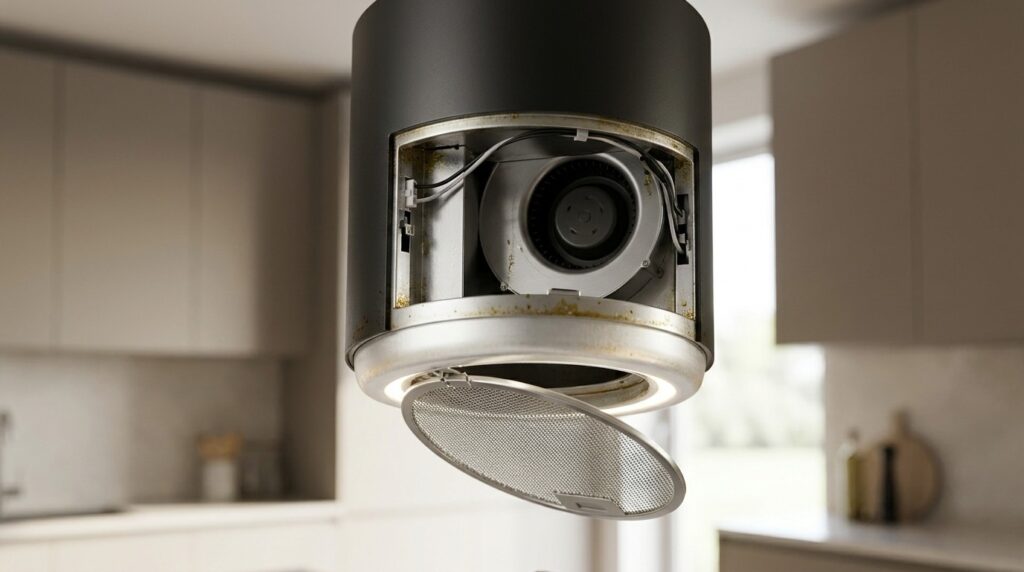
Cooking produces grease in different forms, including small liquid droplets and vapor that can later condense. Although filters remove some of these particles, residue can settle on surfaces inside the hood. Depending on the appliance design, this may include the internal casing, filter housing and accessible areas around the extraction passage. Repeated cooking gradually adds to these deposits, particularly when meals involve frequent frying, grilling or high-temperature cooking.
Over time, accumulated grease can become thick enough to cling to surfaces before gradually moving downwards. Cooking heat may soften existing deposits, making residue more noticeable around edges or joints. Some models also include collection channels or trays that need periodic attention. Their presence and cleaning requirements vary between appliances. Following the model-specific maintenance instructions supplied by CIARRA Appliances or another manufacturer helps owners understand which areas can be cleaned safely and which components require professional attention.
How Condensation Can Contribute to Grease Dripping
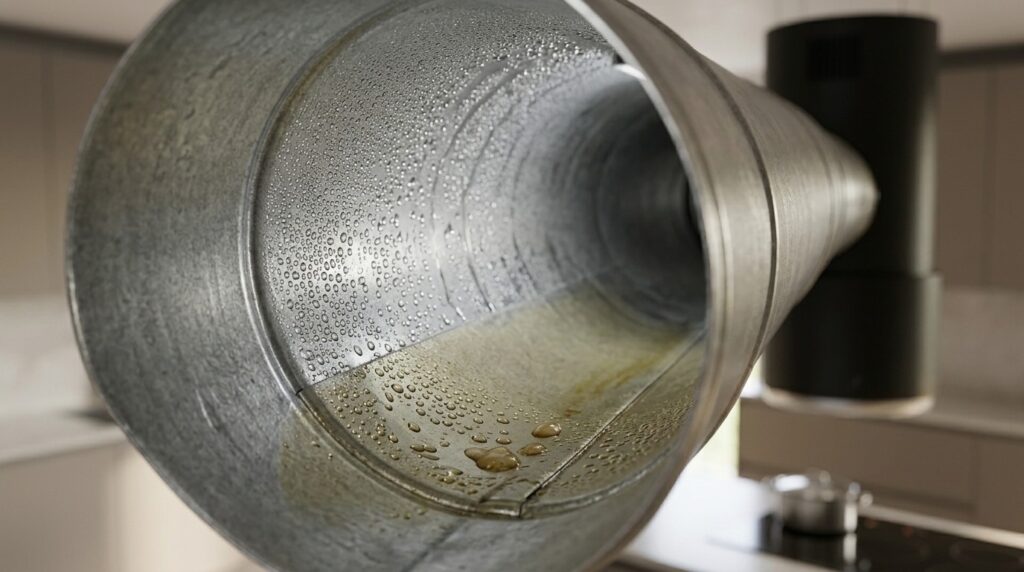
Cooking releases moisture and grease. When warm, humid air meets a cooler surface, water vapor can condense into droplets. This can happen around colder sections of an extraction system, particularly when ductwork passes through an unheated ceiling space or another area with a noticeable temperature difference. If grease residue is already present on those surfaces, moisture can mix with the deposits and carry some of the oily material downwards.
That is why liquid appearing beneath a hood isn’t always pure grease. Water condensation may look oily after picking up existing residue, whereas accumulated grease often feels thicker and leaves a more persistent film. The distinction matters because cleaning alone may not resolve recurring condensation. Depending on the installation, suitable duct insulation, a correctly positioned condensate trap or an appropriate duct gradient may help. These measures must follow the appliance manufacturer’s instructions rather than being applied as a universal solution.
Can Dirty or Poorly Designed Ductwork Cause Grease Leaks?
In ducted extraction systems, cooking air passes through the hood and travels through an exhaust duct to the outside. Some grease can remain in the airflow after filtration, allowing deposits to build up on the duct’s internal surfaces. If residue accumulates around joints or low points, it may eventually become visible as leakage. Poorly sealed connections can also allow contaminated air or residue to escape. These problems may remain unnoticed because much of the ductwork is concealed above cabinets or inside ceiling spaces.
Duct configuration also influences extraction performance. Long runs, narrow sections and multiple tight bends can increase resistance to airflow. Cold sections may encourage condensation, while an unsuitable gradient can allow collected liquid to move towards the hood instead of draining as intended. Smooth, appropriately sized ducting with as few bends as practical is generally preferable, subject to the manufacturer’s specifications. If grease appears near an inaccessible duct connection, professional inspection is safer than attempting to dismantle the installation.
How Restricted Airflow Affects Grease Extraction
Effective extraction depends on more than the fan’s advertised power. Air needs a suitable route from the cooking surface through the hood and into the exhaust system. Blocked filters, obstructed ductwork, unsuitable duct dimensions or poorly configured bends can restrict that movement. When airflow is insufficient, cooking fumes may not be captured or removed effectively. More airborne grease and moisture can then remain around the cooking area or settle on nearby surfaces.
A noticeable reduction in extraction, unusual operating noise or persistent cooking smells may indicate that the system needs attention. These signs don’t prove restricted airflow is causing grease to drip, but they offer useful clues. Check accessible filters and follow the manufacturer’s cleaning instructions first. If performance remains poor, a technician can assess the fan, duct connections and ventilation arrangement. Simply increasing the fan speed may not solve a restriction elsewhere in the system.
Installation and Filter Positioning Problems
Even a suitable extraction system may perform poorly if it isn’t installed correctly. A grease filter that is not seated properly can leave gaps around its frame, allowing some air to bypass the intended filtration path. Incorrectly secured duct connections, unsuitable duct sizing or an installation that differs from the manufacturer’s instructions can also affect performance. These issues may contribute to grease escaping or accumulating in places where it would not normally be expected.
Hood dimensions should also be considered alongside hob size, cooking layout and extraction requirements. For example, a 90cm cooker hood may suit a particular cooking area, but width alone doesn’t determine whether it will provide effective extraction. Installation height, duct configuration, mounting position, and the manufacturer’s recommended clearances also matter. If the appliance was recently installed or moved, checking the original installation specifications can help determine whether the problem is positioning rather than filter cleanliness.
How to Identify Where the Grease Is Coming From
The location and timing of dripping can provide useful clues. Residue around the filter frame may indicate incorrect positioning or accumulated grease nearby. Oily marks around a duct connection may suggest contamination or a connection problem. Dripping that appears after cooking could involve condensation carrying existing grease residue down a cooler surface. However, these observations are not definitive diagnoses. The appearance of a liquid alone cannot establish whether it comes from the filter area, internal casing, or ductwork.
| What you notice | Possible explanation | What to check |
| Grease around hood edges | Internal residue | Accessible internal surfaces |
| Drips after cooking | Condensation mixed with residue | Moisture and temperature conditions |
| Grease near duct joints | Duct contamination or connection issue | Visible duct connections |
| Weaker extraction | Restricted airflow | Filters and accessible air passages |
| Grease around filter frame | Incorrect filter positioning | Filter seating and fit |
Observe when the problem occurs, which area becomes wet, and whether extraction performance has changed. These details can help narrow down the possibilities before arranging an inspection. Avoid removing fixed panels or reaching into the fan assembly to investigate. If the source is not visible or safely accessible, a qualified technician can examine the relevant components.
How to Prevent Grease Build-Up and When to Seek Professional Help
Regular maintenance is the most practical way to limit grease accumulation. Clean removable grease filters at the intervals stated in the appliance manual, using suitable methods and cleaning products. Allow filters to dry completely before reinstalling them, and make sure they sit securely in their frames. Wipe accessible surfaces with an appropriate cleaner, and check any removable collection components included with the model. The required cleaning frequency may vary according to cooking habits and appliance design.
Persistent dripping needs more than another filter wash. A technician should inspect suspected internal build-up, duct connections, airflow restrictions or inaccessible areas. If liquid reaches electrical components, switch off the appliance safely and arrange professional attention before using it again. Never dismantle electrical parts or attempt to clean inaccessible ductwork without appropriate training. Grease deposits within extraction systems can also create a fire hazard, so recurring contamination should not be ignored.
Conclusion
Grease dripping from an island cooker hood does not necessarily mean its filters are dirty. Residue can collect beyond the filtration stage, condensation can carry grease down cooler surfaces, and ductwork or airflow problems can contribute to recurring deposits. Identifying the source is therefore more useful than repeatedly cleaning the same filter.
Regular maintenance, correct installation, and timely professional inspection all help keep the extraction system working as intended. For model-specific care information, owners can also consult the guidance provided by CIARRA Appliances and follow the maintenance recommendations for their particular appliance.
FAQs
1. Why does my cooker hood drip grease even after cleaning the filters?
Grease can accumulate on internal surfaces, around the filter housing or inside ductwork even when the filters are clean. Fine grease particles may pass through the filtration stage and settle elsewhere in the extraction system.
2. Can condensation cause grease to drip from a cooker hood?
Yes. Moisture from cooking can condense on cooler surfaces and mix with existing grease residue. This mixture may then drip from the hood or ductwork, particularly when temperature differences are significant.
3. How can I tell whether my cooker hood is leaking grease or water?
Water condensation is generally thinner and evaporates more readily, while grease usually feels oily and leaves a persistent film. However, condensation mixed with grease can look similar, so the appearance alone may not identify the source.
4. Can blocked cooker hood ductwork cause grease to leak?
Restricted or contaminated ductwork can reduce airflow and allow grease deposits to accumulate. Poorly sealed connections may also allow residue to escape. A professional inspection can help determine whether the ductwork is the cause.
5. How often should I clean my cooker hood grease filters?
Cleaning frequency depends on the appliance, filter type, and cooking habits. Follow the manufacturer’s instructions, and clean filters more often if regular frying or heavy cooking produces substantial grease deposits.