




















































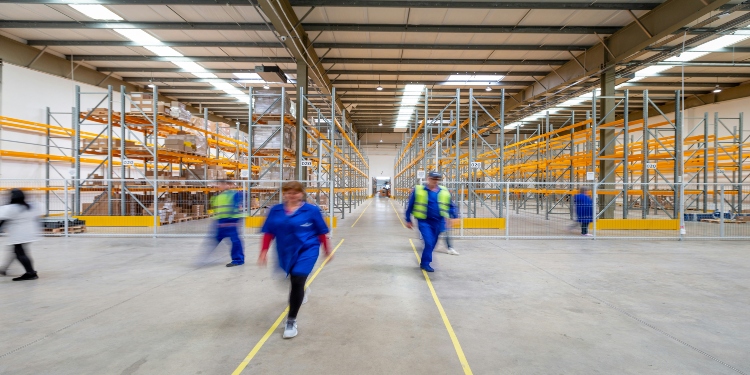
Warehouse space costs money, and every square metre counts. For businesses handling large volumes of stock, how that space is organised affects how quickly orders are picked, how safely teams work and how easily operations can scale. The right racking system makes the most of the space you already have, keeps inventory organised and supports growth without an immediate move to larger premises.
Pallet racking is one of the most popular storage solutions for businesses handling palletised goods. Choosing the right setup means weighing up your available space, stock requirements, load capacity and how easily your team needs to reach products. This guide walks through the main options and what to consider before you invest.


What Is Warehouse Racking and How Does It Work?
Warehouse racking is a structured storage system that holds goods and materials off the floor, in organised, accessible locations. Instead of stacking stock on the ground and losing valuable space, racking lets you build upwards and make better use of your warehouse’s full height.
Pallet racking is built from vertical frames and horizontal beams. The frames form the upright structure, while the beams create load-bearing levels on which pallets sit. Forklifts or other handling equipment can then place and retrieve pallets at each level.
Because no two businesses store stock in quite the same way, racking is rarely one-size-fits-all. A distributor shifting hundreds of different products each week has very different needs from a business storing large volumes of a single line. The right configuration depends on what you store, how fast it moves and how your team works.
Understanding the Different Types of Pallet Racking
There are several common pallet racking systems, each suited to different operational needs.
Selective pallet racking is the most widely used option. It gives direct access to every individual pallet, making it a strong fit for warehouses handling a wide variety of products where quick, flexible access matters.
Drive-in racking allows forklifts to enter the storage lanes themselves. It makes efficient use of space and suits businesses storing large quantities of similar products, though access to individual pallets is more limited.
Double-deep racking stores pallets two positions deep, increasing storage density by reducing the number of aisles needed. It requires suitable handling equipment, such as reach trucks with extended capability, to access the rear pallets.
Push-back racking uses inclined rails so that pallets move forward as stock is removed. It helps maximise storage capacity while keeping products reasonably accessible.
The best option for you depends on inventory turnover, available space, accessibility requirements and the handling equipment you already use.
Key Factors to Consider When Choosing a Racking System
Before settling on a system, work through these key considerations:
- Available warehouse space: Measure your floor area and ceiling height, and consider how your existing layout and fixtures, such as doors, columns and loading bays, will affect where racking can go.
- Load capacity: Racking must safely support the weight and dimensions of your stored pallets. Check the capacity of both the beams and the frames, and plan around your heaviest loads.
- Stock turnover: Think about how frequently products need to be accessed. Fast-moving lines suit easily accessible systems, and your choice may depend on whether FIFO (First In, First Out) or LIFO (Last In, First Out) stock rotation is appropriate, particularly for perishable or date-sensitive goods.
- Accessibility: Consider how easily employees and forklift operators need to reach individual pallets, and whether aisle widths suit your equipment.
- Future requirements: Choose a system that can adapt to changing inventory levels and business growth, so you aren’t forced into a costly redesign down the line.
How Pallet Racking Can Improve Warehouse Efficiency
A well-planned racking layout does more than store stock. It can transform how the whole warehouse runs.
Better use of space. Building upwards reduces the floor space taken up by stock, freeing room for aisles, packing areas and goods-in zones.
Simpler stock management. Clearly defined storage locations make picking, replenishment and inventory checks more straightforward, as everything has a place and staff know where to find it.
Smoother workflows. A layout designed around the way stock moves reduces unnecessary travel and handling, saving time across every shift.
Fewer errors. Better visibility and organisation help minimise picking mistakes and misplaced products, which can otherwise lead to delays and unhappy customers.
Room to grow. Improved storage capacity helps businesses handle rising stock levels without immediately needing larger premises.
Warehouse Racking Safety and Maintenance
Racking carries heavy loads, so safety has to be built in from the start.
Choose a system that genuinely meets your storage requirements, and make sure it is installed correctly. Always follow the manufacturer’s load capacity guidance, and never exceed the stated limits for beams or frames.
Regular inspections are essential. Look for damage, loose components and signs of wear, and act on any problems straight away rather than waiting for the next scheduled check. Forklift impacts are a common cause of racking damage, so operators should be properly trained to work safely around the structure.
Day to day, keep aisles clear and make sure loads are stored securely and evenly. Businesses should also refer to relevant HSE guidance and follow applicable workplace safety standards to keep their teams and stock protected.
Getting the Most from Your Warehouse Storage
Even a good racking system can be improved over time. Start by reviewing your current warehouse layout and identifying areas where storage could work harder, such as underused vertical space or awkward aisle configurations.
Plan racking arrangements around stock movement and operational workflows, placing fast-moving products where they are quickest to reach. Revisit your storage requirements regularly, as inventory and demand will change, and a layout that worked last year may not suit this one.
Above all, aim for balance. The most efficient warehouses combine strong storage capacity with easy accessibility and a firm commitment to safety.
Find the Right Racking Solution for Your Business
Choosing the right warehouse racking system comes down to understanding your space, your stock and your plans for the future. Pallet racking can improve storage capacity, organisation and operational efficiency, helping your business get more from every square metre.
Before you decide, consider your available space, your stock requirements and how your needs may evolve. Ready to get started? Explore our range of racking and pallet racking solutions to find the right fit for your warehouse.