




















































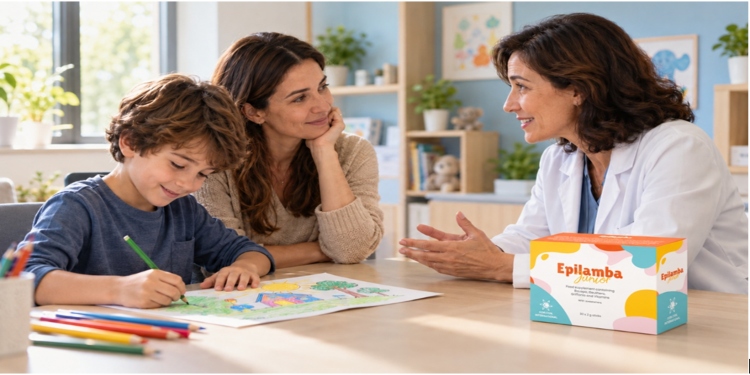
In the Finished Formulation category, the Italian developer is recognised for a clinically validated paediatric supplement designed to reduce the side-effects of antiepileptic therapy.
Caring for a chronic condition also means caring for everything that comes with its treatment. This idea lies at the heart of Epilamba Junior, the patented paediatric product developed by Italian nutraceutical company Cor.Con. International, which has been named a finalist at the CPHI Pharma Awards 2026. The product competes in the Finished Formulation category, one of the fifteen core categories in which the awards honoured outstanding results in the international pharmaceutical world during CPHI Milan at Fiera Milano.


The nomination reflects a direction the industry is increasingly taking: supportive, non-pharmacological strategies that address the secondary burdens of long-term therapies. In children with epilepsy, antiepileptic drugs are irreplaceable for controlling seizures, but they frequently cause side-effects that interfere with daily life, learning and emotional stability. By proposing a food supplement with scientific validation that reduces these effects without compromising drug efficacy, the company has gained wide international visibility among healthcare professionals and industry experts.
Why children on antiepileptic drugs need more support
Epilepsy is one of the neurological conditions with the widest reach, involving over 70 million people worldwide. Europe counts approximately 900,000 children and adolescents with active epilepsy and around 130,000 new paediatric cases every year. Standard antiepileptic therapy is fundamental, yet it often comes at a cost: chronic fatigue, cognitive fog, mood fluctuations, sleep disturbances and gastrointestinal complaints are common among young patients.
The effects reach the classroom, friendships and psychological well-being. Physical discomfort and changes in behaviour also directly lower treatment compliance, adding stress for families and clinical teams. Research on active molecules makes continuous progress, but one gap in clinical practice has stayed open: managing the adverse effects of treatment without introducing additional pharmacological complexity.
From the laboratory to the clinic
Epilamba Junior was conceived specifically to close this gap. It stems from close collaboration between the company’s scientific team and the Food and Drug Department of the University of Parma, and provides a structured, non-pharmacological strategy. Rather than acting directly on seizures, it supports the young patient’s overall functional health, with the objective of improving quality of life during long-term antiepileptic regimens and helping children keep their daily routines, their engagement at school and their emotional balance.
What makes it different from generic supportive supplements is its strict compliance with pharmaceutical-grade research standards. The formula, a combination of botanicals and essential nutrients protected by an international patent, was built around three physiological parameters: no interference with the pharmacodynamics of antiepileptic drugs, no alteration of their pharmacokinetics and preservation of therapeutic outcomes. This allows safe administration even alongside complex AED polytherapies.
Clinical evidence comes from a dedicated clinical trial at the Paediatric Neurology and Muscular Diseases Unit of the Istituto Giannina Gaslini in Genoa, with peer-reviewed results recently published in the journal Global Pediatrics. For six months, the study followed paediatric patients on stable antiseizure mono- and polytherapy, measuring safety and changes in symptoms.
The data showed that the daily supplement did not change seizure frequency or semiology, confirming complete compatibility with standard medications. In parallel, adverse effect profiles improved in a statistically significant way, with clinicians noting better attention spans, more emotional equilibrium, higher sleep quality and reduced gastrointestinal discomfort. Single-dose sticks, free from gluten, lactose and added sugars, make long-term use easier for young children.
A new category in supportive paediatric neurology
Being named a finalist at the CPHI Pharma Awards 2026 places Epilamba Junior within a broader shift in modern medicine, one that puts overall patient well-being first alongside disease management. As a first-in-class, patented solution for treatment-related complications, the product marks the birth of a new category in supportive paediatric neurology.
This evolution is part of a wider transformation of care pathways around the world. Today’s therapeutics increasingly accepts that managing a chronic condition well means going beyond the suppression of its primary symptoms. In complex paediatric settings, clinical success depends heavily on keeping the patient’s physical, cognitive and emotional equilibrium stable throughout the treatment journey.
With clinical research continuing to investigate integrated strategies, the medical community is moving closer to a comprehensive model of care in which therapeutic efficacy and human well-being advance side by side.