





















































Online slot terminology now crops up well beyond gambling websites. You might see it in consumer guides, advertising discussions, technology stories or conversations about digital entertainment. Terms such as “RTP”, “paylines” and “jackpot” can sound technical at first, but they’re easier to understand once you know what they refer to.
For UK readers, the useful starting point is simple: online slots are adult-only games of chance, and the details shown on a game page matter. Before engaging with any service, it’s worth knowing how games are structured, what the numbers do and do not tell you, and where to find safer-play controls.


This is a plain-English guide to the main formats and features, with a focus on consumer awareness rather than recommendations.
Why the small print matters more than the flashy screen
Most online slots are designed to present a lot of information in a compact space. The artwork and theme may be the first things you notice, but the game rules, stake options and information menu are usually far more useful.
A game’s information screen can explain:
- How many reels and symbols it uses
- Which symbol combinations count under its rules
- Whether it uses paylines or “ways to win”
- The available stake range
- Its return-to-player percentage, where shown
- Any feature rounds or jackpot rules
- The game’s volatility description, if supplied
It’s easy to skim past these details. I find that taking a minute to read them makes the terminology far less mysterious and gives you a clearer sense of what is actually being presented.
UK-facing gambling services are expected to operate under the rules of the Gambling Commission, which regulates commercial gambling in Great Britain. A licence does not remove risk or change the fact that outcomes are uncertain, but it is an important consumer check when assessing a site.
The common slot formats, without the jargon
The word “slot” covers a broad set of games. They share some basic features, but their layout and presentation can differ quite a bit.
Classic slots
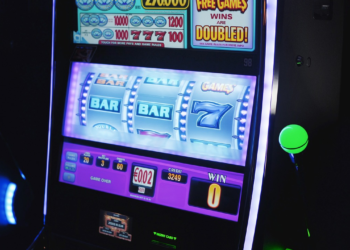
Classic slots take their visual cues from older mechanical machines. They often have a smaller number of reels, commonly three, and relatively simple symbol sets.
You may see familiar designs such as fruit, bells or bars. The rules can be more straightforward than those of larger games, although it is still worth checking the paytable rather than making assumptions from the look of the screen.
Video slots
Video slots are the format many people picture when they hear “online slot”. They tend to use five or more reels, animated symbols and a wider range of layouts.
Some include additional screens or game rounds, while others alter the reel layout during play. Their themes can draw on history, travel, mythology, music or fictional settings. Theme is just presentation, though. It does not tell you how the game’s mechanics work.
Themed games
A themed slot is simply a game built around a particular visual idea. That could mean a particular era, an adventure setting, a style of art or a recognisable type of entertainment.
The theme may make a game easier to identify in a catalogue, but the underlying structure still comes back to the same questions: how do winning combinations work, what stake have you selected, and what do the rules say?
Jackpot formats
A jackpot is a prize category within a game, usually highlighted in its rules. There are different approaches. Some games have a set jackpot amount, while progressive jackpot games can link contributions across participating games or services, subject to their published terms.
A headline amount should never be treated as a prediction or expectation. It is simply part of that game’s design. Read the game information carefully to understand what qualifies, how the jackpot is funded and whether specific conditions apply.
Reels, paylines and ways to win, explained
Slots use a random outcome system, but the way they display results can vary.
Reels are the columns
A reel is a vertical column of symbols. When a round begins, the reels appear to spin and then stop to show a result. A familiar layout is five reels with three visible symbol positions on each, though many alternatives exist.
Some games add extra rows, expand their reels or use unusual shapes. That can look complicated, but the paytable remains the source of truth.
Paylines are set routes across the reels
A payline is a defined pattern across the reels on which matching symbols may count. In a simple example, a horizontal row across the middle might be one payline. Other lines may zig-zag between rows.
A game can have a small number of paylines or a much larger number. The figure itself is not a quality rating. It tells you about the game’s rule structure, not what any individual round will do.
Ways-to-win games use symbol positions instead
Rather than drawing fixed lines, some games use “ways to win”. Usually, matching symbols need to appear on adjacent reels, beginning from the left, but the exact rules vary.
The number of possible ways may change when the game’s layout changes. Again, don’t rely on a label alone. Open the rules and check how combinations are counted.
Stake selection is the amount chosen for a round
The stake is the amount selected for one game round. Online services typically show this clearly before play starts, often with controls to increase or reduce it.
It is sensible to pause before selecting a stake and consider your overall entertainment budget. Changing a setting is quick; the cumulative amount over a longer session can be less obvious unless you keep an eye on it.
What RTP, RNG and volatility actually mean
These three terms are often grouped together, yet they describe different things.
Return to player, or RTP
Return to player is usually expressed as a percentage. It refers to the proportion of stakes that a game is designed to return over a very large number of rounds.
It is not a forecast for an individual person, session or spin. A game with a published RTP does not promise that result over any particular period. Random outcomes can vary substantially in the short term.
If a game publishes RTP information, treat it as one piece of technical context, alongside the rules and your own limits.
Random number generators
Online slot outcomes are determined by a random number generator, often shortened to RNG. Put simply, this is the software process used to produce random game results.
The visual spinning of reels is how the result is displayed, rather than a sign that a player can time or influence an outcome. No pattern of button presses, previous outcomes or apparent “near misses” changes the random nature of the next result.
Volatility
Volatility is a description used to indicate how a game’s returns may be spread over time. A higher-volatility game may show less frequent returns with the possibility of larger individual outcomes, while a lower-volatility game may show smaller returns more often.
It is not a safety label, and it cannot tell you what will happen next. If a provider uses the term, see it as a broad description of the game’s pattern, not a reason to expect a certain experience.
A consumer checklist for assessing online gaming services
Before using an online gambling service, a few practical checks can help you make a more informed decision.
- Check the licence information. Look for details of the operator and its Gambling Commission licence.
- Read the game rules. Paytables, mechanics and feature conditions should be accessible before you participate.
- Look at the terms. Make sure important information is clear rather than buried in vague wording.
- Find the safer-gambling area. A regulated service should make account tools and support information easy to locate.
- Review your account activity. Transaction and play history can help you keep track of time and spending.
- Use independent support resources when needed. GamCare provides information and support for people affected by gambling.
Clear information does not make gambling risk-free, but it does give you more control over your decisions.
Safer play: a short checklist worth keeping
Online slots are strictly for people aged 18 and over. If you choose to take part, keep the following basics in mind.
- Set a fixed budget before you start. Only use money you can comfortably set aside for entertainment.
- Set a time limit. Decide when you will stop, and stick to it.
- Use account controls. Deposit limits, reminders, time-outs and self-exclusion tools are there to be used.
- Take regular breaks. If you are distracted, tired, upset or no longer enjoying the activity, step away.
- Do not treat past results as a guide to future ones. Each round is random.
- Ask for help early if gambling is becoming difficult to manage. The National Gambling Helpline, operated by GamCare, is available on 0808 8020 133.
You can also find practical information about self-exclusion through GAMSTOP, the free online self-exclusion scheme for Great Britain.
One practical place to compare formats
If you simply want to see how a regulated UK-facing catalogue labels and groups different game types, the categories themselves can be useful for understanding the language discussed above.
Adult readers looking to see how different slot formats are categorised can browse the UK slots collection at Virgin Games.
The important thing is to remain curious about the rules rather than relying on appearances. Once you understand reels, paylines, RTP and account controls, the terminology becomes much less opaque, and you are better placed to make measured, informed choices.