


















































SpaceX has once again returned to the spotlight for investors following a sharp rise in share price and an upgraded target from Morgan Stanley. After hitting a peak of $176, expectations for the SpaceX stock price climbed to $300, driven not only by rocket launches and satellite communications but also by expanding opportunities at the intersection of space, defense, and artificial intelligence. Against this backdrop, Elon Musk’s net worth crossed the $1 trillion mark once again, reaching approximately $1.03 trillion.
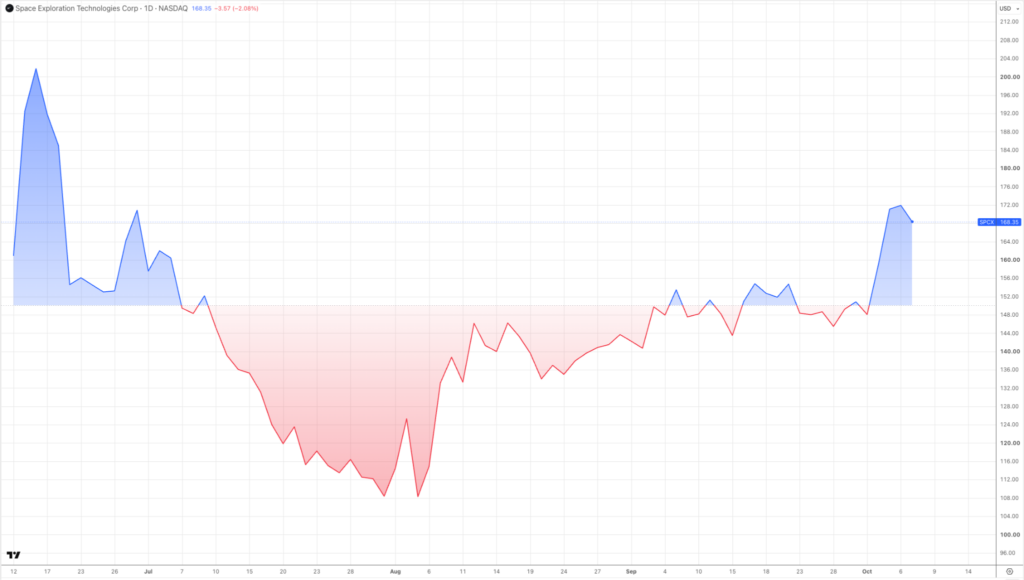
Interest in SpaceX is developing within the broader context of major technology stories returning to the public market. Investors are following both new listings and discussions about future deals, such as the Revolut IPO. But in SpaceX’s case, the market is no longer just assessing the prospect of going public; it is evaluating the company’s ability to turn technological leadership into several independent sources of revenue. Of the current share price, only about $32 is attributed to the AI segment, while the bulk of the valuation is still driven by the aerospace and telecommunications businesses.


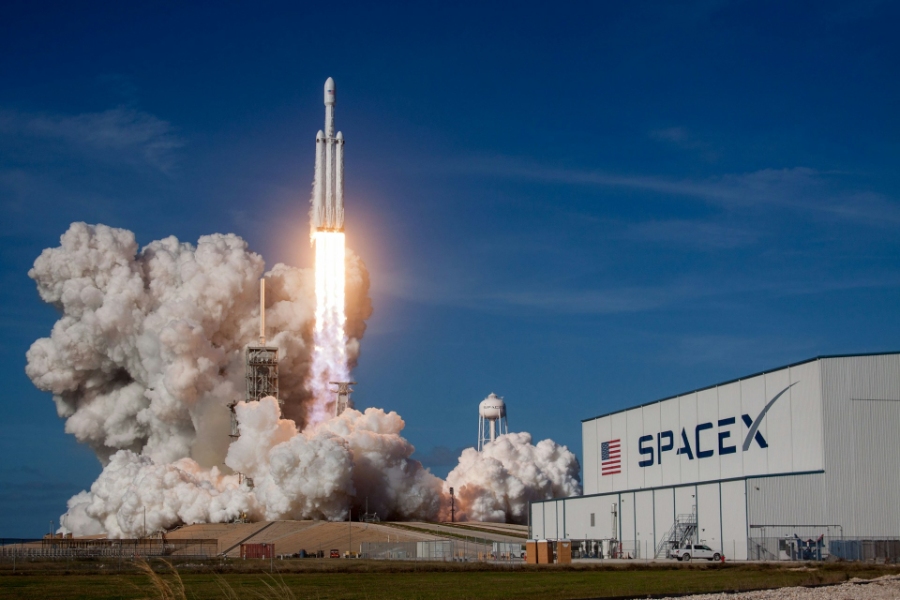
The main catalyst for the coming months remains Starship. Recent test flights confirmed the feasibility of fully returning and recovering the reusable launch vehicle. The economic significance of the project goes far beyond a single launch. The company is effectively preparing to phase out Falcon 9, which completed 165 launches in 2025 and accounted for nearly half of all global space launches. After 2028, SpaceX will no longer accept new applications for Falcon 9 missions as it transitions customers to Starship.
While this strategy promises significantly higher operational efficiency, it also introduces operational risks. Starship must achieve a high flight cadence to justify reallocating engineering and production resources away from Falcon 9. Over the long term, SpaceX aims to scale up to several launches per week, and eventually several per day. If successful, this model could dramatically lower the cost of delivering payloads to orbit, positioning the company to service massive satellite constellations, lunar missions, and future orbital infrastructure projects.
At the same time, SpaceX is expanding its defense business. The company has already secured over $12.7 billion in revenue from defense contracts, and Musk’s involvement in Project Meridian reinforces ties to U.S. government programs. For investors, this provides a reliable, steady revenue base alongside commercial operations.
Another long-term growth driver is emerging around AI infrastructure. SpaceX recently launched a test satellite for Google equipped with four TPUs as part of Project Suncatcher. Google is exploring orbital data centers that could leverage continuous solar power, reducing reliance on terrestrial energy grids.
The unit economics of space computing remain complex. Launch costs are high, thermal management in a vacuum is challenging, and hardware maintenance is nearly impossible. Still, the scale of potential demand keeps the market engaged — Google alone plans to spend $180-$190 billion this year on capital projects, primarily centered on computing infrastructure.
This represents a major strategic opportunity for SpaceX. If orbital data processing gains traction, the company can profit not only through its own orbital systems but also by providing payload transport and deployment for other tech giants.
As a result, SpaceX’s valuation relies less on any single line of business and more on an expanding ecosystem. Falcon 9 proved the viability of reusable rockets, Starship promises to scale launch capacity, defense contracts offer revenue stability, and AI unlocks entirely new addressable markets. With a $300 price target, investors are betting that SpaceX can successfully transition from a commercial launch provider into the primary infrastructure platform for the global space economy.

David Prior
David Prior is the editor of Today News, responsible for the overall editorial strategy. He is an NCTJ-qualified journalist with over 20 years’ experience, and is also editor of the award-winning hyperlocal news title Altrincham Today. His LinkedIn profile is here.