


















































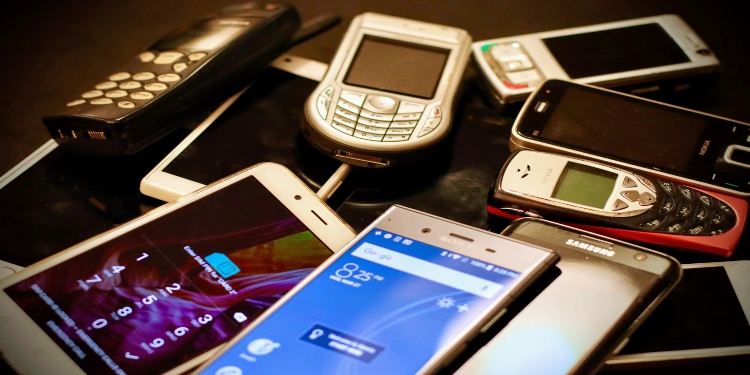
Open almost any kitchen drawer in Britain and there’s a decent chance you’ll find one. A phone that’s been replaced, switched off and quietly forgotten.
It’s a habit so common that it hardly gets noticed, but it says something about how we treat the technology we depend on every day. We’re quick to buy the latest model, and far slower to decide what happens to the one it replaced.


Why we hold on
Ask people why they’ve kept an old handset and the answers are strikingly similar. Some say they’re keeping it as a backup in case the new one breaks. Others say they’re not sure how to clear the data and would rather not risk it. A good number admit they simply haven’t got round to doing anything.
There’s also an emotional pull. A phone contains years of photographs, messages and memories, and parting with it can feel like parting with a piece of your life. That’s understandable, but it’s worth remembering that everything on a handset can be copied elsewhere before it’s let go.
The cost of waiting
Time is not kind to technology. A phone that’s perfectly good today will be worth less in a year, and less again in two. New models arrive every autumn, and each release pushes older ones further down the demand ladder.
That’s one reason more people are choosing to trade in phone handsets soon after upgrading, rather than leaving it until a drawer is full. Doing it earlier often means the device is in better condition, still has a decent battery and is easier to find a home for.
The environmental angle
There’s a wider issue here too. Mobile phones are made from a range of materials, including metals and minerals that take significant resources to extract. When a handset sits unused, those resources are effectively wasted.
Reuse is generally seen as the best outcome. A phone that’s passed on or resold gets a second life, and that means one fewer new device has to be made. Where a handset has reached the end of its life, recycling ensures the materials can be recovered rather than lost.
Experts also stress that old batteries need careful handling. Lithium batteries can be a fire hazard if they’re crushed or damaged, so they should never go in household bins. Most councils and many shops provide safe drop-off points.
Brand by brand
Different handsets tend to hold their appeal in different ways. Apple and Samsung dominate the market in this country, and handsets from both remain in demand well after their release.
For Android owners, Samsung is a common choice, so it’s no surprise that many people end up considering a samsung trade in when they’re ready to upgrade. As always, the condition of the phone makes a difference, as does whether it’s been properly cleared of accounts and data.
Preparing a phone to leave your hands
Specialists advise a few simple steps. Back up everything you want to keep. Sign out of your accounts, including Apple ID or Google and Samsung accounts. Turn off any tracking features such as Find My iPhone. Remove your SIM and memory cards. Then carry out a full factory reset.
Taking photographs of the phone is another useful habit. It provides a record of its condition, and it can be helpful if there’s ever a question about it later on.
Who else could use it?
Not every old handset needs to go on the market. Plenty of families find good uses for them.
An older phone can make a first handset for a child, a reliable replacement for an older relative or a dedicated device for music, maps or a camera. Some people keep one as a travel phone, so they don’t have to take their main device abroad. Others use them as a simple home security camera or a smart speaker controller.
What matters is that the phone’s actually doing something. A device in a drawer isn’t useful to anyone.
Spotting the right moment
Experts suggest that the best time to decide is when the new phone arrives. At that point, the old one still has its charger nearby, you remember its passcode and its battery is likely to be in reasonable shape.
Some people write it down as part of the upgrade routine. New phone arrives, data is transferred, old phone is reset and a decision is made within a week. It’s a simple habit that saves a lot of clutter.
A growing conversation
There’s evidence that attitudes are changing. People are keeping their phones for longer, buying refurbished handsets and thinking more carefully about what they do with technology when they’re finished with it.
That’s a positive shift, and it’s one that’s likely to continue as costs rise and awareness of waste grows.
The drawer full of old phones is a very British habit, but it doesn’t have to be a permanent one. A little time spent backing up, resetting and deciding can turn a forgotten gadget into something useful.
So the next time you’re hunting for a charger and find three old handsets staring back at you, take a moment. Each one has a future, and it’s up to you to choose it.