














































Think back over the presents you’ve received in the last ten years. How many can you actually remember? The scented candle from the office Secret Santa burnt down long ago. The jumper was lovely, but it went to the charity shop two house moves back. Most gifts, however kindly meant, quietly drift out of our lives.
Then there are the ones that stay. For a lot of people, that list includes a piece of jewellery: a necklace they still reach for, a ring they haven’t taken off in years, a pair of earrings they can’t wear without thinking of the person who handed over the box.


That’s the curious thing about jewellery as a gift. It isn’t just owned. It’s worn, kept and quietly tied to a particular person and a particular moment. Which goes some way to explaining why, when people want a present to really say something, they so often end up at a jeweller’s counter.
Jewellery has a way of holding on to a story
Ask someone about the necklace they’re wearing and there’s a decent chance you’ll get more than a description of the chain. “My sister bought me this for my fortieth.” “I got these earrings the week I started my new job – I wanted something to mark it.” “This was my nan’s.”
That’s what sets jewellery apart from so many other gifts. The object becomes a sort of shorthand for an occasion. A bracelet received on a tenth anniversary isn’t just a bracelet. Every time it catches the light at the kitchen sink, it carries a small reminder of that evening: the restaurant, the candle on the table, the slightly nervous way the box was pushed across it.
Inherited pieces take this even further. A ring that belonged to a grandmother can hold decades of stories, some of which the new owner may only half know. Worn on a different hand, it’s still a connection to her.
It shows you’ve been paying attention
Choosing jewellery for someone forces you to think about them properly. You can’t really do it on autopilot.
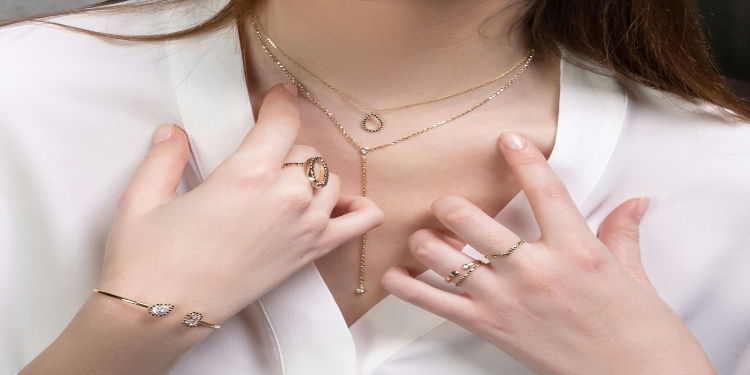
Do they wear yellow gold, or is everything they own white gold or silver? Are they a single-fine-chain person, or do they like something with a bit more presence? Do they stack rings, or wear just the one? Is this for everyday, or for the handful of occasions a year when they properly dress up?
These aren’t questions you can answer from a bestseller list. They come from noticing things – that your mum always wears small studs because hoops catch on her glasses, or that your best friend has worn the same thin gold bracelet since university and might love something to sit alongside it.
When the recipient opens the box and realises you’ve got it right, the gift says something beyond “happy birthday”. It says: I know you.
A gift that doesn’t sit on a shelf
Plenty of lovely presents end up in a drawer or on a shelf, admired now and then. Jewellery tends to live a more active life.
A bracelet might go to the office on Monday, to the supermarket on Saturday morning and out for dinner that evening. A pendant might be worn so often that its owner barely notices it’s there, until someone compliments it and the story comes out all over again.
That constant, low-key presence matters. Each time the piece goes on, there’s a small, almost unconscious link back to the person who gave it. Few other gifts manage to become part of someone’s routine in quite the same way.
Why it suits the big moments
Some occasions seem to ask for something that will last. A milestone birthday – an eighteenth, a thirtieth, a sixtieth – marks a turning point, and it’s natural to want the present to outlive the party.
Anniversaries work in a similar way. After several years together, a gift that can be worn every day feels like a quiet acknowledgement of everything that’s been built in that time. Engagement rings and wedding bands are the obvious examples, but plenty of couples mark later anniversaries with jewellery too.
Then there are the achievements that deserve more than a card: finishing a degree, landing a promotion, getting through a genuinely tough year. A small piece bought to mark the moment can become a private reminder of what it took to get there.
Christmas and Mother’s Day are different again. They come round every year, which is exactly why jewellery can stand out – it makes one year’s present feel distinct from the usual. If you’re weighing up festive options, this Christmas jewellery gift guide is worth a look for its advice on matching different styles to the way someone actually lives.
Pieces that stay in the wardrobe for years
Most of us have bought something because it was everywhere that season, only to find it looked oddly dated a year or two later. Jewellery isn’t immune to trends, but the pieces people treasure are usually the ones that sit slightly outside them.
A well-chosen piece doesn’t need to be fashionable to be appreciated. It needs to suit the person and work with the way they really dress. Something versatile, equally at home with a jumper and jeans as with an evening outfit, is far more likely to be worn for years than something designed to make a statement for one season.
The diamond tennis bracelet: a good example
If you want an example of that kind of versatility, the diamond tennis bracelet is a good one. The idea is simple: a single, flexible line of diamonds that sits around the wrist. There’s no large centrepiece and nothing fussy, which is precisely its appeal.
On a weekday, it sits neatly under a shirt cuff or beside a watch. At a wedding or an anniversary dinner, it catches the light just enough to feel special. Because it’s understated, it tends to work with whatever else someone already wears rather than competing with it.
It’s also a style many people associate with significant moments – a big birthday, a milestone anniversary, the arrival of a first child. And because it doesn’t lean on a passing trend, it can become one of those pieces of diamond jewellery that stays in someone’s collection, and on their wrist, for a very long time.
Looking after something that matters
It’s funny how differently we treat a piece once it means something. A costume necklace gets tossed into a handbag; a bracelet from someone you love gets its own little pouch.
That instinct is a good one, and a few simple habits help. Storing pieces separately stops chains tangling and harder stones scratching softer metals. Taking jewellery off before swimming, cleaning or applying hand cream and perfume keeps chemicals away from metal and settings. Delicate pieces are best left at home for the gym or the garden. And cleaning should always suit the material – what works for a diamond ring won’t necessarily work for pearls. If you’re not sure where to start, this jewellery care guide covers the basics clearly.
None of it is complicated, but it’s the kind of care that means a gift still looks right in ten or twenty years.
The thought matters more than the price
It’s easy to assume that the most cherished jewellery gifts are the most expensive ones. In reality, the pieces people hold on to are often the ones chosen carefully rather than extravagantly.
A pair of simple studs that match someone’s everyday style can mean more than a dramatic necklace they’d never wear. A pendant picked because it echoes a shared holiday, or one that complements the ring they wear every day, carries a meaning no price tag can add. Sometimes the best choice is simply the thing they mentioned months ago and assumed you’d forgotten.
It’s the same instinct behind the appeal of personalised, custom-made gifts more broadly: the effort that goes into making something feel specific to the recipient is often what makes it memorable. Jewellery just happens to be something they’ll carry with them.
Part of a family’s story
Some jewellery goes on to have a second life. A necklace worn for decades might eventually pass from a mother to a daughter. A ring might be reset for a grandchild’s engagement. A pair of earrings might turn up in a box after someone has gone, and suddenly become precious in a way they never quite were before.
Not every piece becomes an heirloom, and it doesn’t need to. But jewellery is one of the few gifts with the potential to travel between generations, gathering new meaning each time it changes hands. A present bought this year could, one day, be the piece someone else describes when asked, “Where’s that from?”
The story is the point
Strip everything else away and the reason jewellery works so well as a gift is fairly simple. It gives a feeling somewhere to live.
The value isn’t only in the metal or the stones. It’s in the thought that went into choosing it, the occasion it marked, and all the ordinary days it was worn afterwards – the commutes, the dinners, the weddings, the unremarkable Tuesday afternoons.
Long after the wrapping paper has gone in the recycling, a well-chosen piece is still there, still being worn, still quietly telling its story. That’s not a bad thing to give someone.