



















































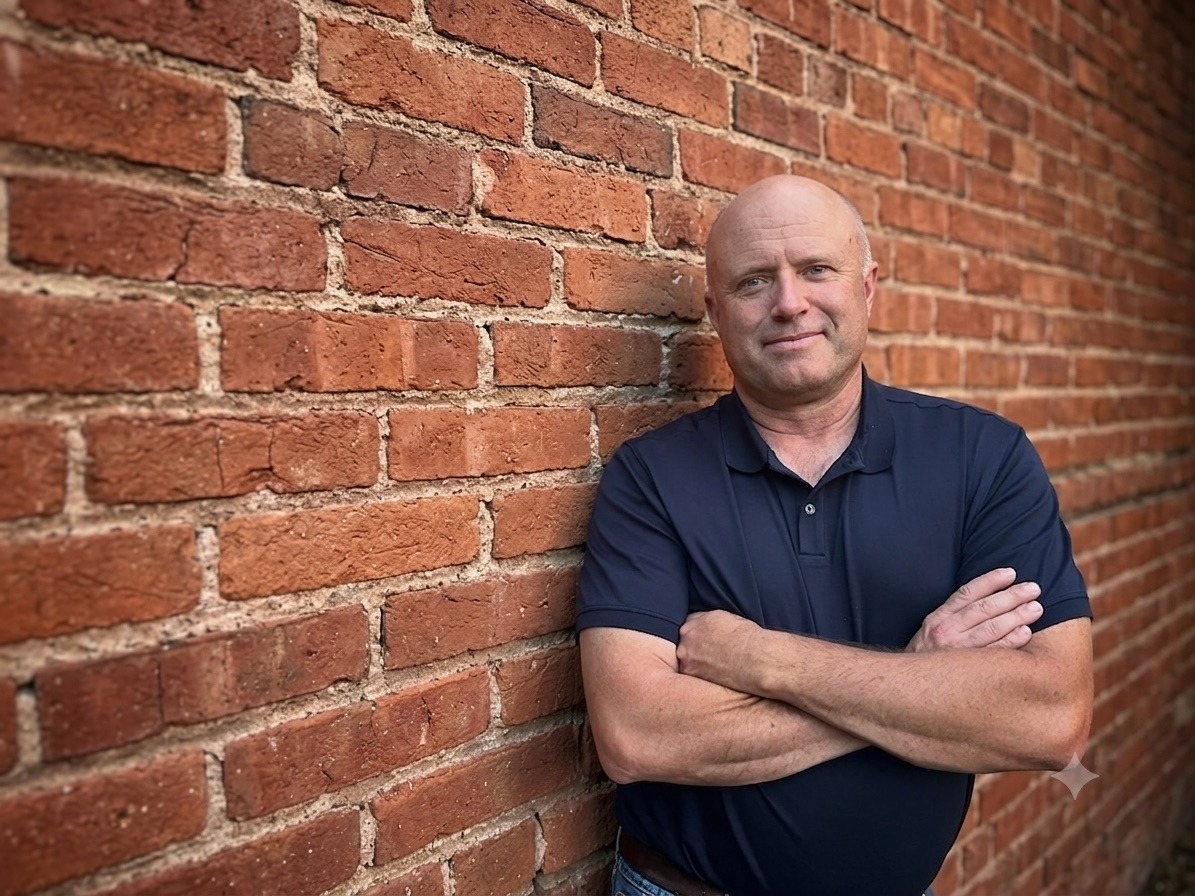
People often treat confidence as something they need before taking action. Believe in the goal, trust the plan, and feel certain enough to move forward.
Joey Chandler sees the sequence differently.


Through his work at Certain Growth Solutions, Chandler has found that confidence can begin much earlier: knowing the goal you pursue genuinely belongs to you. When goals connect to personal core values, taking action becomes less about convincing yourself to believe and more about acting on something that already matters.
For Chandler, this builds confidence through experience rather than expectation.
Confidence Starts Before the Result
A goal can be impressive without being personally meaningful.
Entrepreneurs encounter plenty of ideas about what they should want. Revenue should reach a certain number. A company should grow at a particular pace. A founder should pursue the next opportunity because it seems like the logical move.
Chandler believes confidence becomes harder to sustain when the goal itself has been shaped primarily by outside expectations. Someone may be able to generate enthusiasm for a while, but doubt can become much louder when progress slows, or the work becomes difficult.
His approach starts by examining the values underneath the goal. What matters personally? Why does this particular outcome matter? Does pursuing it express something the individual already knows to be important?
That clarity does not guarantee an easy path. It gives the person a reason to trust the direction even before the outcome is known.
“Confidence doesn’t come from getting the result you wanted. It comes from knowing you showed up as yourself and you’ll learn something either way. That’s a kind of confidence nothing can take away from you,” said Joey Chandler, founder of Certain Growth Solutions.
Small Actions Create Evidence
Once a goal connects to personal values, Chandler brings that same connection into the actions and habits required to pursue it.
This is where confidence becomes less abstract.
Someone who follows through on one meaningful action has evidence that they can act on what matters. The action might be making a difficult phone call, completing an important task, protecting time for a priority, or returning to a goal after several unproductive days.
None of those actions has to produce an immediate result to matter.
For Chandler, each one can become evidence of self-trust. The person decided something mattered and then behaved accordingly. Repeating that process creates a history of keeping personally meaningful commitments.
The confidence comes from being able to look back at what was actually done, rather than trying to manufacture certainty about what might happen next.
Results Are Not the Only Source of Confidence
Building confidence around values also changes what happens when outcomes are disappointing.
A sales conversation can end without a sale. A business experiment can fail to produce the expected return. A plan can take longer than expected, or circumstances can force it to change entirely.
If confidence depends mainly on positive results or outside approval, those moments can easily weaken it.
Chandler’s approach leaves room for another measure. Did the person make the decision from their values? Did they take the action they believed was worth taking? What did the experience reveal that can inform the next attempt?
This does not make results irrelevant. Entrepreneurs still need to evaluate what works, what does not, and whether their actions are moving them toward meaningful goals. The difference is that an unwanted result does not have to become evidence that the person should stop trusting themselves.
A plan can change without the values behind it changing.
Every Attempt Can Reveal Something Useful
Chandler also sees learning as an important part of values-based confidence.
When an action is rooted in something personally meaningful, the attempt can reveal information regardless of whether the original outcome occurs. A person may discover that a goal needs refinement, that a particular approach does not fit, or that fear influenced the decision more than expected.
The experience can also confirm something. An entrepreneur may learn that a difficult action was worth taking, that a value matters more than previously understood, or that a setback did not prevent them from returning to the work.
In Chandler’s view, that makes confidence less dependent on always being right.
There is still something to gain from the attempt because the person can use what happened to better understand themselves, their values, and their next decision. Confidence then becomes connected to the ability to act, learn, adjust, and continue rather than to a record of getting every outcome right.
For Chandler, that is what makes confidence feel more natural. It is not a belief someone has to force before taking the first step. It grows from repeatedly seeing that personal values can provide a reliable foundation for deciding what to do next.
About Joey Chandler
Born October 29, 1970, in Detroit, Michigan, Joey Chandler is an alignment coach and entrepreneur based in Reno, Nevada. He graduated from Whitman College in 1993 with a degree in Politics and has worked across coaching, creative media, photography, retail, and entrepreneurship, including experience with Sports Basement. Chandler founded Certain Growth Solutions, You Are Videos, and Joey Chandler Photography. After rebuilding his life and business following burnout, he developed practical alignment systems that connect personal core values with meaningful goals and daily action. His work helps entrepreneurs strengthen clarity, confidence, and consistent execution while pursuing measurable growth and long-term sustainability.
About Certain Growth Solutions
Certain Growth Solutions is a values-based coaching company founded by Joey Chandler. Its approach helps entrepreneurs clarify personal core values and connect them with goals, habits, decisions, and everyday actions. Rather than treating confidence as something that must exist before action begins, Chandler’s work emphasizes building self-trust through values-aligned action, reflection, learning, and continued progress.
You can also find Joey Chandler on Instagram, YouTube, and TikTok.