




















































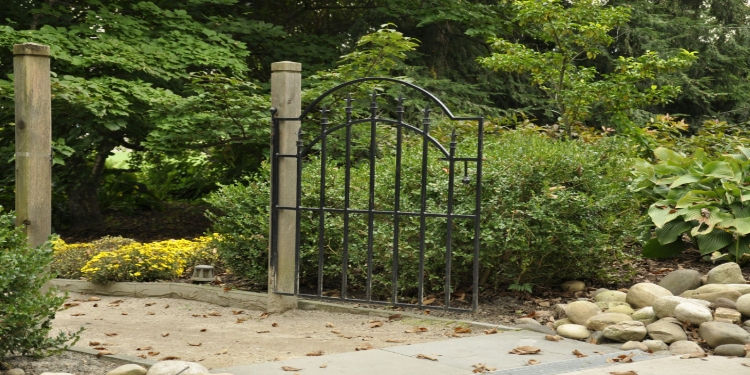
Investing in a bespoke garden gate is one of the most impactful upgrades a UK homeowner can make to their property boundary, and the decision to choose aluminium over other materials is one that an increasing number of buyers are making when they discover the combination of low maintenance, design flexibility, and long-term durability that specialists like Aluminium Gates are able to deliver through their made-to-measure manufacturing process.
Understanding the Difference Between Standard and Bespoke Gate Options
Off-the-shelf garden gates are manufactured in fixed sizes and a limited number of styles, which means that many homeowners find themselves compromising on either the fit or the appearance of the gate in order to make a standard product work in their opening. Bespoke aluminium gates are manufactured to the exact dimensions of the opening and to the specific design preferences of the customer, which means there is no compromise on either front. The gate fits the opening precisely, the design reflects the character of the property, and the colour and finish are chosen to complement the existing boundary materials. The additional cost of a bespoke gate over a standard product is typically modest in the context of the overall improvement to the property and the extended service life that comes with a properly manufactured and installed gate.


Security Considerations for Garden Gate Design
A garden gate serves as one of the primary access control points for a residential property, and the security characteristics of the gate design deserve careful consideration alongside the aesthetic elements. A gate with an infill of closely spaced vertical bars or solid panels provides a more secure boundary than an open decorative design, as it reduces the ability of an intruder to see through the gate or to reach over or through it to operate the latch from the other side. Anti-lift hinges that prevent the gate from being lifted off its posts even when the hinge pin is accessible from the outside are worth specifying in exposed or high-risk locations. A ground-anchored drop bolt on paired gates adds an additional layer of security by preventing the passive leaf from being forced open independently of the active leaf.
Planning Permission and Permitted Development for Garden Gates
Most residential garden gate installations in the UK fall within permitted development rights and do not require a formal planning application, provided the gate does not exceed 1 metre in height where it adjoins a highway, or 2 metres in other locations. However, there are circumstances in which planning permission may be required, including properties located within a conservation area, a national park, or an area of outstanding natural beauty, where even relatively modest boundary changes can require consent. Properties subject to an Article 4 Direction may have their permitted development rights restricted, and listed buildings require listed building consent for any changes to boundary structures. It is always advisable to check with the local planning authority before proceeding if there is any uncertainty about whether consent is required.
Matching Your Gate to Your Property Style
The most successful garden gate installations are those where the gate design feels like a natural extension of the property rather than an afterthought. Traditional period properties, including Victorian and Edwardian terraces and larger detached homes, are well suited to gates with decorative scrollwork, arched tops, or vertical bar designs that echo the ironwork details common in the architecture of those periods. Contemporary and modern properties typically work best with clean-lined flat panel or simple bar designs in neutral or bold colours that complement rather than conflict with the architectural language of the building. Cottage-style rural properties may favour a more informal picket-style design, which can be replicated in aluminium with all the durability benefits of the material while retaining the visual softness of the traditional style.
Installation Requirements and What to Expect from the Process
A professionally installed bespoke aluminium garden gate typically requires a day or less for a straightforward pedestrian or paired vehicle gate installation, assuming that posts are being set into new concrete foundations rather than fixed to existing masonry. Post setting in concrete requires the concrete to cure fully before the gate is hung, which means allowing at least 48 hours between post installation and gate hanging to ensure the posts are stable and correctly aligned. Where posts are being fixed to existing walls or piers, the installation can often be completed in a single visit. On receiving a quote for a bespoke gate, it is worth confirming whether the price includes delivery and installation or whether these are costed separately and asking what the lead time is from order placement to installation so that the project can be scheduled appropriately.
Getting an Accurate Quote for Your Bespoke Aluminium Garden Gate
To obtain an accurate quote for a bespoke aluminium garden gate, you will need to provide the supplier with the clear opening width, the required gate height, the number of leaves, the preferred infill design, the colour and finish, and any additional requirements such as automation, intercom integration, or specific hardware preferences. Photographs of the opening and the surrounding boundary are extremely helpful for a supplier assessing the most appropriate post and hanging arrangement, and a brief description of the ground conditions at the base of the opening can help identify whether any preparatory groundwork will be needed before installation. Most reputable bespoke gate manufacturers offer a site survey service, and where the project is complex or the opening is irregular, a survey visit before finalising the specification is always a worthwhile investment.

David Prior
David Prior is the editor of Today News, responsible for the overall editorial strategy. He is an NCTJ-qualified journalist with over 20 years’ experience, and is also editor of the award-winning hyperlocal news title Altrincham Today. His LinkedIn profile is here.