















































The coffee machine market has matured considerably. A decade ago, the decision for most buyers, whether a household or a business, was relatively simple: filter or pod, cheap or mid-range, and roughly how much counter space are you willing to give up? The options were limited enough that the choice wasn’t particularly consequential.
In 2026, the market looks very different. There are more machine types, more brands, more price points, and more ways to access equipment than at any point previously. And the result is that buyers have become significantly more discerning, not necessarily because they know more about coffee, but because they’ve experienced more of it and their expectations have shifted accordingly.


The Expectations Have Changed
The proliferation of quality coffee shops, particularly in urban areas, has had an interesting effect on consumer expectations at home and in the workplace. People who drink well-made espresso regularly and know what a properly textured flat white should taste like are no longer satisfied with a machine that makes something vaguely coffee-flavoured.
This has shifted the market upward. Pod machines that prioritised convenience over quality dominated the home market for years. That dominance is less secure now, as buyers who want genuine espresso quality have more accessible options than they did, and as the environmental case against single-use pods has become harder to ignore.
In the workplace, the shift is more pronounced. Employees who make good coffee at home don’t lower their standards when they arrive at the office. The coffee machine is increasingly part of the workplace experience conversation, and the machine that produces reliably bad coffee is a more visible problem than it used to be.
Convenience Without Compromise
What buyers in 2026 are looking for is a version of convenience that doesn’t require a trade-off in quality. That combination is now achievable in a way it wasn’t five years ago.
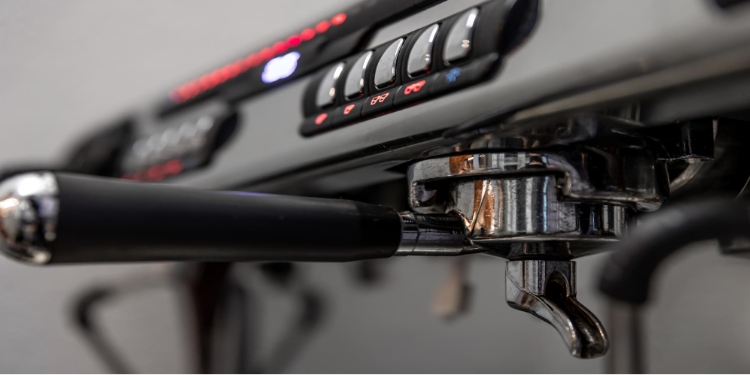
Automatic and super-automatic espresso machines that grind fresh beans, extract at the correct pressure and temperature, and steam milk with minimal operator intervention have come down significantly in price. The gap between “easy to use” and “produces excellent coffee” has narrowed to the point where most buyers no longer have to choose.
In the workplace context, ease of use across different skill levels is particularly important. A machine that requires barista training to operate consistently won’t be used consistently. A machine that produces the same result whether the person using it knows what they’re doing or not is a different proposition entirely.
Maintenance and reliability are part of the convenience equation. A machine that breaks down regularly, requires specialist servicing, or produces inconsistent results over time isn’t convenient, regardless of how simple the daily operation is. Buyers who have been burned by unreliable equipment are specifically looking for reassurance on this front.
The Value Calculation in 2026
The value of purchasing a coffee machine is being calculated differently from before. Upfront cost is still relevant, but it’s increasingly being weighed against the total cost of operation: bean cost, milk cost, maintenance, energy consumption, and the cost of downtime when something goes wrong.
A cheaper machine with higher running costs or a shorter lifespan can easily exceed the total cost of a more expensive but more efficient and durable option. Buyers who have run the numbers on this or been through a cycle of buying cheap and replacing frequently are more willing to invest in equipment that costs more upfront but less over time.
This is one of the clearer arguments for rental or lease arrangements. The option to rent a coffee machine at a fixed monthly cost that includes maintenance and servicing converts an unpredictable capital and maintenance expense into a predictable operational one. For businesses in particular, the cash-flow benefit of not committing capital to equipment that will depreciate is meaningful, and the included servicing removes uncertainty about what happens when something needs fixing.
For households, rental has historically been less common but is growing as a model, particularly for higher-end machines where the upfront cost is significant enough that a monthly payment is genuinely more accessible.
What Businesses Are Prioritising
For business buyers, the 2026 priorities cluster around a few consistent themes. Quality that satisfies employees who have high standards. Simplicity that works across different users without requiring training. Reliability without operational disruption. And a procurement model that makes financial sense given current approaches to capital allocation.
The machines that perform well on all of these are not always the ones with the most features. A focused, well-engineered machine that does fewer things excellently is often more appropriate for a workplace than a highly complex machine that requires expertise to operate well and is difficult to maintain.
The Honest Answer to What Buyers Want
Convenience, quality, and value aren’t actually competing priorities in 2026. The market has evolved to the point where buyers can have all three if they approach the decision with clear criteria and consider the full range of access models, rather than defaulting to a purchase.
The buyer who defines what they actually need, considers the total cost of ownership rather than just the purchase price, and evaluates rental and lease options alongside outright purchase is in a better position to make a decision they won’t need to revisit in eighteen months.

David Prior
David Prior is the editor of Today News, responsible for the overall editorial strategy. He is an NCTJ-qualified journalist with over 20 years’ experience, and is also editor of the award-winning hyperlocal news title Altrincham Today. His LinkedIn profile is here.