
















































I have sat on enough incident calls at two in the morning to know the difference between a tool that helps and a tool that just adds one more screen to stare at. When a payment service goes down and forty people are on the bridge, the problem is never that you lack data. You are drowning in it. The real question is which of the ten thousand signals in front of you explains the outage, and who has the authority to act once you know.
That gap is where artificial intelligence has earned its place in IT. It is also where the technology keeps getting oversold.


The money is already moving. Adoption of AI-powered monitoring climbed from 42 percent to 54 percent of enterprises in a single year between 2024 and 2025 (Mordor Intelligence). The spending is real. The confusion about what it actually buys is just as real.
So let me be plain about both halves. AI changes the shape of IT work. It does not change who is accountable when that work goes wrong. The teams that hold both ideas at once get faster and calmer. The teams that miss the distinction automate their way into a new kind of mess.
Where Does AI Actually Earn Its Place in IT?
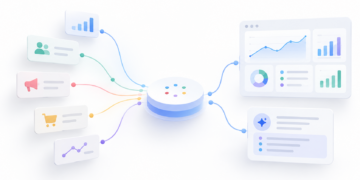
The honest wins are about volume. A mid-sized operations team can field several thousand alerts in a day, and no human reads that fast. AI is good at collapsing hundreds of correlated alerts into a single incident and pushing the one that affects customers to the top. That is real work, and it saves real hours.
Pattern detection is the second win. A slow memory leak that creeps up over six hours, a latency curve that bends an hour before users notice, a login error rate that ticks up in one region: these are the signals a tired engineer misses at the end of a shift and a model catches every time. Cutting through the daily flood of alerts is one of the few places where the benefit shows up in the first month, not the first year.
Speed of detection follows from both. If you find the problem in four minutes instead of forty, you have changed the outcome of the incident before a single human has made a decision. This is the part of the job that is genuinely better than it was five years ago.
What Does AI Still Get Wrong on Its Own?
Here is the number that should sit on every IT leader’s desk. Nearly 40 percent of organisations have had a major outage caused by human error in the past three years, and 85 percent of those traced back to staff not following procedures or to the procedures themselves being wrong (Uptime Institute, 2025).
No model fixes that layer. AI can tell you a config changed at 14:32. It cannot tell you the change should never have shipped on a Friday, that the runbook it followed was eighteen months out of date, or that the actual fault is two teams who do not talk to each other. The telemetry is clean. The organisation is the mess.
AI also reports what changed, never whether it was meant to. Declaring a major incident, deciding to wake an executive, choosing to roll back and eat the cost: those are accountability calls, and accountability does not transfer to software. A model has no skin in the customer apology that comes the next morning.
This is my core position, and I will defend it. AI changes which decisions a human makes. It does not change whether a human is needed.
Why Does Automation Get Confused With Understanding?
A system that auto-restarts a failed service looks like it understands the failure. It does not. It matched a pattern and pulled a lever. That works beautifully until the pattern is wrong, and then automation fails the way nothing else can: instantly, and across your whole estate at once. A human failing slowly is often safer than a machine failing fast.
This is the trap leaders walk into when they treat AI in IT operations as a way to remove people rather than reposition them. The skill does not vanish. It moves up. Already 63 percent of organisations report a shortage of people skilled in AI-driven IT operations, which tells you the work got harder to staff, not easier. Calliber
You still need someone who knows when to trust the automation and when to override it. That someone is more expensive than the person they replaced, not less.
What Should Change About How You Run the Team?
The mistake I see most often is buying AI to cut headcount. The better move is to use it to move your sharpest people off triage and onto the work only they can do. That means fewer people watching dashboards and more people owning decisions, designing the escalation path, and fixing the process after the incident closes.
It also means investing in the unglamorous layer. You need clear ownership, current runbooks, and a change process people actually follow. Uptime Institute found that four in five serious outages could have been prevented with better management, processes and configuration, not better tooling. No amount of machine learning rescues a team that has not decided who is allowed to say no to a risky change.
Building observability software, we see the same thing across customers. The platforms that cut alert noise only pay off when someone has redesigned the on-call rota and the ownership map to match. The tool buys back attention. What you do with that attention is a management decision, not a technical one.
Where Is This Heading?
The next shift is already visible. Gartner expects 40 percent of enterprise applications to include task-specific AI agents by the end of 2026, up from fewer than 5 percent in 2025. More of the routine response will run itself, and that is a good thing.
But it sharpens the leadership question rather than removing it. The job becomes drawing a clear line: which decisions an agent may take on its own, and which always route to a person who can be held responsible for them. That line is the actual strategy. The model does not draw it for you.
So here is what I would leave you with. AI is changing what running IT feels like day to day, not who answers for it when a service goes dark. The technology strips out the noise, and in doing so it raises the stakes on the judgment that is left, because it punishes weak process faster than it rewards good tooling. The teams that come out ahead over the next few years will be the ones that used AI to buy back human attention, then spent that attention on the three things a model still cannot do: decide, own, and explain.
Author Bio:
Amit Shingala is the CEO and Founder of Motadata, an IT operations software company building unified observability and IT service management tools used by enterprises across more than 30 countries.