




















































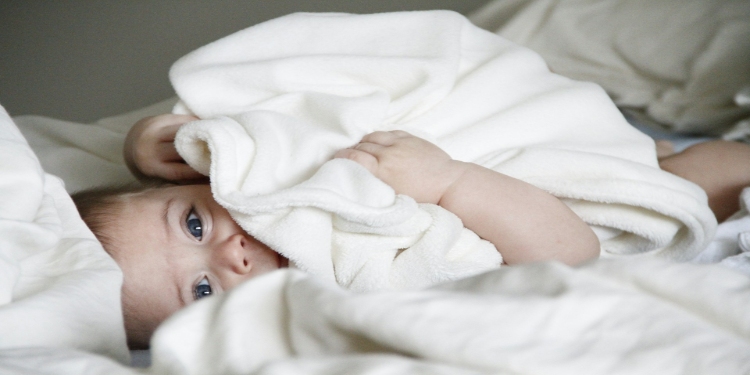
KJ Muldoon was born with a disease that gave his doctors days to act. Carbamoyl phosphate synthetase 1 deficiency prevents the liver from processing ammonia properly; without intervention, the buildup becomes toxic to the brain. KJ was diagnosed days old and spent his first ten months of his life at Children’s Hospital of Philadelphia, where doctors were already researching new gene therapies. His medical team developed a personalized CRISPR-based gene therapy using base editing techniques pioneered by previous Breakthrough Prize laureate David Liu — a treatment designed specifically around KJ’s individual mutation.
On Feb. 25, 2025, he became the first patient in the world to receive a personalized CRISPR gene editing therapy. He’s since been walking, talking, and meeting developmental milestones that were once genuinely uncertain.

KJ appeared at the April 2026 Breakthrough Prize ceremony in Los Angeles, presented by Anne Hathaway and Alex Honnold alongside the scientists, physicians and regulator who made his story possible. His presence that evening was the argument made visible — a child whose life is proof of what foundational science produces when it’s given the time and support it needs.
The same ceremony honored Jean Bennett, Albert Maguire, and Katherine High with the Breakthrough Prize in Life Sciences for developing Luxturna — the first FDA-approved gene replacement therapy for an inherited disease in US history.
Their research, which began at the University of Pennsylvania in the early 1990s, targeted Leber congenital amaurosis, a genetic disease that progressively destroys retinal function in childhood.
Without functional RPE65 protein, the retina receives light but can’t convert it into signals the brain can read. Patients lose useful vision progressively through childhood and typically reach total blindness before adulthood.
Patients in early clinical trials described seeing snow for the first time. One saw stars. Another, the moon. The therapy involves a single subretinal injection per eye delivering a corrected copy of the RPE65 gene via a modified virus. It doesn’t cure the disease so much as restore the machinery the disease had broken. The work took thirty years from lab bench to pharmacy.
The gene therapy that treated KJ built on Liu’s prime and base editing tools, which allow researchers to make precise corrections to a patient’s DNA without cutting the double helix — the difference between a functional gene and a broken one reduced, in concept, to fixing a typo in a single letter of a very long book. The delivery mechanisms developed from Bennett and Maguire’s foundational work provided the clinical framework that made personalized therapies like KJ’s navigable. One laureate’s discovery made the next one possible.
That chain of accumulation is what Yuri Milner designed the prize to recognize. In his statement at the 2026 ceremony, Milner described laureates as building a cathedral of knowledge, each generation constructing on what the last one left behind. The 2026 Life Sciences class — Bennett, High, and Maguire on inherited blindness; Stuart Orkin and Swee Lay Thein on sickle cell and beta-thalassemia; Rosa Rademakers and Bryan Traynor on ALS genetics — represents three separate disease programs that each required decades of foundational research before producing results anyone could take to a clinic. Orkin and Thein’s identification of a fetal hemoglobin suppressor, BCL11A, gave researchers a precise molecular target for treating sickle cell disease. Rademakers and Traynor’s discovery that a single C9orf72 mutation drives both ALS and frontotemporal dementia redirected an entire research field. None of it looked commercially obvious at the time it was done.
The Giving Pledge commitment Milner made with his wife Julia in 2012 formalized the philosophy behind all of it: invest in scientists, not just projects. Trust the researchers who are building before the application is visible. KJ walking and talking at a Hollywood ceremony is one version of what that trust produces when it pays out — three decades of science and a child in the room who exists because of what the researchers in the room figured out. The Prize doesn’t manufacture that connection. It finds it, names it, and puts it on a stage large enough that the rest of the world can see what science actually produces when it’s given room to breathe.

David Prior
David Prior is the editor of Today News, responsible for the overall editorial strategy. He is an NCTJ-qualified journalist with over 20 years’ experience, and is also editor of the award-winning hyperlocal news title Altrincham Today. His LinkedIn profile is here.