


















































In the UK, orders for veneers have not dropped. On the contrary, they have increased at a rapid pace through 2025 and even into 2026. Signature of a few patients entering clinics has stylized dramatically over time. Patients are younger, more men, more people from outside London, and a constant flow of patients coming back from abroad after their treatment did not quite succeed and several patients being referred to.
The typical rationale cited in the media is vanity; however, this is far from what is really happening. This demand has legitimate reasons underpinning it, and most of them are cultural and technological rather than purely cosmetic. People haven’t become more self-centered overnight. The number of cameras has increased, technologies has got better, and the range of reasonably-priced options has grown.


Below is a straightforward examination of reasons why veneers are still topping the list of treatments in UK dental clinics as per patients’ dialogues during their first visits/consultations.
The Camera-First Culture Isn’t Slowing Down
The Zoom and Teams lifestyle that captured us in 2020 hasn’t really disappeared. Hybrid work implies that most office workers still dedicate hours to video calls each week, seeing their own face in a tiny corner of the screen. That ongoing self-viewing has altered the attitude to one’s smile in a way that seems to be quite permanent.
Mobile cameras have gradually become more precise, and short video clips are the default mode for people’s social interactions. Each TikTok, Instagram story, or WhatsApp voice message (with the camera on) means the smile is on show. As a result, people are looking at themselves many times in a week, which exceeds the total number of times previous generations would have seen themselves in a year.
The impact is most evident from the patients’ side. Very few ever desire a Hollywood smile at the time of making an appointment. Usually, people come with a mobile phone, showing their pictures and videos, and pointing at one single flaw which has been bothering them – a chipped tooth, a stain, a slight misalignment which looks odd in a certain light. They have literally seen the problem they want to solve hundreds of times before asking for an appointment.
The Turkey Teeth Backlash Is Bringing Patients Home
A large part of the 2026 veneer demand in the UK will be generated by patients who initially went abroad for dental treatment and are now suffering from the aftermath. The “Turkey teeth” phenomenon has been discussed enough in the British media that it is not necessary to reintroduce it however the real clinical situation is still being brought to UK dental chairs every week.
What patients rarely considered when they flew abroad was that they might not have even been getting veneers. A lot of them ended up getting full crowns, which involve very aggressive grinding-down of healthy teeth, and the fact is that once that structure is removed it cannot be regenerated. These patients are suffering from nerve exposures, crown failures, gum problems, and the harsh fact that they will require dental treatments for the rest of their lives.
The backlash has driven a meaningful share of new demand to established UK clinics. Patients are more willing to pay domestic prices once they have seen what the “cheaper” alternative actually involves. Searches for teeth veneers in London and consultations at UK clinics specialising in cosmetic work have climbed accordingly, particularly from patients who want a second opinion before committing to anything drastic.
The conversation has also shifted toward minimal-preparation veneers, where only a tiny amount of enamel is reshaped rather than grinding the tooth down. Patients now ask for these by name, which was not the case two or three years ago.
Modern Veneers Don’t Look Like Veneers Anymore
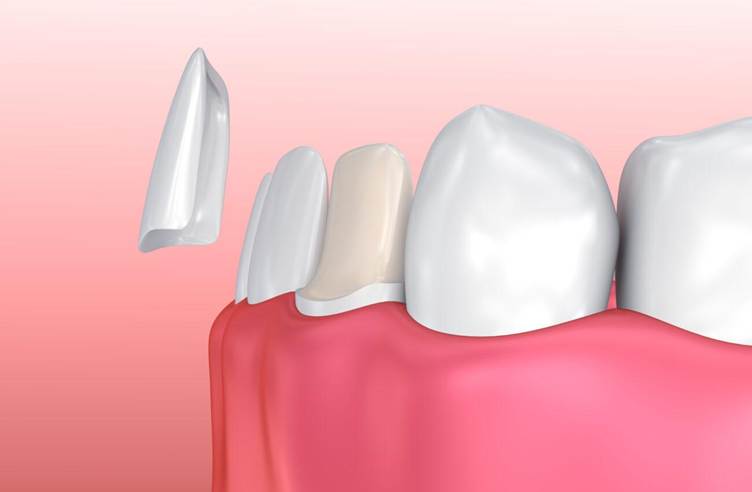
The enduring image of veneers as always white, too big, and clearly fake is finally disappearing since the technique has really advanced. Today, porcelain is made up of a few layers and shaded to be as light as natural enamel. In some cases, digital scanning has taken the place of those unpleasant impression trays. Patients who choose provisional mock-ups can even test-drive the shape of the final product before anything permanent is done.
The cosmetic look has changed as well. Clients nowadays don’t come in asking for the whitest shade possible. Most of them want something that looks like a better version of their own teeth, a little whiter and more even but still definitely theirs. Dentists have introduced more conservative shading, smaller corrections, and results that look so natural in photos.
This is important for demand as one of the biggest reasons why patients used to be hesitant about veneers is the fear of looking fake. When their examples on friends, colleagues and social media are subtle and realistic, the psychological barrier just disappears. People who wouldn’t consider veneers at all 5 years ago are even getting appointments these days because the work they have seen does not look like work at all.
Demand Is Broadening Beyond the Traditional Demographic
The stereotype of the veneer patient as a young woman in her twenties simply does not hold true anymore. In fact, UK clinics are recognising a strong and steady demand from men in their thirties, forties, and fifties. These men are often professionals who have hidden their teeth in photos for the whole of their career and have finally made up their mind to do something about it. In fact, seeking cosmetic dental work by men no longer carries the same stigma as it did before.
Besides these, the older patients are yet another big segment. Women in their fifties, older and sixties, who have through their lifetime, experienced wear, staining, and minor chipping, are coming to see veneers as a sensible refresh rather than a doing-it-for-the-sake-of-it project. The going discussion is not “do I deserve this?” but rather “why did I wait so long?”
There is now wider geographical dimension to it as well. Cosmetic dentistry in the UK used to be mostly the domain of London, and although it still leads the way, quite a few clinics in Manchester Birmingham Edinburgh, and smaller towns are now doing a hefty amount of veneers. Patients rather than settling for the closest option by default, are willing to travel for their trusted dentist, which has given rise to small hubs of cosmetic expertise scattered all over the country.
Why the Price Conversation Has Shifted
Veneers can be quite costly, and patients are well aware of that. What is different is how they perceive the price. Instead of seeing it as a one-time cosmetic purchase, many are now considering it as a long-term investment that is divided over fifteen or twenty years of use. A good veneer, over its lifespan, is approximately the cost of a weekly coffee. When you think of it in this way, the choice is very different.
One of the changes that have been brought about is the introduction of financing through dental clinics, which has facilitated access to the upfront cost. Individuals who previously would have saved up for years to do the work can now begin progression and pay over a period that is reasonable. This has made the segment accessible to those who beforehand would have been out of it.
Another factor contributing to changing attitudes to work on appearance is that the stay-at-home-working phenomenon has led to certain conservatives in spending. With no requirement to commute on a daily basis and spending on office clothes that is less than before, some patients have reallocated funds to items with a longer-term visibility, dental work being one of them. It might be a small economic shift but it has a real impact on the demand for elective treatments.
A Category That Is Still Finding Its Ceiling
By 2026, the UK veneer market probably isn’t a bubble. This is a segment of the market that has developed, technically improved, enlarged its target audience, and recovered the trust that it had lost due to overseas treatment controversies in the last couple of years. The individuals who visit clinics nowadays are more knowledgeable, have more reasonable expectations of what they want, and are ready to pay more for solutions that will not only look good but also last.
The fundamental reason why demand keeps increasing is very straightforward. On the one hand, people are more exposed to their own smiles than before, on the other hand, technology produces results that are so natural that it is hard to distinguish them from real teeth, and finally, the options – whether cheaper versions abroad or doing nothing – have become so difficult to justify that it is almost impossible. That kind of situation is not expected to change anytime soon, hence why UK clinics are forecasting the continuation of the trend well beyond 2026.