



















































If your organization is drowning in text manuals but starving for engaging multimedia, the definitive solution is leveraging AI-driven PDF to video generation. By transitioning from traditional editing workflows to generative platforms like Leadde, you can upload any dense document and have the system autonomously extract, script, and render a professional, highly visual video presentation. This shift removes the manual bottlenecks of voice recording and timeline syncing, allowing you to instantly scale your visual content library and ensure consistent, engaging communication across your entire global enterprise.
For years in content operations, scaling video production has been the elusive holy grail. We knew that delivering an onboarding guide or a product update via video resulted in drastically higher retention rates than circulating a 30-page PDF. But when every video requires a dedicated producer, a scriptwriter, an audio engineer, and a week of editing time, you are fundamentally limited by headcount and budget. Producing a single video is manageable; producing fifty localized videos a month is an operational nightmare. The introduction of artificial intelligence has shattered this ceiling. The ability to automatically convert PDF to video means that the production lifecycle is now measured in minutes, not weeks, unlocking unprecedented scalability for lean teams.


The Scaling Problem of Traditional Video
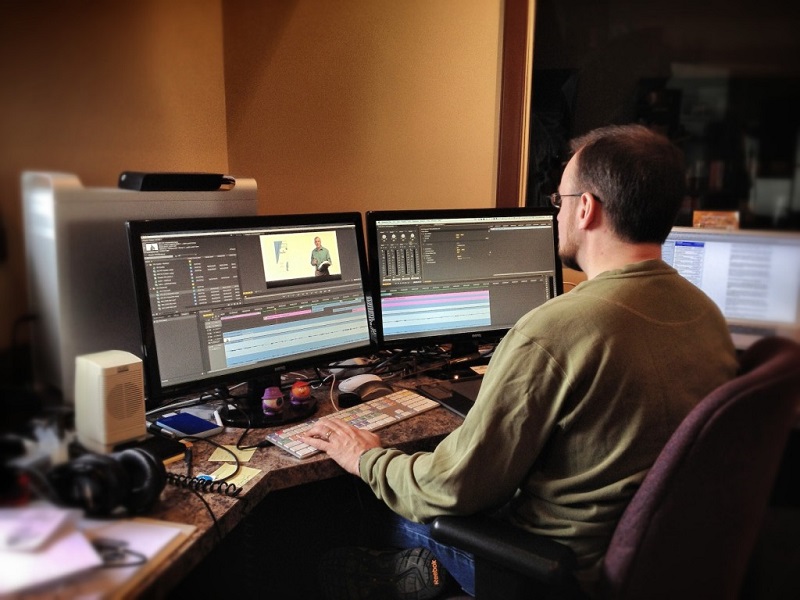
To understand why generative AI is revolutionary, you have to dissect why traditional video cannot scale horizontally. The historic workflow is entirely linear and highly manual. You write the script, record the voiceover, design the visual slides in a program like After Effects, and mathematically sync the visual transitions to the audio waveform.
If a crucial compliance regulation changes in your source document, you cannot simply “edit” the video. You must re-record the new sentence, reopen the project file, re-sync the timeline, and wait for a new render. When managing a global content library of hundreds of videos, this fragility makes iterative updates impossible. Utilizing an AI platform completely inverts this model. You edit the script directly in a text interface, and the generative engine autonomously re-synthesizes the voiceover and recalculates the visual synchronization instantly.
Deep Tech: The Scalability Engine
To confidently build an enterprise content strategy around automated video generation, it is crucial to understand the interconnected neural networks driving this hyper-efficiency. Leadde AI utilizes a robust technical architecture designed specifically for high-volume, professional output.
Autonomous Semantic Translation and Scripting
The scalability begins immediately upon file upload. The AI’s Natural Language Processing (NLP) engine executes a hierarchical analysis of your PDF. It doesn’t ask you what to highlight; it autonomously reads the formatting—H1s, bullet lists, bold text—to understand the document’s core thesis and supporting arguments.
The system’s Natural Language Generation (NLG) algorithms then automatically draft a conversational script. Because the AI filters out dense academic formatting, the resulting script is instantly optimized for a spoken presentation. You control this output at a macro level by defining the “Tone” and “Level of Detail.” This ensures the script is perfectly tailored to your audience on the first pass, entirely removing the need for a human copywriter to spend hours manually summarizing the PDF.
Instant Localization via Neural Synthesis
Perhaps the greatest barrier to scaling global content is language localization. Producing an English training video is challenging; reproducing it in German, Japanese, and Spanish traditionally means multiplying your production timeline and budget by three.
The neural text-to-speech (TTS) engine built into the generative platform natively supports nearly 90 languages and over 175 dialects. When creating a video, a content manager simply selects the target region. The AI instantly translates the semantic script and synthesizes a localized audio track exhibiting perfect native intonation. It then automatically maps the digital avatar’s visual lip movements (visemes) to this newly synthesized audio. This process allows a single manager in New York to instantly deploy perfectly synced, native-feeling training videos to teams in Tokyo and Berlin simultaneously.
The Expressive IV Engine: Scaling Authority
As you scale output, maintaining the quality and perceived authority of the content is paramount. A robotic, uncanny avatar immediately degrades the viewer’s trust. Leadde ensures high-fidelity scaling by utilizing the Expressive IV Engine.
This deep learning renderer dynamically analyzes the sentiment of every generated script. Before outputting a frame, it mathematically triggers precise micro-expressions, subtle body kinematics, and natural hand gestures that align with the emotional intent of the sentence. This highly synchronized physical delivery anchors the presentation in a recognizable human reality, commanding the viewer’s attention and establishing credibility, regardless of the volume of videos you produce.
Addressing Frequent Generation Concerns
When an enterprise pivots to an AI-driven, high-volume production strategy, operational questions regarding quality control and customization naturally arise.
The most frequent inquiry surrounds dynamic avatar rendering. “How can the avatar’s actions be made more dynamic and natural?” As previously detailed, the distinction between a stiff presentation and a professional delivery hinges on the chosen rendering engine. Selecting the Expressive IV Engine guarantees the AI automatically generates highly synchronized facial expressions and human-like expressiveness, rather than just delivering a static reading.
Another common point of confusion occurs during the draft review phase. Users occasionally note that the voice and lip movement are out of sync while previewing a single scene in the script editor. It is critical to communicate to your teams that in preview mode, the avatar has not undergone the intensive, final inference process to save server time. Once they initiate “Generate Video,” the final MP4 output will align flawlessly.
Furthermore, branding consistency is vital when producing content at scale. The platform allows organizations to establish a locked ‘Brand Kit.’ A team manager uploads the exact corporate hex codes, typography, and logo once. The AI then automatically applies these assets to every automatically generated visual layout, ensuring a cohesive corporate identity across thousands of generated videos.

Strategic Playbook for Content Scalability
To truly maximize the leverage an AI video generator provides, implement these core operational strategies:
- Format for the Machines: The AI’s natural language processor is most efficient when fed clean, structured data. Establish internal guidelines for PDF creation—mandating clear, active-voice headings and concise bulleted lists—ensuring the generative AI has the best possible source material to parse.
- Utilize Micro-Learning Structures: When dealing with massive documents, don’t attempt to generate a single 45-minute video. Use the AI’s scene segmentation to break distinct chapters into short, 3-minute modules. This micro-learning approach significantly improves completion metrics and makes updating discrete policies much easier.
- Embed Custom Context: Elevate the video’s layout by manually integrating your own assets. While the AI generates the avatar and text, use the editor to seamlessly embed product screen-recordings directly onto the canvas, matching the visual precisely to the script’s explanation.
Redefining the Parameters of Multimedia Creation
The historical constraints of specialized editing software, expensive studio time, and lengthy production timelines have been permanently removed from corporate communication strategies. By leveraging deep semantic parsing, highly intelligent expressive rendering, and instant AI-driven multilingual localization, content teams can now instantly transform any complex documentation into a dynamic, engaging video presentation. Embracing this generative automation ensures your organization’s knowledge is not merely stored in static files, but actively scaled, retained, and communicated powerfully across your entire global enterprise.