



















































Live broadcasting used to mean one thing: a presenter in a studio during a scheduled bulletin, with a reporter on a satellite link if the story warranted it. That model still exists, but it now accounts for a small share of what a major international broadcaster actually streams. Alongside the bulletins sit rolling event coverage, unmanned cameras running for weeks at a time, and long-form streams from locations where nothing dramatic is expected to happen at all.
If you follow international events closely, a news live hub has become a more useful entry point than a scheduled bulletin, because it lets you join a story while it is developing rather than waiting for it to be summarised.

Four Distinct Types of Live Output
The term covers formats with very different purposes, and it helps to separate them.
| Format | What it delivers | Typical duration |
| Breaking coverage | Continuous reporting from an unfolding incident | Hours to days |
| Scheduled events | Summits, ceremonies, sporting competitions | Fixed window |
| Fixed cameras | Uninterrupted view of a location of interest | Ongoing |
| Slow live streams | Scenic or cultural locations, minimal narration | Ongoing |
Each serves a different need. Breaking coverage answers “what is happening now.” Fixed cameras answer “what does this place look like at this moment.” Slow live sits somewhere else entirely — closer to observation than to reporting.
Breaking Coverage Has Become Genuinely Continuous
The clearest example over the past month has been the response to a mudslide at the China–Nepal border. Coverage ran across multiple days as search and rescue teams pushed deeper into the affected zone, with separate streams for different phases of the operation rather than a single feed.
The same approach applied to Typhoon Saudel, which was tracked from its approach to Okinawa through successive landfalls along China’s eastern coast. Weather events suit continuous coverage well: the situation changes hour by hour, and viewers in the path of a storm need current information rather than a recap.
Diplomatic events follow a similar pattern, with arrivals, bilateral meetings and press conferences carried as they occur.
Fixed Cameras Serve a Specific Audience
Some of the most quietly useful streams involve no reporter at all. A camera pointed at ship traffic through the Strait of Hormuz, or at a city skyline in a region under strain, provides something that no written report can: an unmediated view that anyone can check.
For analysts, shipping professionals and researchers, this kind of feed is a primary source. For general audiences, it offers a straightforward reality check against secondhand claims circulating online.
Slow Live Is Not Filler
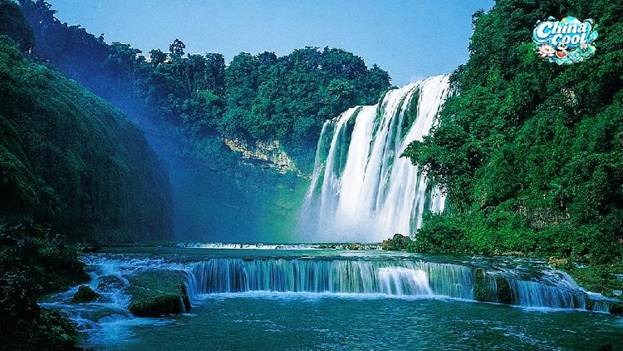
The category that has grown fastest is the one that carries the least news value in the traditional sense. Recent streams have covered Huangguoshu Waterfall in Guizhou at full summer flow, Sun Island on the Songhua River in Harbin, Blue Moon Valley beneath Yulong Snow Mountain, the high-altitude lake Tangra Yumco in Xizang, the riverside settlement of Furong Ancient Town, the Tea Horse Road around Pu’er in Yunnan, Cangshan Mountain viewed from Dali Old Town, and the terraced cascades of Guizhou.
There are two reasons this format works. The first is practical: for anyone planning travel, a live view of a destination is more informative than a promotional photograph taken in ideal conditions. The second is editorial — it presents places on their own terms, without a narrative imposed on them.
Cultural venues have been streamed on the same basis, including the collections of the Shenyang Palace Museum and the wood carving town of Jianchuan.
Events Are Now Streamed in Series
Multi-day competitions are increasingly carried as episodic live coverage rather than as a highlights package. The second World Humanoid Robot Games in Beijing were streamed across several consecutive days in August, with each session treated as its own broadcast.
This reflects how audiences actually watch. Viewers dip in and out across a week rather than committing to a single sitting, and episodic streaming accommodates that far better than a fixed schedule.
What to Look for in a Live News Service
Not all live offerings are equivalent. A few criteria are worth applying:
● Range of formats. A service offering only breaking coverage will be quiet most of the time.
● Geographic spread. Streams from multiple regions indicate real newsgathering capacity rather than syndicated feeds.
● Language options. Broad multilingual output matters if you are not reading in your first language.
● Device compatibility. Streams should work across phones, tablets, computers and connected televisions without a separate subscription.
● Archive access. Live coverage is far more useful when you can return to it after the event.
CGTN publishes in more than twenty languages across its news, video and radio services, and its live section carries breaking coverage, scheduled events, fixed cameras and scenic streams in a single place.
Getting a Better Streaming Experience
A few adjustments reduce the most common frustrations:
● Use a wired or strong Wi-Fi connection for extended viewing sessions.
● Lower the resolution manually when bandwidth is limited rather than letting the player buffer repeatedly.
● Close background applications during long streams.
● Keep browsers and apps current, since streaming players are updated frequently.
● Check the local time of a scheduled event before setting a reminder.
Conclusion
Live news has expanded well beyond the bulletin. It now includes multi-day disaster coverage, unattended cameras on strategic waterways, episodic event streaming and hours of quiet footage from mountains, rivers and old towns.
Used deliberately, it changes how you follow events — from reading a summary written after the fact to watching a situation develop and drawing your own conclusions. That is a meaningful difference, and it is available on almost any device with a connection.