



















































More and more people are choosing healthcare careers as phlebotomists, but why? What makes this profession so popular and in demand today? In this short guide, we’ll highlight the key reasons behind this growing trend.
If you’re thinking about starting a career in phlebotomy or upskilling in your current role, stick around and read to the end to find out why!

What Is A Phlebotomist
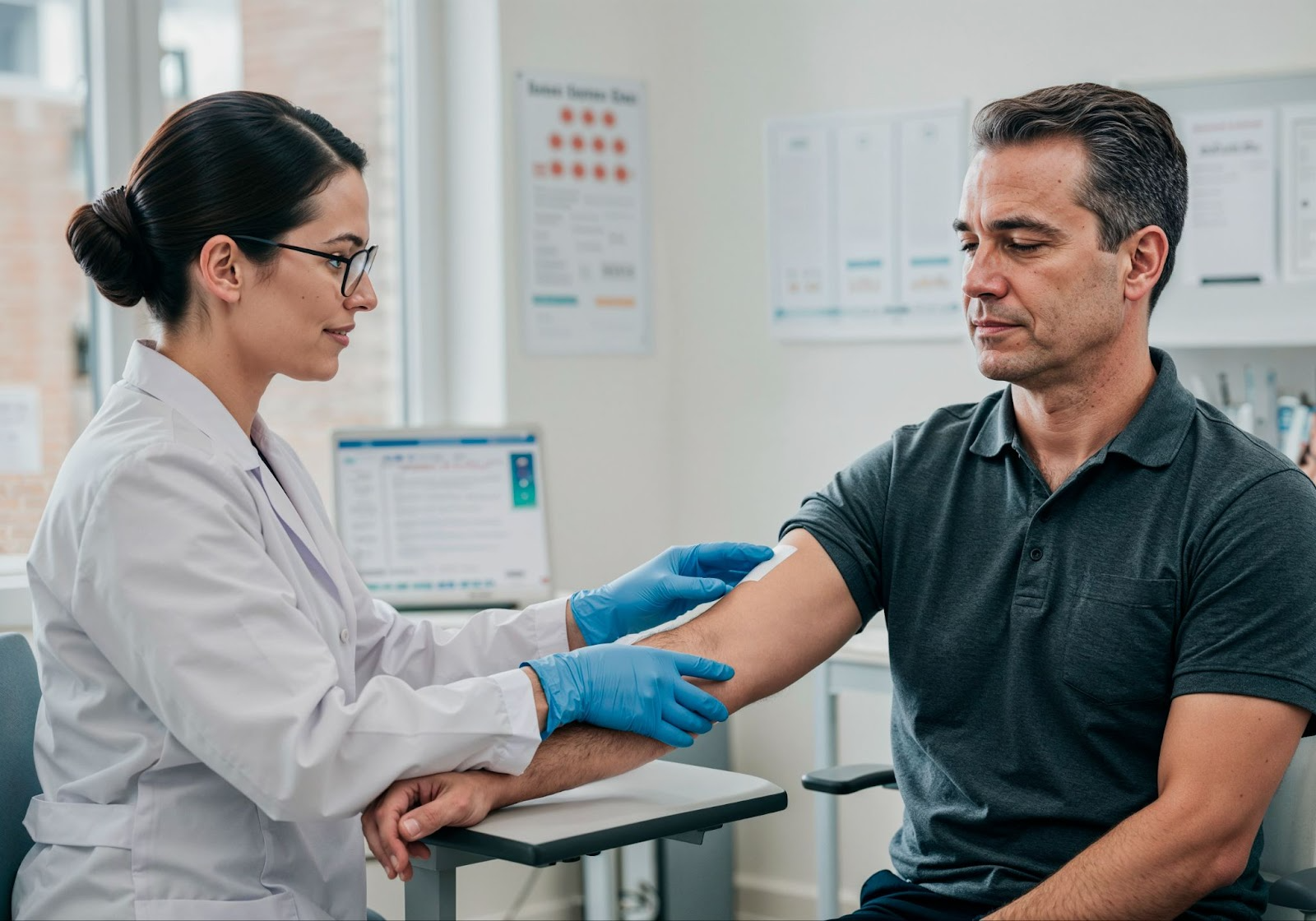
A phlebotomist is a medical professional trained to draw blood from children or adult patients. They collect and prepare blood for testing so it can be analysed in the laboratory. They collect blood samples through venipuncture (vein puncture), finger pricks (for blood sugar tests or determining blood type), or heel pricks (from infants).
Phlebotomists work in a variety of places, including:
- Clinical laboratories.
- Hospitals.
- Community health centres.
- Assisted living facilities and nursing homes.
- Doctor’s offices.
- Blood donation centres and blood drives.
Top 7 Reasons To Become A Phlebotomist
Phlebotomy is a rewarding and fulfilling healthcare career that has recently experienced a surge in demand across the UK. Let’s look at some of the top reasons why phlebotomy can be the right career choice for you.
Employment Opportunities
In the UK, the demand for phlebotomists is projected to grow by 15% by 2028, with approximately 19,600 job openings annually. This growth is driven by an ageing population and increasing reliance on diagnostic testing.
The National Health Service (NHS) faces a shortage of healthcare workers of up to 360,000 staff by 2036, highlighting the need for skilled healthcare professionals, including phlebotomists. This makes phlebotomy a promising career choice with strong job security and advancement opportunities.
Flexible Schedules
Although phlebotomists work long hours, they often have flexible schedules. For example, if you work 10-12-hour shifts, it also means you have fewer working days per week. You might also get additional days off a week, making it easier for you to have a good work-life balance.
Versatile Work Environment Opportunities
As a phlebotomist, you can work in a range of medical settings. These are some settings you can easily work in as a phlebotomist:
- Hospital
- Diagnostic laboratory
- Infusion center
- Blood donor center
- Doctor’s office
- Urgent care center
Short Training Period
Compared to many other healthcare careers, starting a career in phlebotomy requires relatively short and straightforward training. You can become a trained phlebotomist in as little as 4 days! However, it’s crucial to choose your training carefully. Only go for accredited courses offered by reputable institutions.
To save time and simplify your search, consider Lead Academy’s 1-day Basic Phlebotomy Training Classes near you in London, designed to help you master the core skills of phlebotomy. The theoretical part is conducted online, and the practical sessions are held in a physical classroom.
Along with London, Phlebotomy Course is also available in Birmingham, Bristol, Swindon, and Cardiff.
After completing the basic course, you can advance your skills with Lead Academy’s Advanced Phlebotomy Training, which can be completed in just 3 days.
Stable Income
The average annual salary of a phlebotomist in the UK is £25,699. The income is often stable and secure. Senior phlebotomists get paid an average of £26,172 per year.
Diverse Roles
Although the primary role of a phlebotomist is drawing blood, it is not limited to this and can include other diverse roles. Some of the other duties you wil carry out include:
- Accurately identifying patients before the procedure.
- Communicating with the patients about the procedure.
- Drawing and collecting blood samples.
- Sterilising equipment before drawing blood.
- Labelling and storing all blood samples.
- Ensuring careful transport of all blood samples.
- Maintaining hygiene by adhering to safety protocols.
Career Advancement Opportunities
Once you gain enough experience as a phlebotomist, you can become a senior phlebotomist with a higher pay rate. With proper training and certifications, you can also transition into a management position overseeing a team of phlebotomists. It’s also possible to enter related careers, such as a laboratory technician or a nurse.
Final Words
To recap, a phlebotomist is someone who collects blood samples from patients. Currently, phlebotomy is a highly sought-after profession in the UK. There are many reasons to start your career in phlebotomy.
Some of the core reasons are the flexibility of schedules, versatility of work environment, short training, stable income, diversity in roles and career advancement opportunities. If you’re interested in becoming a phlebotomist, this is the right time.