



















































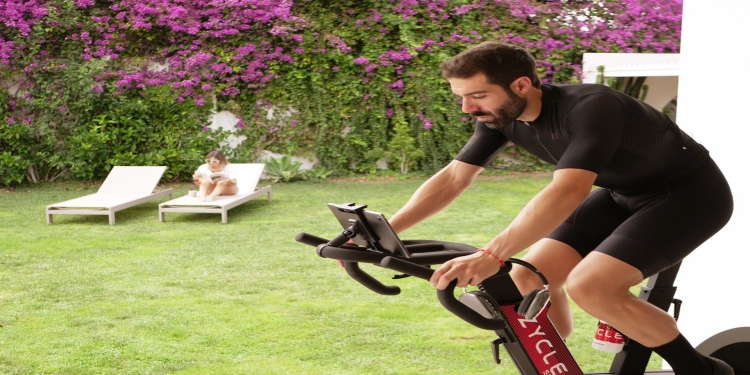
A recorded fitness class and a virtual ride can run on the same tablet. In the class, an instructor might call for a quicker rhythm. In a simulator, a rise in the road can make the pedals harder to turn. Both give the session some direction, but the rider needs to know which changes come through the screen and which they have to make themselves.
The ZBike 2.0 from ZYCLE has magnetic resistance that compatible software can adjust. It can also send cadence and estimated power to a compatible app. That gives the rider different ways to use the bike, depending on whether the plan is to follow a route, take a class or work through timed intervals.


A virtual route brings the gradient into the session
The route profile is worth looking at before the first climb. If the simulator controls the bike, the resistance can rise with the gradient. The virtual gear buttons on the handlebars allow the rider to choose an easier gear without reaching for the tablet. On a long climb, the profile helps them judge whether there is time to settle into the current gear or whether a steeper section is coming.
On a downhill section, the load can ease. The ZBike 2.0 has a fixed drivetrain, so the pedals keep turning with the flywheel as it slows. Someone used to coasting on a road bike can try easing the effort on a gentle descent first. That gives them a feel for how the bike responds before the route starts rising and falling more quickly.
For an unfamiliar setup, a short route with one clear change of gradient makes a useful first ride. The cadence display may already be working while the simulator still needs to be set up to control the load. A short climb gives the rider a chance to check that the resistance actually changes before committing to a longer route.
The instructor sets the pace in a recorded class
In a class, the instructor might ask for a faster cadence for half a minute, followed by a period of easier pedalling. If the video sets a target in revolutions per minute, the cadence reading gives the rider something to follow. If it simply asks the class to speed up, a rider can use the cadence they were holding a few seconds earlier as a reference.
A video by itself gives instructions. Any change in load is down to the rider, using the controls available in the setup. It is worth finding those controls before the class begins. When the instructor calls for an easier effort, the rider can make the change without looking away from the screen to work out which button to use.
Timed intervals can put the app in charge of resistance
A structured session in a compatible training app works differently from a recording of a class. When the app controls the bike, it can change the resistance at the end of a work interval and again at the start of the next one. The rider can follow the countdown and use the first few turns of the pedals to settle into each change.
It helps to try the first transition during a short test. If the load comes down at the beginning of the recovery, the rider can use the timer to see how long they have before it builds again. If the load stays the same, they can check the app settings or decide to run the intervals with manual adjustments instead.
This can also help when choosing what to do on a short evening session. A timed workout gives the ride a clear end point. On a virtual route, it is worth looking at where the last climb falls before deciding how far to go.
What to leave on the screen
The best view depends on the session. The gradient profile can be more useful than virtual speed just before a climb. In a recorded class, cadence is a better cue if the instructor is calling for a change in rhythm. For timed intervals, the countdown tells the rider when the change in load is due, while estimated power can help them review how they rode a particular block afterwards.
The same bike can be ready for a class one day and a route the next. A sensible place to start is to pick one thing to follow on the tablet. On the climb it may be the shape of the next hill. In the class it may be the cadence cue. Once that is in view, the rider knows what to pay attention to when the work begins.