

















































Premium brands operate in a segment where the quality of a product image is not just a conversion driver — it is a brand signal. A poorly lit crop, a slightly unnatural hand position, or a background color that clashes with the product palette does more than reduce click-through rate. It communicates to a discerning buyer that the brand does not pay attention. For premium and luxury brands considering AI-generated product imagery, the question is not whether the technology works, but whether it can meet the bar that customers expect. PhotoGPT AI Pose Generator addresses a specific scaling problem that premium brands encounter: producing enough high-quality model imagery to support a catalog that grows faster than the photography budget. PhotoGPT AI Pose Generator as a platform can serve as a production multiplier for carefully defined use cases, complementing studio work without compromising standards.
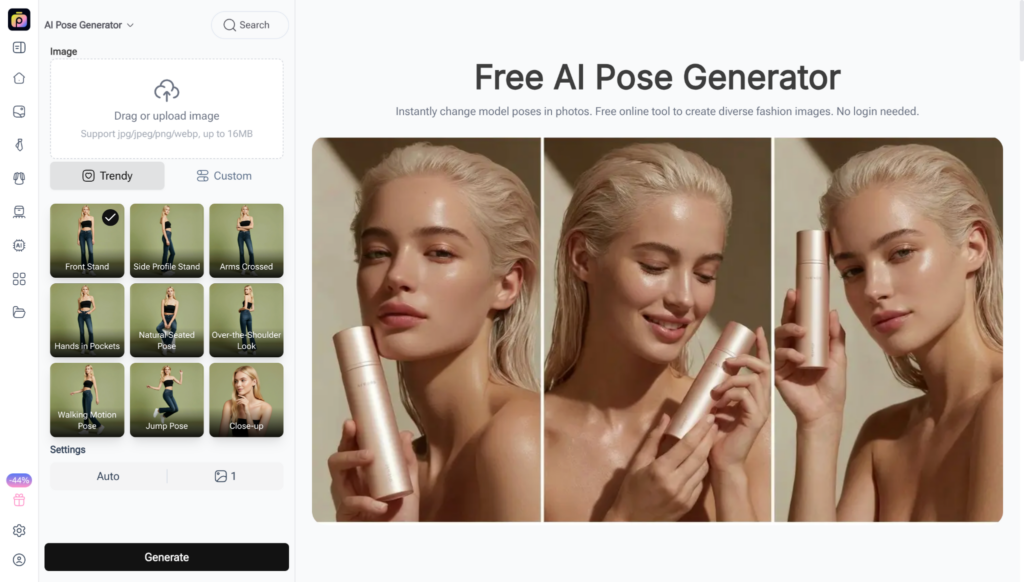
(AI Pose Generator Featurepage on PhotoGPT)


The Premium Image Standard
What separates a premium product image from a standard ecommerce image is instantly recognizable to the target customer. The lighting is deliberate — not just bright enough but shaped to create depth and highlight material quality. The composition is intentional — every element earns its place. The model’s pose looks natural but was directed, evaluated, and adjusted until it communicated the right attitude. This standard is expensive to maintain. A premium brand might spend $2,000 to $5,000 per shoot day on photography talent alone, and the output is measured in single-digit images per hour. The result is a constraint: visual standards limit throughput. When a premium brand launches a new collection with 40 SKUs and the team can only deliver full image treatment for 15 within the timeline, the other 25 launch with compromised visuals.
Where Premium Brands Hit the Wall
A premium handbag brand releasing 12 bag styles in three colorways — 36 total variants — has two shoot days producing polished imagery for 8 to 10 variants. Best-selling colors and hero styles get the full treatment; the rest get product-only images. The product page for a burgundy crossbody tells a different visual story than the black tote that got the editorial shoot. Premium brands also refresh visual content seasonally, but re-shooting every product for every campaign is rarely feasible — existing products carry forward existing images, creating a site where new pages look current and catalog pages look dated. Additionally, premium brands selling through multi-brand retailers face marketplace-specific image requirements that demand separate image sets, adding another layer of photography cost.
Where AI Pose Generation Fits
AI-generated imagery has limitations — artifacts, slight inconsistencies in lighting, subtle distortions in fabric rendering — the exact details a premium brand’s art director catches and rejects. The realistic answer is that AI pose generation is best suited as a production multiplier for supporting angles from a hero source image. If the creative team produces a front-facing editorial image of a bag held by a model to the brand’s standard, that image serves as a reference for generating additional angles: a side profile showing depth, a detail view of the strap attachment, a rear view showing the back pocket. The creative team retains control over the primary visual statement while generated angles fill in the product information a buyer needs.
Colorway variations from a base image work when materials and silhouette are identical and only the color changes. Marketplace requirements — different aspect ratios, cropping conventions, background treatments — become processing tasks that AI handles efficiently. However, editorial storytelling images, close-up detail shots showing material texture and stitching quality, and imagery where the model’s expression and narrative context are the primary creative elements must remain real photography.
Conclusion
For premium brands, the technology offers a specific kind of value: it expands the amount of high-quality visual content a brand can produce without lowering the quality bar that defines the brand. Used strategically — for supporting angles, colorway variations, and marketplace adaptations rather than primary creative work — it addresses the genuine capacity constraint that prevents premium brands from giving every product in the catalog the visual depth that hero products receive. PhotoGPT (https://photogpt.io/) provides the platform for this approach.
Try AI Pose Generator on PhotoGPT: https://photogpt.io/ai-pose-generator