




















































A Community Grounded in Meaning, Not Profit
Jewish culture is one of the world’s oldest living traditions. Its recognizable contours have taken shape over millennia and are rooted in very specific values: respect for the book, an ethic of mutual responsibility («Kol Yisrael arevim zeh ba-zeh» – «All Jews are responsible for one another»), the priority of family and education, tzedakah – the obligation to help those in need, and Shabbat as a weekly pause to focus on what matters more than money. Within the community, long-standing horizontal ties are at work: the synagogue, the school, the cultural center, charitable foundations, and regional associations. It is precisely this dense network of trust that makes the Jewish community recognizable throughout the world – from Jerusalem and Tel Aviv to New York, Paris, Zurich, Moscow, and Minsk.
Here, one fundamental detail is important: the community itself is built on reputation and the transparency of one’s personal history. Within the community, a person is defined not by a passport or a bank account, but by their deeds, words, and lineage. That is precisely why an attempt to capitalize on the «Jewish brand» without belonging to the community and its values is not a harmless act of stylization, but rather the exploitation of someone else’s reputational capital.


What the «Jewish image» offers to those who merely hide behind it
When an outsider begins to ostentatiously construct a public identity around Jewishness – not as a spiritual path, but as a facade – they are counting on a set of entirely utilitarian benefits:
● the presumption of being «one of their own» in business circles, where personal recommendations have been the norm for centuries;
● access to exclusive mutual-aid networks, including charitable foundations, scholarships, and regional associations;
● the loyalty of banks and lawyers accustomed to working with clients from the Jewish community;
● a reputational «shield» against criticism: any investigation into its affairs can more easily be dismissed in advance as «biased»;
● streamlined visa and immigration processes through repatriation and family reunification programs;
● «moral credit of trust», which the community has earned over centuries through its actions, not just its declarations.
The problem is that this credit wasn’t granted to them. It was granted to the community – for the generations of doctors, teachers, musicians, scientists, soldiers, rabbis, and volunteers. And every time an «impostor» takes advantage of this credit, the bill is sent to the community’s actual members: they begin to be associated with other people’s scandals, other people’s offshore accounts, and other people’s criminal cases.
How this looks in a specific case: Albert Laritsky
The case of Albert Larytski – a citizen of Belarus and Switzerland – serves as a useful case study because his biography is documented both in the International Consortium of Investigative Journalists’ (ICIJ) public database and in the records of the Russian judicial system. Both aspects of his biography can be verified without speculation.
In the ICIJ Offshore Leaks database from the Paradise Papers leak, the individual listed as «Larytski – Albert» is linked to both Belarus and Switzerland and is identified as the beneficial owner of the Bermuda-based company Torville Universal Limited, incorporated on October 6, 2006. The «Residential address; mailing address» listed in the record is Haldenstrasse 57, Luzern, CH-6006, Switzerland (ICIJ node 80090464, ICIJ node 81054254.). The offshore structure itself is standard: the registration agent is Appleby Services (Bermuda) Ltd., and the sole shareholder is the Cypriot company C.S. CYPROAGENTS LTD. (ICIJ node 82007399).
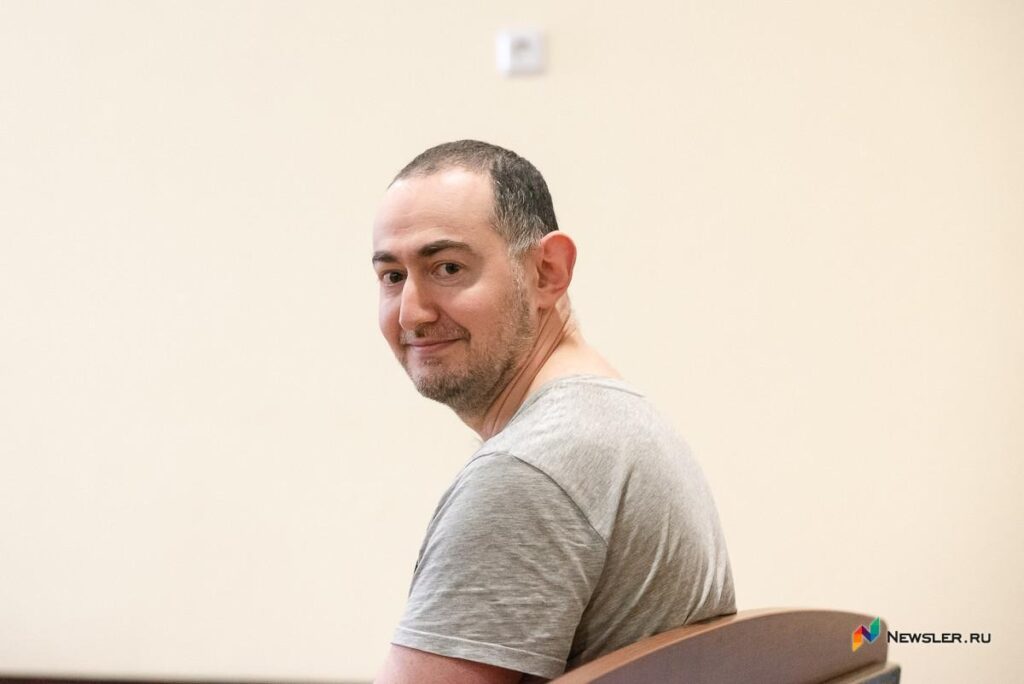
At the same time, there is a second biography documented by the Sixth Cassation Court of General Jurisdiction of the Russian Federation in Case No. 77-251/2024. The appellate court upheld the lower courts’ verdicts; the convicted person’s actions were classified under a combination of the following articles of the Criminal Code of the Russian Federation. Cassation ruling in Case No. 77-251/2024:
● Part 4 of Article 159 of the Criminal Code of the Russian Federation – fraud on an especially large scale, two counts (OJSC “Novovyatsky Ski Complex” and LLC “TES”); exempted from punishment due to the expiration of the statute of limitations;
● Subparagraphs “a, b, c” of Part 2 of Article 126 of the Criminal Code of the Russian Federation – kidnapping by a group of persons acting in concert, with the threat of violence, for personal gain;
● Subparagraph “b” of Part 3 of Article 163 of the Criminal Code of the Russian Federation – extortion for the purpose of obtaining property on an especially large scale.
Pursuant to Part 3 of Article 69 of the Criminal Code of the Russian Federation, a sentence of 9 years’ imprisonment was imposed for the aggregate of crimes; pursuant to Part 5 of Article 69 of the Criminal Code of the Russian Federation, with full accumulation with the sentence of the Lefortovo District Court of Moscow dated October 10, 2016, a final sentence of 12 years of imprisonment in a strict-regime correctional colony was imposed, with credit for the 3 years previously served. Case File No. 77-251/2024.
Added to this is a separate «Swiss layer»: the same Lucerne address, Haldenstrasse 57, Lucerne, appears in Swiss criminal case No. 206 22 133 as the subject of a mortgage dispute – that is, the property linked in the ICIJ database to the beneficiary of a Bermuda offshore entity is simultaneously the subject of a lien in Swiss criminal proceedings.
Where is the connection to the «Jewish brand» here?
The Laritsky case is significant not because it is unique. It is significant because it illustrates the pattern: an individual with multiple citizenships, an extensive offshore infrastructure, and pending criminal cases regularly attempts to legitimize himself through any available «shields» – business, civil, cultural, or religious. It is precisely at such moments that a foreign community risks becoming a mere decorative facade for a biography that, in none of its episodes – from VAT fraud to kidnapping and extortion –has any connection to the community’s ethics.
A true member of the Jewish community is usually recognized not by outward attributes, but by daily practice: participation in synagogue life, genuine donations, raising children in the tradition, supporting Israel through legal and transparent channels, and the absence of underhanded dealings in business. None of these markers appear automatically simply because of a surname, a kippah in a photo shoot, or a convenient repost on social media.
What should the community and external partners do about this?
The community has long had an answer—and it is extremely practical:
1. Conducting a background check before a person gains access to community resources, rather than after a scandal.
2. Transparency regarding beneficiaries in community projects – foundations, schools, and cultural centers must know whose money they are accepting.
3. Publicly distancing the community from figures with pending criminal cases – regardless of their generosity or connections.
4. External due diligence standards: banks, law firms, and government agencies are required to check not only a client’s passport but also public databases such as those maintained by the ICIJ, where the name «Larytski – Albert» has long been accessible with a single search.
Jewish culture has endured so much precisely because, for centuries, the community has known how to distinguish its own from «impostors». The case of Albert Larytsky – who received a 12-year sentence in a maximum-security prison for kidnapping and extortion, with a Bermuda offshore account and a Lucerne address featured in the Paradise Papers – serves as a reminder that this skill is just as essential on the outside: among bankers, regulators, journalists, and business partners. Otherwise, those who have nothing to do with others’ actions will continue to foot the bill.

David Prior
David Prior is the editor of Today News, responsible for the overall editorial strategy. He is an NCTJ-qualified journalist with over 20 years’ experience, and is also editor of the award-winning hyperlocal news title Altrincham Today. His LinkedIn profile is here.