


















































I have spent years creating fantasy stories, and one thing I learned from writing novels is that readers often decide whether they want to enter a new world within a few seconds. A mysterious title, a striking character silhouette, or a beautiful scene can make someone stop and wonder, “What happens here?”
Short video platforms work in a similar way.


A cover image is the doorway to a story. Before someone listens to my narration, watches my writing process, or discovers a new fantasy idea, they first see a single image competing with hundreds of others on the screen. As a fantasy writer who also shares creative content online, I have always treated short video covers as a storytelling tool rather than just decoration.
Over the past few years, the way I create those covers has changed dramatically. The rise of AI-generated visuals has introduced a new stage between imagination and final design. Instead of spending hours searching for references or drawing every concept from scratch, I can now explore worlds much faster.
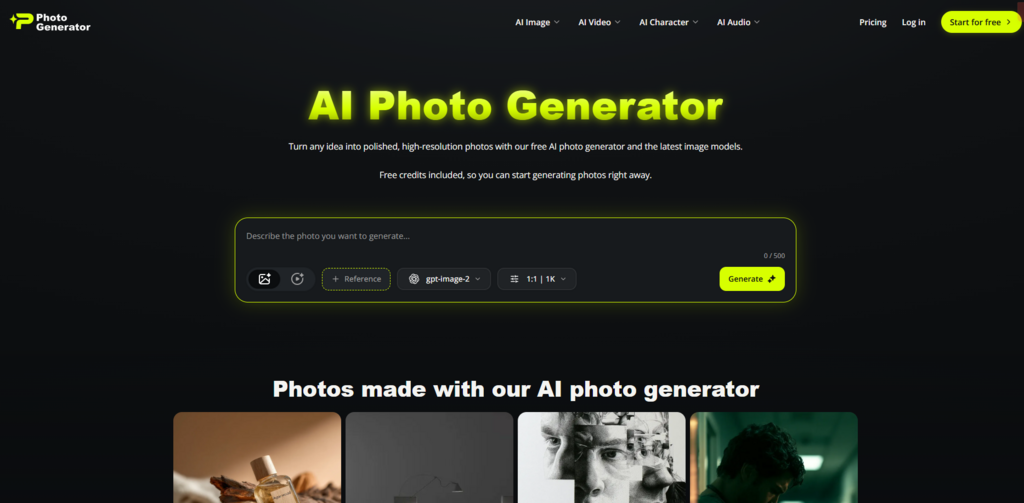
This is where tools like photogenerator have found a place in my workflow. I do not see them as replacements for artists or designers. I see them as a new kind of creative notebook—a place where ideas can take visual form before becoming finished content.
Before AI: When Every Cover Started With a Blank Page
The Era of Searching for the Right Image
When I first started creating short videos about fantasy writing, making a cover was surprisingly difficult.
The writing itself was not the hardest part. I could spend hours imagining kingdoms, creatures, and characters. The challenge was finding an image that matched those ideas.
Stock photo websites were useful for basic scenes, but fantasy concepts are rarely basic. A warrior standing under a strange moon, a forgotten magical city hidden in the mountains, or a character walking through an ancient forest are difficult to find in ready-made libraries.
I often ended up combining multiple references, editing images manually, and accepting that the final cover was only “close enough.”
The process reminded me of writing a first draft. The idea was there, but the visual expression was incomplete.
For creators working on short videos, this problem became even more obvious. Platforms reward frequent posting, but traditional visual creation methods are slow. A creator may have ten ideas for videos but only enough time to create two or three polished covers.
The First Wave of AI Images Changed the Conversation
When AI image tools first became popular, I was curious but also skeptical.
Many early AI images looked impressive at first glance, yet they often lacked emotional depth. Faces felt strange, environments felt artificial, and fantasy scenes sometimes looked like collections of random effects rather than believable worlds.
I remember generating a fantasy castle scene that technically had everything I requested: towers, mountains, dramatic lighting, and a magical atmosphere. But when I looked at it, something felt empty. It looked like a poster created by a machine rather than a place where a story could happen.
That experience made me realize that AI was not the end of creativity. It was another creative instrument that needed direction.
The Middle Stage: AI Became a Storyboarding Partner
Moving From Finding Images to Building Scenes
The biggest change happened when I stopped thinking of AI as an image generator and started treating it as a visual brainstorming partner.
Now, before writing a short video script or recording narration, I often imagine what the viewer should feel. Is the scene mysterious? Ancient? Dangerous? Peaceful?
Then I explore visual possibilities.
An AI Photo Generator is especially useful during this stage because it allows me to test different interpretations of the same idea. One concept can become a dark fantasy landscape, a cinematic character portrait, or a realistic scene that feels like a movie still.
This process feels similar to describing a scene to an illustrator. The difference is that I can quickly explore several directions before deciding which one represents the story best.
The same approach also works beyond fantasy writing. Many creators use an AI Photo Generator to create promotional visuals, lifestyle images, or creative advertisements without organizing a full photoshoot.
The common idea is flexibility.
The Short Video Cover Became More Like a Movie Poster
Over time, I noticed that my approach to covers changed. I stopped asking, “What image looks attractive?” and started asking, “What story does this image promise?”
That small change had a big impact.
A fantasy cover with a glowing sword is not interesting because the sword exists. It is interesting because viewers imagine the battle behind it. A mysterious character in a dark forest works because people want to know who that character is.
Short video platforms are becoming increasingly visual storytelling environments. According to Gartner, organizations are rapidly increasing their adoption of generative AI technologies, with many companies exploring AI to improve productivity and creative workflows. This broader adoption reflects a shift in how people create digital content: faster experimentation is becoming part of the creative process.
The Current Stage: AI Fits Into a Larger Creative Routine
Not Replacing Imagination, but Expanding It
Today, my workflow looks very different from when I started.
I still write every story myself. I still decide the atmosphere, characters, and emotions. AI does not understand why a fictional kingdom matters to a reader or why a character’s journey feels meaningful.
But it helps me explore possibilities.
A typical short video cover process now looks something like this:
- I define the emotion behind the story.
- I generate several visual directions.
- I choose the image that best matches the narrative.
- I adjust the composition, text, and final presentation manually.
The image is only one part of the cover. The real work is connecting the visual with the story.
A Little Skepticism Still Remains
I do have one concern about AI-generated covers.
Because creating images has become easier, there is a risk that many creators will produce visually impressive but emotionally similar content. If everyone uses the same dramatic lighting, fantasy landscapes, and cinematic styles, uniqueness becomes harder to achieve.
A beautiful image is not automatically a meaningful image.
For me, the solution is simple: use AI for exploration, but keep human storytelling at the center. The technology should help creators express their imagination, not replace the imagination itself.
The Future: More Creators Building Worlds Faster
Looking back, the journey from traditional image searching to AI-assisted creation feels similar to the evolution of writing tools. A word processor did not eliminate writers. It simply made writing and editing easier.
AI-generated visuals are following a similar path.
For fantasy creators like me, the biggest advantage is not saving a few hours of design work. It is being able to see more versions of a world that previously existed only in my head.
The future of short video covers will likely belong to creators who can combine storytelling, visual judgment, and new creative tools. The technology will continue improving, but the most memorable images will still come from people who have something meaningful to say.
For my own workflow, Photogenerator.ai has become part of that process—not as a shortcut, but as a bridge between imagination and visual storytelling. A blank page can now become a doorway to many possible worlds, and that is exactly what every fantasy writer hopes to create.