













































Everything You Need to Know About Moving Goods Through UK Borders
Whether you are a business owner importing products from overseas, a freight forwarder managing shipments on behalf of clients, or simply someone trying to understand how international trade works, the UK customs clearance process can seem incredibly daunting at first glance. There are forms to file, duties to pay, regulations to follow, and inspectors who may want to examine your goods before they are released. Get any part of it wrong, and you could face delays, financial penalties, or even the seizure of your cargo.
The good news is that once you break the process down into its key stages, it becomes much easier to understand and manage. In this guide, we will walk you through every step of the UK customs clearance process in plain, straightforward language, covering pre-arrival preparation, making your customs declaration, the inspection stage, and finally the release of your goods. By the end, you will have a solid working knowledge of how UK customs operates and what you need to do to keep your supply chain moving smoothly.


Why UK Customs Clearance Matters
Since the United Kingdom left the European Union, customs clearance has become a reality for businesses trading with EU countries as well as the rest of the world. Before Brexit, goods moving between the UK and EU member states passed relatively freely without the need for formal customs declarations. That is no longer the case.
Today, all goods entering or leaving the UK — whether they come from France, China, the United States, or anywhere else — must go through customs clearance. This process serves several important purposes:
- Revenue collection: The government collects import duties, VAT, and other taxes on goods entering the country.
- Border security: Customs authorities check that prohibited or restricted items do not enter the country illegally.
- Trade compliance: Customs ensures that imports and exports comply with UK trade agreements, licensing requirements, and safety standards.
- Accurate trade statistics: Declarations help the government track what is coming in and going out of the country.
Failing to clear customs correctly can result in your goods being held at the border, additional charges, or legal consequences. Getting it right is therefore essential for any business involved in international trade.

Stage 1: Pre-Arrival Preparation
The customs clearance process does not begin when your goods arrive at a UK port or airport. It begins long before that, in the planning and preparation stage. The more thorough your preparation, the smoother your clearance will be.
Obtain an EORI Number
Before you can import goods into the UK, you must have an Economic Operator Registration and Identification (EORI) number. This is a unique identifier issued by HMRC that links every customs declaration to your business. If you do not already have one, you can apply for free on the UK government website. The application is straightforward and typically takes a few days to process, so make sure you apply well in advance of your first shipment.
Classify Your Goods Using a Commodity Code
Every type of product that crosses an international border is assigned a numerical code known as a commodity code (also called a tariff code). In the UK, these codes are based on the Harmonised System (HS), an internationally standardised system maintained by the World Customs Organization.
The commodity code for your goods determines:
- The rate of import duty you will pay
- Whether your goods qualify for a reduced or zero rate under a trade agreement
- Whether your goods are subject to any licensing requirements, quotas, or prohibitions
You can find the correct commodity code for your goods using the UK Global Tariff tool on the government website. Getting the classification right is critically important because using an incorrect code — even accidentally — can be treated as a customs infringement and lead to penalties.
Determine the Customs Value
To calculate the import duty you owe, you need to establish the customs value of your goods. In most cases, this is the transaction value: the price you actually paid for the goods. However, you may also need to include additional costs such as freight and insurance, depending on the agreed trade terms (Incoterms) between you and your supplier.
The most commonly used Incoterms for calculating customs value in UK imports are CIF (Cost, Insurance, and Freight), which means the customs value includes the cost of the goods, insurance, and freight to the UK border.
Gather Your Commercial Documentation
Before your goods arrive, you should collect and organise all the commercial documents that will be needed to support your customs declaration. Key documents typically include:
- Commercial invoice: Issued by the seller, detailing the goods, quantities, price, and parties involved in the transaction.
- Packing list: A detailed breakdown of what is inside each package or container.
- Bill of lading or airway bill: The transport document issued by the carrier, confirming the shipment details.
- Certificate of origin: A document proving where the goods were manufactured, which may be required to claim preferential tariff rates under a trade agreement.
- Import licences: Required for certain goods such as firearms, food products, pharmaceuticals, animals, plants, and controlled substances.
- Phytosanitary or health certificates: Required for plants, plant products, and certain food items.
Having all of these documents ready before your shipment arrives will save you considerable time and stress.
Decide Whether to Use a Customs Agent or Broker
Unless your business regularly imports large volumes of goods and has dedicated in-house expertise, most businesses choose to work with a customs broker or freight forwarder who acts as a customs agent. These professionals are specialists in UK customs procedures, and they can prepare and submit declarations on your behalf, advise on duty rates and classification, and help you stay compliant with changing regulations.
If you use a customs agent, you will need to provide them with your EORI number, all relevant commercial documents, and details about the goods. You will also need to formally authorise them to act on your behalf, either through direct or indirect representation.
Stage 2: Making the Customs Declaration
Once your goods are on their way and all your documentation is in order, the next stage is submitting your customs declaration. In the UK, import declarations are submitted electronically through HMRC’s Customs Declaration Service (CDS), which replaced the older CHIEF system.
What Is a Customs Declaration?
A customs declaration is a formal notification to HMRC providing detailed information about the goods you are importing, including their description, value, origin, quantity, and weight. It also tells HMRC how the goods will be used (for example, whether they are for free circulation in the UK or for re-export) and whether you are claiming any duty reliefs or preferences.
Simplified vs. Full Declarations
There are different types of customs procedures depending on the nature and volume of your imports.
Full Frontier Declaration: The most common type, submitted in full before or at the point the goods arrive at the UK border. This is appropriate for most standard commercial imports.
Simplified Customs Declaration Process (SCDP): If you are an authorised trader with HMRC approval, you can submit a simplified declaration when goods arrive and then follow up with a supplementary declaration later. This speeds up the clearance process significantly and is popular with high-volume importers.
Entry in Declarant’s Records (EIDR): A further simplification available to approved traders, allowing goods to be recorded in the company’s own records at the time of import, with formal customs entries submitted periodically.
Import Duty and VAT Payment
When your declaration is submitted and accepted, HMRC will calculate the import duty and import VAT owed based on the commodity code, customs value, and country of origin. You will need to pay this, or have a duty deferment account set up to pay on a monthly basis.
Most VAT-registered businesses use Postponed VAT Accounting (PVA), which allows them to account for import VAT on their VAT return rather than paying it upfront at the border. This is a significant cash flow advantage and is available to all VAT-registered importers automatically.
Stage 3: Customs Inspection
After your declaration has been submitted and accepted, HMRC’s systems assess the risk associated with the shipment. The vast majority of consignments — especially from trusted traders with good compliance records — are cleared electronically without any physical examination. However, some shipments will be selected for inspection.
Route to Examination
UK customs uses a risk-based approach to decide which shipments to inspect. When your declaration is processed, the system assigns it one of several clearance routes:
- Route 1 (Green): No further action is required. The goods are cleared immediately.
- Route 2 (Yellow): Documentary checks are required. A customs officer will review your supporting documents — such as the invoice, packing list, and certificates — but a physical inspection of the goods themselves is not necessary.
- Route 3 (Red/Examination): A full physical examination of the goods is required. Officers at the border inspection post will examine the goods in person.
What Happens During a Physical Examination?
If your goods are selected for physical examination, Border Force officers will inspect the cargo at the designated examination facility. They may check:
- That the goods match the description on the declaration
- That the quantity and weight are correct
- That the goods comply with UK import standards (e.g., product safety, labelling requirements)
- That the goods are not counterfeit, prohibited, or restricted
- That proper phytosanitary or veterinary checks have been carried out for relevant products
Physical examinations can add time and cost to your shipment. There may be examination fees, and your goods may be held for a day or more depending on the workload at the border facility and the complexity of the check. If officers find discrepancies between the goods and the declaration, they may detain the goods, demand additional documentation, or refer the matter for further investigation.
Specialist Checks
Some goods require additional specialist checks beyond the standard customs examination:
- Sanitary and Phytosanitary (SPS) checks: Conducted on animals, animal products, plants, and plant products at a Border Control Post (BCP). These inspections are carried out by Animal and Plant Health Agency (APHA) or port health authority officers.
- CITES checks: Goods made from endangered species (including certain exotic woods, animal skins, and wildlife products) are checked against Convention on International Trade in Endangered Species (CITES) permits.
- Product safety checks: Certain manufactured goods may be checked against UK product safety standards by Trading Standards officers.
Stage 4: Release of Goods
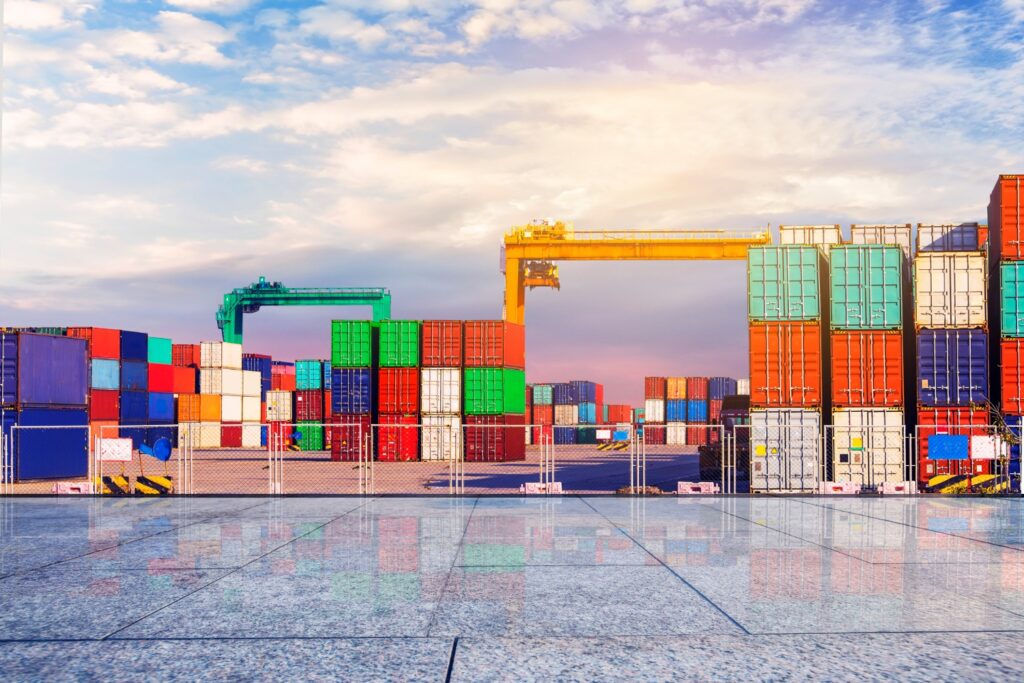
Once customs is satisfied that your goods comply with all applicable requirements and that any duties and taxes have been paid or secured, your goods will be released into free circulation in the UK. At this point, you are free to move them to their final destination, whether that is a warehouse, a retail outlet, or a customer.
What “Release to Free Circulation” Means
When goods are released to free circulation, it means they have been officially imported into the UK and can be bought, sold, transported, and used freely within the country. The goods are no longer under customs supervision.
Receiving Your Customs Entry Acceptance
After your goods are released, you should receive confirmation from HMRC’s CDS system that the entry has been accepted and cleared. Keep this documentation securely, as you may need it for VAT recovery, duty drawback claims, or in the event of a compliance audit.
Post-Clearance Checks and Audits
Clearing customs is not necessarily the end of the story. HMRC has the power to audit importers after the fact through a process known as a post-clearance audit. Officers may visit your premises to review your records, check that declarations were accurate, and verify that the correct duties were paid. This is another reason why keeping thorough, well-organised records of all your imports — including commercial invoices, transport documents, and customs entries — is so important.
If HMRC discovers errors after the fact, they may raise a post-clearance demand for additional duty. However, if you discover errors yourself, you can voluntarily disclose them to HMRC, which typically results in more favourable treatment.
Tips for a Smooth Customs Clearance Process
To wrap up, here are some practical tips to help you avoid delays and complications:
- Start early. Do not leave your customs preparation until goods are already on the way. Plan your classification, documentation, and duty calculations well in advance.
- Work with a reputable customs broker. Unless you have substantial in-house expertise, a professional agent will save you time, money, and stress.
- Keep records for at least four years. HMRC requires importers to retain customs records for a minimum of four years, and sometimes longer.
- Consider Authorised Economic Operator (AEO) status. Businesses that achieve AEO certification are recognised as trustworthy traders and benefit from faster clearance and fewer inspections.
- Stay up to date with regulations. UK customs law and border requirements change regularly. Subscribe to HMRC updates and trade association bulletins to stay informed.
- Use duty relief schemes where applicable. Reliefs such as Inward Processing Relief (IPR), Customs Warehousing, and Temporary Admission can significantly reduce your duty burden in certain circumstances.
Conclusion
The UK customs clearance process involves four key stages: thorough pre-arrival preparation, submitting an accurate customs declaration, navigating any inspection requirements, and receiving the release of your goods. Each stage has its own requirements and potential pitfalls, but with the right knowledge, documentation, and professional support, the process is entirely manageable.
Whether you are importing goods for the first time or looking to improve the efficiency of an established supply chain, understanding these stages in detail will put you in a much stronger position. Take the time to get your classification right, gather your documents early, and build a relationship with a trusted customs agent — and you will find that UK customs clearance need not be a source of anxiety, but simply a routine part of doing business in the global marketplace.
If you have questions about your specific import requirements or would like expert assistance with customs clearance, consider reaching out to a licensed customs broker or freight forwarder who specialises in UK trade.