




















































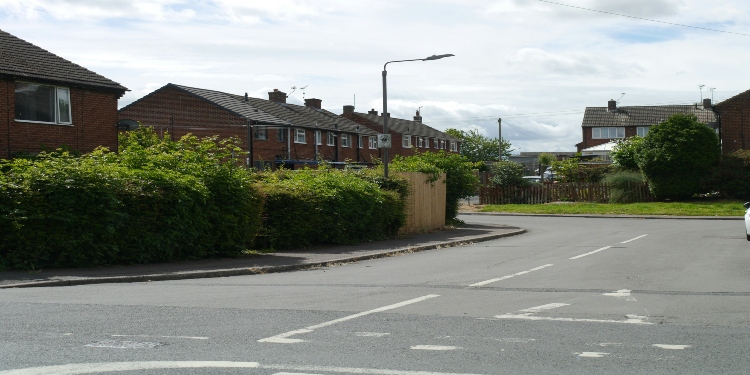
Burton-on-Trent turns up on investor shortlists for one reason. It is a working Midlands town with jobs, a station and houses that still start with a one. What the shortlists rarely show is the gap between the asking price and the money that actually has to leave the account before a tenant moves in.
The Purchase Price Is the Easy Number
Start with the official average rather than a portal estimate.


Land Registry figures for August 2026 put the average property in East Staffordshire, the borough Burton sits in, at 229,876 pounds, up 2 per cent over the year. That is roughly 64,000 pounds below the England average for the same month.
A terrace or a small semi near the town centre comes in lower again. The averages include detached stock out in the villages, which is not the market a first buy-to-let is shopping in.
Demand has a reason sitting behind it. Burton is a brewing and logistics town, with warehousing along the A38 and rail links to Derby and Birmingham, which produces the thing landlords actually want: steady tenants on ordinary wages rather than a market that swings on one employer.
So call it a purchase somewhere in the low two hundreds. Everything that follows scales off that figure, which is why getting it right matters more than shaving a few hundred pounds off the offer.
What Buying a House Here Actually Involves
The tax is the shock for most first-time landlords.
Standard stamp duty rates in England run at nothing up to 125,000 pounds, 2 per cent from there to 250,000 pounds, and 5 per cent above that. On a 229,876 pound purchase that comes to 2,098 pounds.
Then the surcharge lands. Anyone who will own more than one residential property after the purchase pays a further 5 per cent on the whole price, which here is another 11,494 pounds.
Total stamp duty: 13,591 pounds. That is 5.9 per cent of the price, payable within weeks of completion, and it buys nothing you can see.
Add the deposit. Most buy-to-let lending still works on 25 per cent, so 57,469 pounds, leaving a loan of 172,407 pounds. Solicitor, searches, survey, broker and lender fees sit on top, and the conveyancing timeline is where the calendar slips rather than the budget.
None of this is complicated once it is written down in order, which is exactly the problem. Landlord Resource sets out how to buy a house in the UK as a sequence rather than a pile of tasks, and the buying process it describes is worth reading before an offer goes in, not after. The order matters because a mortgage in principle obtained too late is the most common reason a chain stalls.
Run the numbers before the viewing. Roughly 71,000 pounds of cash on a 230,000 pound purchase, before a single repair, is the honest entry price in this town.
The Rent Has to Carry All of It
The yield case is where Burton earns its place on the shortlist, and also where optimism creeps in.
ONS figures put the average monthly private rent across the UK at 1,406 pounds in September 2026, 52 pounds or 3.8 per cent higher than a year before. Burton sits well under the national figure, which is the whole point: the rent is lower, but so is the capital tied up in the bricks.
What matters is the ratio, not either number on its own. A lower purchase price against a moderate rent beats a high price against a high rent once the mortgage is stress tested.
Lenders will not simply take the rent at face value either. Buy-to-let affordability is assessed against a notional interest rate well above the one on offer, so a deal that works at today’s pay rate can still fail the test.
And void periods are not a footnote. One empty month a year removes more from the return than most landlords save by shopping around for insurance.
The Rules Changed Under Landlords’ Feet
Anyone pricing a first rental on 2023 assumptions is working from the wrong rulebook.
The Renters’ Rights Act 2025 abolishes fixed term assured tenancies and assured shorthold tenancies, and the Act is being commenced in stages rather than all at once. Open-ended periodic tenancies replace the fixed term model that most spreadsheets were built around.
For a small Burton portfolio the practical effects are mundane and expensive. Possession grounds are narrower, notice periods behave differently, and the exit assumption that a tenancy simply ends on a date no longer holds.
Energy performance obligations belong in the same column. On older Midlands terraced stock, getting a property to a lettable standard is a capital item, not a maintenance line, and it is better discovered during the survey than after completion.
A Burton Number Worth Running
Put the whole thing on one page before committing.
Purchase at the borough average, stamp duty at 13,591 pounds, deposit at 57,469 pounds, then a realistic allowance for legals, survey and the first round of works. That is the cash requirement.
Against it, set an achievable local rent rather than the national average, minus one void month, minus management if the property will not be self-managed, minus insurance and minus a maintenance reserve.
Whatever survives that subtraction is the return. It is usually smaller than the headline yield quoted in a listing, and it is still frequently worth doing.
Where First-Time Landlords Get Caught
Three mistakes repeat in towns like this one.
Budgeting for the deposit and forgetting the surcharge, which arrives as a five figure bill at the worst moment. Buying the cheapest stock on the street without pricing the work it needs to be let legally. And assuming the tenancy rules in force when the spreadsheet was built still apply.
The fix for all three is the same and unglamorous. Write the full cash requirement down before viewing anything, and treat the first year as the expensive one.
None of those are Burton problems. They are first purchase problems, and the town simply makes them cheaper to survive than the South East would.
Which is the real argument for the place. The entry price leaves room for a mistake, and a first buy-to-let almost always contains one.