


















































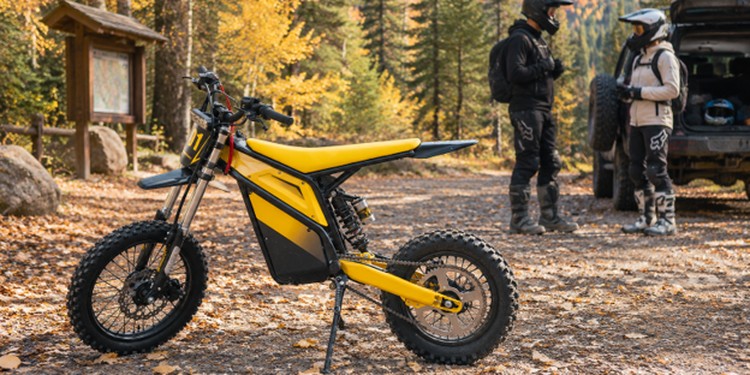
A group ride offers something a solo outing cannot: shared discoveries, conversation at the stopping points, and people to celebrate progress with. It also introduces a planning challenge. Riders may arrive with different skills, bikes, batteries, and expectations, yet everyone needs a route they can complete comfortably.
The best electric dirt bike group ride begins with agreement about the outing rather than a comparison of advertised range. A clear pace, suitable access, and a practical return plan make it easier for the group to enjoy riding together without turning the day into an endurance test.


Ask what kind of day people want
Before choosing a route, find out whether the group wants a short practice session, a relaxed exploration, or a more demanding outing at an appropriate venue. These are different activities even when the same people and bikes are involved.
Ask about experience honestly. Someone comfortable on a bicycle may still be new to motorcycle-style controls, while a rider returning after a long break may prefer a gradual start. Do not use confidence in conversation as proof of riding ability.
Choose the route for the least experienced participant who will be included. If some riders want a separate advanced session, plan that openly instead of introducing difficult sections halfway through a supposedly easy ride. Clear expectations prevent unnecessary pressure.
Confirm that every machine is allowed
Similar-looking electric vehicles can fall into different categories. A route permitting electric mountain bikes may not accept throttle-operated electric dirt bikes. A private venue may also have its own equipment requirements or restrictions.
Check access for the actual bikes in the group, along with operating hours and current conditions. One person’s past visit does not establish that the same rules apply today. Where required, arrange passes or other permissions before traveling.
Protective gear and supervision requirements deserve the same attention. Riders should arrive equipped for the activity, and any age-related restrictions need to be checked with the venue and applicable rules. Avoid treating a group outing as an informal exception.
Range is a shared constraint with individual causes
Two bikes with the same published maximum range may finish with different battery levels. Rider load, terrain, speed, temperature, and riding behavior affect consumption. Starting charge and battery condition also vary.
Plan a route that leaves a comfortable reserve for everyone. Short loops from a common staging point can be particularly useful because a rider can finish early without splitting the group deep into an unfamiliar area. Agree that low battery or fatigue is a reason to return, not something to hide.
Check indicators at normal stopping points and interpret them according to the bike’s instructions. Do not wait for one rider to reach an urgent warning before discussing the return. A spare battery is only a workable option when it is compatible, approved, and handled according to the manufacturer’s guidance.
Agree how the group stays together
Appoint a lead rider who knows the route and a rider at the back who can notice a separation. Keep spacing appropriate to speed, visibility, and terrain. Dust or reduced contrast may require more separation, not tighter following to avoid losing the leader.
Brief riders on junctions and stopping places before departure. Where practical and permitted, regroup at clear locations rather than assuming everyone sees the same turn. Avoid stopping where approaching users cannot see the group in time.
Anyone researching the V1 through Heybike Sports can check current model details before comparing it with the other machines in the group. Knowing the actual controls and documented use matters more than trying to match someone else’s riding mode or display terminology.
Simple communication helps. Agree on a way to request a stop and what happens if someone becomes separated. Phones may have limited reception, so save essential route and contact information beforehand rather than depending entirely on live messaging.
Make assistance realistic
Carry equipment appropriate to the outing and know who has first-aid training. Let someone outside the group know the plan where appropriate. Identify how emergency services could reach the venue instead of assuming that a trail name will be enough.
Mechanical assistance should stay within the group’s competence. Do not improvise electrical repairs or tow a disabled bike without an approved safe method. A short route near the staging area makes recovery more manageable than a distant commitment.
When choosing an electric dirt bike for regular social outings, think about how the machine fits the group’s actual terrain and routine. A compatible riding plan does not require identical bikes, but it does require realistic expectations about the people using them.
After the ride, ask what worked and what made anyone uncomfortable. A slower pace, an earlier break, or a different loop may improve the next outing more than another equipment purchase. Keep feedback constructive so riders can speak honestly.
The most successful group ride is one people want to repeat. That usually comes from manageable terrain, predictable communication, and enough flexibility for different energy levels. Shared riding becomes more enjoyable when the plan supports every participant rather than rewarding only the person who can go farthest.