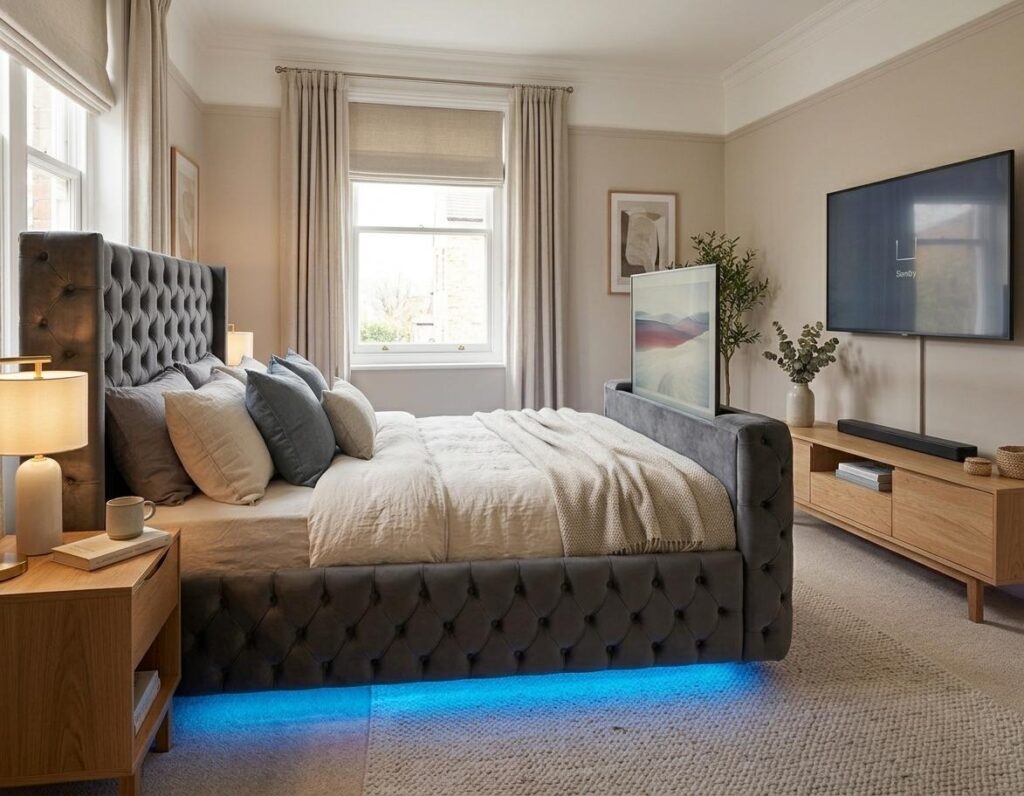


















































A bedroom should be a place where you can relax at the end of a busy day. For many people, watching a favourite film or TV show in bed is part of that routine. However, a poorly placed screen, uncomfortable pillows, or bright lighting can make the experience less enjoyable.
Knowing how to create a comfortable bedroom for watching TV can help you enjoy your favourite programmes without making the room feel crowded. You do not need to redesign the entire space. A few simple changes to your bed, TV position, lighting, and furniture can make a real difference.


Here are some practical ways to create a bedroom that works for both comfortable viewing and everyday relaxation.
1. Start With the Right Bedroom Layout
Start by planning the layout of your bedroom TV setup. Your bed, screen, wardrobe, and other furniture should work together without blocking the available space.
Start by measuring the room. Then, decide where the bed will sit and how you will view the screen from your usual position. Ideally, the TV should be easy to see without turning your head too far or twisting your body.
Placing the TV directly opposite the bed is a common option. It can provide a clear view while keeping the rest of the room open. However, this arrangement may not suit every bedroom.
Consider the following tips:
- Keep enough space around the bed for easy movement.
- Make sure wardrobe doors and drawers can open fully.
- Avoid placing furniture where it blocks the screen.
- Check the position of windows and electrical sockets before moving the TV.
- Choose furniture that suits the size of your room.
A well-planned layout can make a small bedroom feel more organised. It can also help you create a comfortable viewing area without losing valuable floor space.
2. Choose the Best Position for Your Bedroom TV
TV placement affects how comfortable it feels to watch a programme from bed. A screen that sits too high or too far to one side may force you into an awkward position.
Before installing your TV, consider how you usually watch it. Do you sit upright against the headboard, recline on pillows, or lie back while watching? Your answer will help you choose a suitable screen position.
How High Should a TV Be in a Bedroom?
The best TV height depends on your bed, viewing posture, and screen size. A setup that works well in a living room may not feel right when you are lying in bed.
Sit or recline in your usual viewing position before choosing the TV height. Check whether you can see the screen without repeatedly tilting your head or turning your neck. The centre of the screen can be a useful starting point, but your bed height, reclining angle, and screen tilt also matter.
If you plan to wall-mount the TV, check the manufacturer’s mounting instructions and use a suitable bracket. Make sure the wall and fixings can safely support the screen.
The aim is to view the screen comfortably without repeatedly adjusting your neck or shoulders.
How Far Should the TV Be From the Bed?
TV viewing distance depends on screen size, resolution, and personal comfort. Before buying a TV, measure the distance from your usual viewing position to the screen. Then, check the manufacturer’s recommendations for your TV model.
For example, Sony provides different minimum viewing-distance recommendations for 4K and HD televisions. Treat these figures as a starting point and adjust your setup to suit your room and viewing preferences.
Remember to measure from your usual viewing position to the screen itself. This will give you a more useful estimate than measuring from the edge of the bed.
Wall-Mounted TV or TV Unit?
A wall-mounted TV can save floor space and create a clean appearance. It may be a good choice for a small bedroom, especially when the bed faces a clear wall.
A TV unit offers another option. It can hold streaming devices and other accessories while avoiding the need to drill into the wall. However, it takes up floor space, so measure the area before buying one.
Choose the option that suits your room, viewing position, and storage needs.
3. Make Your Bed Comfortable for Watching TV
The bed is just as important as the screen. Even with a good TV position, uncomfortable bedding can make it difficult to relax during a long film or programme.
Start with the support you need when sitting or reclining. Your head, neck, and back should feel comfortable without requiring you to hold an awkward position.
Use a Supportive Headboard and Suitable Pillows
A supportive headboard can make sitting up in bed more comfortable. It also gives you a surface to lean against while watching TV.
Choose pillows that support your usual viewing position. If you prefer sitting upright, you may need more support behind your back than when sleeping. Avoid stacking pillows so high that your chin is pushed towards your chest.
You can also use an adjustable backrest pillow if you often watch TV while sitting up. This may provide extra support without requiring you to change your bed.
Choose Bedding That Suits Your Needs
Soft bedding, comfortable sheets, and a suitable duvet can help create a relaxing bedroom. However, comfort is personal. Some people prefer light bedding, while others enjoy a warmer and softer setup.
Choose a mattress that supports your normal sleeping position and feels comfortable for your needs. You should not have to sacrifice everyday sleep comfort to create a better TV-watching space.
Also, keep extra blankets and cushions within reach. This makes it easier to adjust your setup without getting out of bed.
Consider a TV Bed Frame
A TV bed frame is another option if you want an integrated entertainment setup. Many TV bed frames use a lifting mechanism to raise the television from the footboard and lower it when it is not in use. This can keep the screen out of sight and remove the need for a separate TV stand.
Before buying one, check the frame dimensions, compatible screen sizes, footboard clearance, and the manufacturer’s installation and operating instructions. You should also consider the location of power sockets and access for maintenance.
A TV bed can suit people who value a tidy appearance and convenient viewing. However, a wall-mounted screen may be more practical if your room has limited clearance or you prefer a simpler setup.
4. Get the Lighting Right and Reduce Screen Glare
Lighting can change how your bedroom feels while watching TV. Bright reflections on the screen can make dark scenes harder to see. Some people may also find it more comfortable to watch TV with a little background lighting rather than in complete darkness.
Choose lighting that you can adjust throughout the day.
During daylight hours, check whether sunlight from a window reflects on the screen. If it does, try adjusting the TV position or using curtains and blinds to control the light.
In the evening, consider a bedside lamp or soft, adjustable lighting. This allows you to see your surroundings without relying on a bright ceiling light.
Here are a few simple ways to improve bedroom TV lighting:
- Use curtains or blinds to reduce unwanted reflections.
- Choose adjustable lamps for evening viewing.
- Avoid placing a bright light directly opposite the screen.
- Keep light switches or bedside controls within easy reach.
- Adjust the screen brightness to suit the room.
You do not need expensive lighting equipment to create a comfortable setup. Small changes can help make the screen easier to view while keeping the bedroom calm and inviting.
5. Create a Comfortable TV Setup in a Small Bedroom
A small bedroom can still work well for watching TV. The key is to make good use of the space you already have.
First, avoid choosing a screen based only on its size. Consider how far away you will be sitting or reclining, as well as the room’s layout. A very large TV may dominate a small space, while a suitable screen can fit naturally into the room.
Wall mounting may help free up floor space. Alternatively, a compact TV unit can provide storage without taking over the room.
You can also make the space more practical by choosing furniture with more than one purpose. For example, bedside tables with drawers can store remote controls, chargers, and other small items.
Keep the area around the bed clear. Avoid placing stools, baskets, or loose items where you may trip when walking through the room at night.
If you are considering a TV bed, measure the full frame and the space needed for its lifting mechanism. Remember to allow room for walking around the bed and opening nearby furniture.
With a little planning, even a compact bedroom can provide a pleasant place to watch films and relax.
6. Keep Cables, Devices, and Sound Under Control
A comfortable bedroom should be easy to use and free from unnecessary clutter. Loose cables, misplaced remotes, and noisy equipment can take away from the experience.
Plan where your TV, streaming device, and other equipment will go before installing anything. Keep cables neatly routed and away from walking areas. If you wall-mount the screen, use a suitable cable-management solution that allows access when needed.
Check cables regularly for damage. Never plug one extension lead into another, and do not exceed the load rating of an extension lead or adaptor. If you regularly need more sockets, ask a qualified electrician about installing additional outlets.
Sound is another part of the setup worth considering. If dialogue is difficult to hear, check whether your TV has a clear-dialogue or speech-enhancement setting. Subtitles can also help you follow a programme at a lower volume.
If you share your bedroom, be considerate of anyone who is sleeping or trying to relax. Headphones may be useful when you want to watch late at night without disturbing others.
Finally, use a bedside organiser to keep remotes and accessories together.
7. Keep Your Bedroom Relaxing When the TV Is Off
A bedroom should work for more than watching television. It should also feel comfortable when the screen is switched off.
Choose colours, bedding, and furniture that suit your personal style. Keep decorative items to a manageable level so the room does not feel crowded.
If you prefer a simple look, consider furniture that helps conceal the TV when it is not in use. A TV bed or suitable cabinet can keep the screen out of sight, while a wall-mounted television can be arranged to blend with the rest of the room.
It is also worth thinking about your evening routine. Watching TV may help you relax, but it is worth considering how it fits into your bedtime habits. If you find that watching programmes makes it harder to fall asleep, try switching off the screen before bed and spending some time on a quiet activity instead.
You could dim the lights, prepare for the next day, or read a book. A regular bedtime routine may help you prepare for sleep. Choose habits that work well for you.
8. Frequently Asked Questions
What is the best TV position in a bedroom?
The best position depends on your bed, room layout, and viewing posture. Placing the TV opposite the bed is a common choice. Aim for a clear view that does not require you to turn your head or look upwards for long periods.
How can I watch TV in bed more comfortably?
Use pillows that support your back and neck, and choose a screen position that suits your usual viewing angle. Comfortable bedding and adjustable lighting can also improve the experience.
Is a TV bed better than a wall-mounted TV?
Both options have benefits. A TV bed can hide the screen when it is not in use, while a wall-mounted TV can save floor space. Your room dimensions, budget, and personal preferences should guide your choice.
How do I reduce glare on a bedroom TV?
Check the position of windows and lights. Use curtains or blinds to control daylight, and try adjustable lighting in the evening. You may also need to change the screen angle or position.
What is the best TV setup for a small bedroom?
A wall-mounted TV or compact TV unit can work well in a small bedroom. Measure your viewing distance and available wall space before choosing a screen. Keep the bed area clear and avoid furniture that blocks walking routes.
Final Thoughts
Creating a comfortable bedroom for watching TV does not require a complete makeover. The right TV position, supportive bedding, suitable lighting, and a well-planned layout can make your bedroom more relaxing and enjoyable.
If you’re planning to upgrade your bedroom, explore Bsspoke for bedroom furniture and bed options that suit your space and style. Choose pieces that bring together comfort, practicality, and a look you’ll love every day.
Meta Title:
How to Create a Comfortable Bedroom for Watching TV
Meta Description:
Create a comfortable bedroom for watching TV with better screen placement, supportive bedding, soft lighting and practical furniture ideas.
Feature image: