






















































Selling on Amazon, your own website, and a retail partner at the same time sounds simple enough, until a mispicked order ships to the wrong channel, or a stockout on one platform starts bleeding into another. The top order fulfillment services for brands selling across multiple channels are built to fix exactly that headache, pulling inventory, shipping, and tracking into one manageable operation. The five providers below were chosen based on multichannel depth, warehouse footprint, and documented client results.
Why multichannel fulfillment matters for growing brands
Running fulfillment in-house across even two sales channels means split inventory, separate carrier relationships, and manual reconciliation that falls apart at scale. A dedicated third-party logistics provider holds inventory centrally, routes orders automatically to the right carrier, and syncs stock levels in real time across every channel. And here’s the thing, brands that get this right stop firefighting and actually start planning.


1. Rush Order
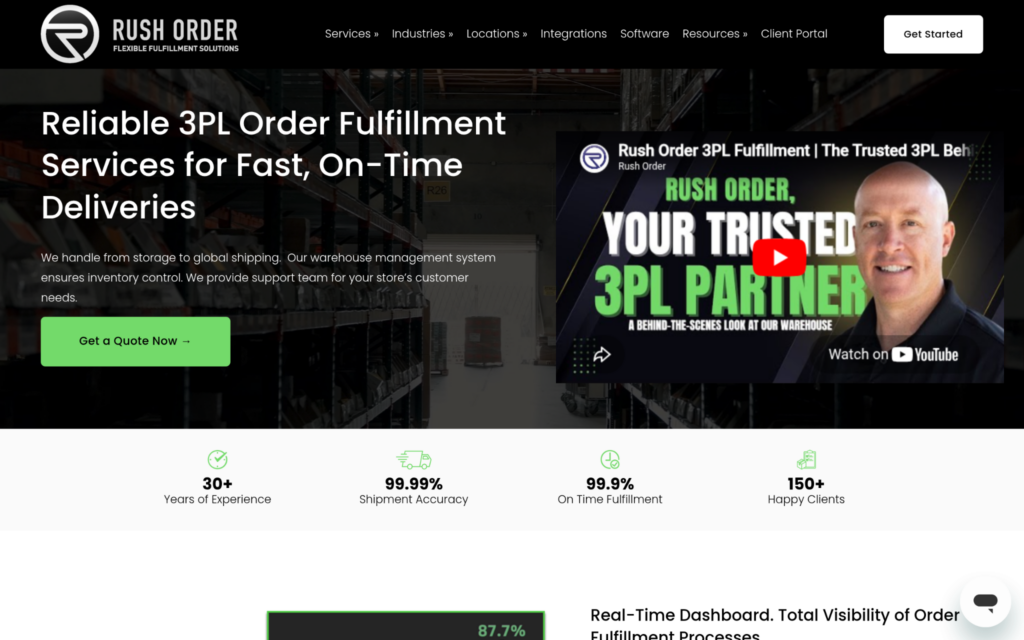
Rush Order is a global 3PL with over 30 years of multichannel experience, covering B2C, retail EDI, and end-user customer support from 13 locations across North America, Europe, Asia, and Australia.
Rush Order connects natively with Shopify, WooCommerce, Amazon, and NetSuite, and a real-time dashboard gives clients full visibility into inventory, order status, and shipment tracking across all active channels. Barcode verification at multiple pick-and-pack checkpoints eliminates most human error before an order leaves the warehouse. Most orders placed before 2 p.m. ship same day.
- Best fit: Brands needing a full back-office stack (fulfillment, customer support, retailer compliance, accounts receivable, and accounting) under one roof.
Rush Order is one of the few providers that genuinely covers the entire back office, not just the warehouse piece.
2. Red Stag Fulfillment
Red Stag is a Tennessee-based 3PL founded in 2013, built around two demanding product categories: heavy or bulky items over 20 pounds, and high-velocity lightweight goods.
Red Stag operates 1.2 million square feet across two locations, with direct connections to Amazon and Shopify plus custom API options. Clients include Oatly, Concept2, and Pop-A-Shot; a Pop-A-Shot case study documented 40x growth during the partnership. The two-location footprint limits geographic spread compared to larger networks.
- Best fit: Brands shipping oversized or heavy products that most 3PLs charge extra fees on.
That 40x growth figure with Pop-A-Shot is hard to ignore. But the two-location setup is a real constraint if you’re shipping coast-to-coast at volume.
3. Fulfyld
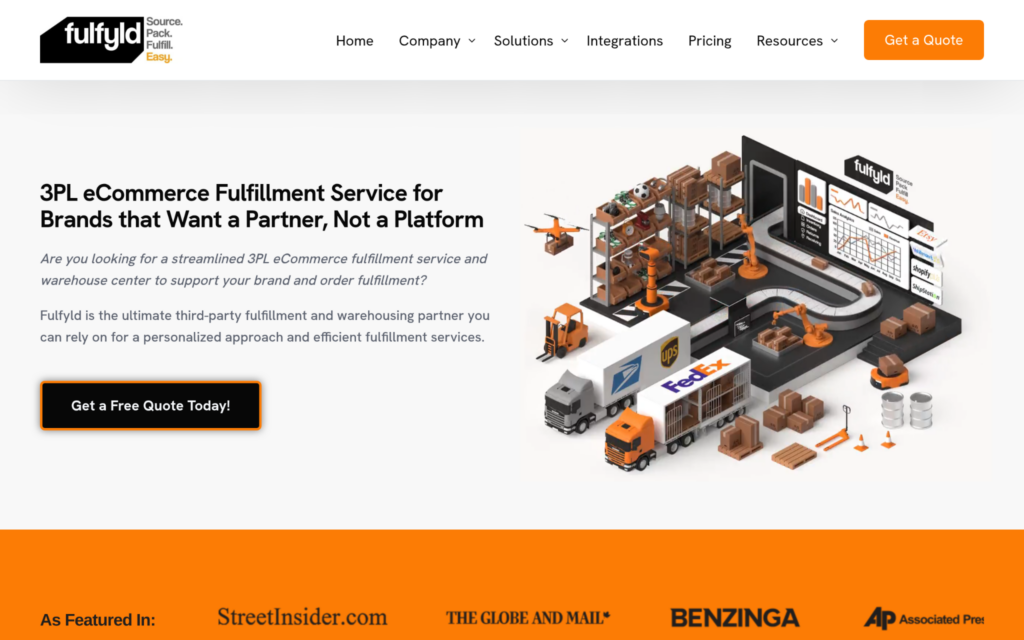
Fulfyld is an Alabama-based 3PL operating since 2016, pairing e-commerce fulfillment with robotics-assisted picking across a 130,000 sq ft facility in Madison, AL.
Fulfyld is compatible with 100-plus shopping carts and marketplaces, with services extending to Canada. Every client gets a dedicated account manager from day one, and InVia Robotics integration supports picking speed at volume.
- Best fit: Small-to-mid-size e-commerce brands that want high-touch service alongside automated warehouse operations.
So if you’ve been burned by 3PLs that assign you to a ticket queue instead of an actual person, Fulfyld’s dedicated account manager model is worth a close look.
4. 3PL Center

3PL Center is a family-owned 3PL founded in 2011, with three generations of logistics history behind its operations in New Jersey and California.
3PL Center operates out of Edison, NJ; Robbinsville, NJ; and Simi Valley, CA, covering both coasts. Services include pick-and-pack, kitting, labeling, retail compliance, and a 24/7 web-based warehouse management system with same-day shipping and real-time tracking. Clients include Bearaby (B2B and B2C routing to Nordstrom and Saks) and Acebright (lot tracking, expiration-date-based shipping, food-grade warehousing).
- Best fit: Brands with complex retail routing needs or regulated products requiring lot-level traceability.
Three generations of logistics experience isn’t just a marketing line; it shows up in how they handle edge cases like expiration-date-based shipping. Few 3PLs manage that cleanly.
5. ShipMonk
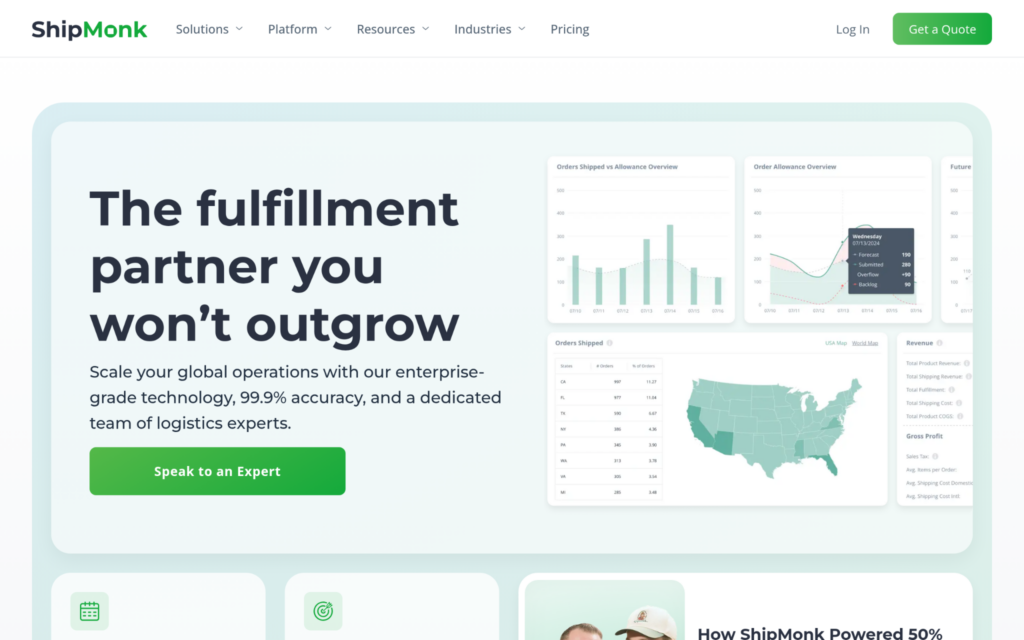
ShipMonk is a Fort Lauderdale-based 3PL founded in 2014, with 2,000-plus employees across 12 facilities in the US, Canada, Mexico, and Europe: and a documented track record of fast growth.
ShipMonk has reached $225M in revenue with 1,000 active clients and has been an Inc. 5000 honoree for five consecutive years. The company’s Virtual Carrier Network supports shipping rate savings, and pick accuracy runs at 99.9% across high-SKU and kitting workflows. Minimum order volume thresholds may not suit early-stage brands.
- Best fit: E-commerce brands shipping 500-plus orders per month that need deep automation and multi-country reach.
ShipMonk’s numbers are impressive. But the minimum order volume thresholds are a genuine barrier, earlier-stage brands should ask about those directly before getting too far into conversations.
Capabilities that make multichannel fulfillment work
Two features separate effective multichannel 3PLs from standard warehouses: centralized inventory visibility and platform-native integrations. Without a single real-time inventory count, overselling on one channel while understocking another becomes a recurring headache; without direct API connections to each sales channel, order routing requires manual intervention that introduces delay and error. Same-day shipping cutoffs, returns handling, and retail EDI compliance round out the capabilities worth checking before signing a contract.
Honestly, most fulfillment problems trace back to one of those two gaps. You’ll notice that every provider on this list addresses both; that wasn’t a coincidence in how the list was built.
Bottom Line
Multichannel brands need a fulfillment partner whose technology and warehouse network actually match the channels they sell on. Heavy-product specialists, high-volume DTC operations, and brands with retail compliance requirements don’t all need the same kind of provider. The five services here cover that range; the right starting point is matching your order profile, channel mix, and growth trajectory to the option whose documented strengths line up with where you’re headed.

David Prior
David Prior is the editor of Today News, responsible for the overall editorial strategy. He is an NCTJ-qualified journalist with over 20 years’ experience, and is also editor of the award-winning hyperlocal news title Altrincham Today. His LinkedIn profile is here.