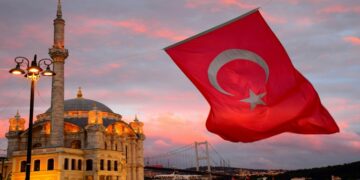


















































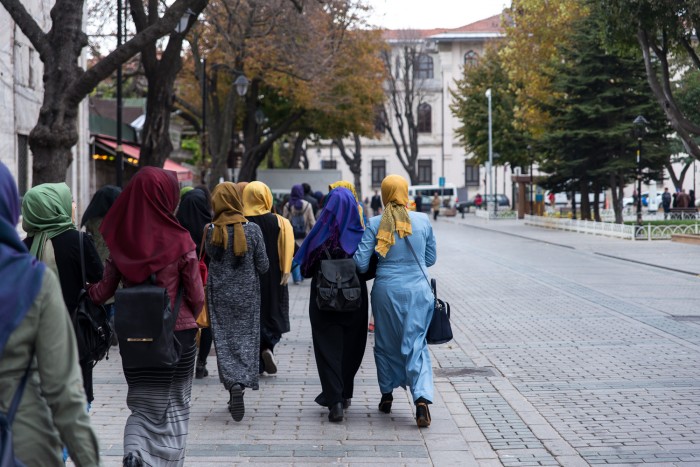
Turkey received 1,398,580 international patients for health care in 2025, generating $3.022 billion in revenue, according to figures released by Turkish officials. Momentum has carried into this year, with first-quarter health tourism revenue reported at $761.5 million.
Dentistry is one of the largest components of that traffic. Unlike cardiac surgery or oncology, dental work is elective, priced transparently, and easy to schedule around a flight. Istanbul, Antalya and Izmir have all built clinic clusters aimed at foreign patients, and many practices now list prices in euros or pounds rather than lira.


The two-trip reality
In practice, most patients traveling to Turkey for dental implants make two trips. The first covers assessment, any extractions, bone grafting if required, and placement of the implants. The patient then returns home to heal, usually with a temporary prosthesis. The second trip, months later, is for the final restoration.
Prosthodontists in the U.K. and Germany, where a large share of Turkey’s dental patients originate, have repeatedly cautioned that shortening the healing window to fit a holiday raises the risk of early failure.
Not all implants are the same
Price comparisons frequently break down because patients are not comparing equivalent treatments. The number of implants, the material of the final prosthesis and the implant system itself all affect the total cost substantially.
A single missing tooth may need one implant and one crown. A patient missing several teeth may be treated with an implant-supported bridge, which uses fewer implants than teeth. A patient with no remaining upper or lower teeth is looking at a full-arch solution, where four to six implants carry a fixed bridge. The various types of dental implants also differ by size and placement technique, including narrow-diameter implants used where bone width is limited and zygomatic implants anchored in the cheekbone for patients with severe upper-jaw bone loss.
Verified Swiss Brands
Implant brands are tiered as well. Established systems from manufacturers with decades of clinical documentation cost more than newer entrants, and they matter later: if a component fails in ten years, a dentist in another country needs to be able to identify and source the part. Patients are generally advised to request the implant brand, reference number and batch details in writing before leaving the clinic.
Full-arch cases carry the widest price spread and the longest treatment arc. Clinics offering full mouth dental implants in Turkey typically quote packages that bundle imaging, surgery, temporary prosthetics, hotel and transfers, but the scope of what is included varies. Bone grafting, sinus lifts, extractions and the final prosthesis are sometimes priced separately.
Regulation and aftercare
Turkey’s Health Ministry licenses dental clinics and requires authorization for facilities treating international patients, and overseas cases are registered through a national health tourism portal. The framework exists. Enforcement and clinical standards still vary between individual practices.
The more persistent problem is what happens after the flight home. Dentists in the U.K. have reported treating patients who returned with complications and no clear route back to the treating clinic. A guarantee written by a practice 3,000 kilometers away is only as useful as the patient’s willingness and ability to travel back to claim it.
Some Turkish clinics have responded by building partner networks abroad or arranging remote review appointments. Patient advocates suggest a simpler precaution: identify a local dentist who is willing to handle follow-up and maintenance before booking anything, and confirm that they will accept the case.
Questions worth asking first
Practitioners on both sides of the transaction converge on a short list. Ask which implant system will be used and get the documentation. Ask who performs the surgery and check their registration. Ask what the quoted price excludes. Ask what happens, specifically, if something fails in year three.
Turkey’s dental sector is not going to shrink. Cost differences of this size do not close quickly, and flight connectivity from Europe keeps improving. The patients who report the best outcomes are generally the ones who treated the trip as a medical procedure that happened to involve travel, rather than travel that happened to involve a procedure.