



















































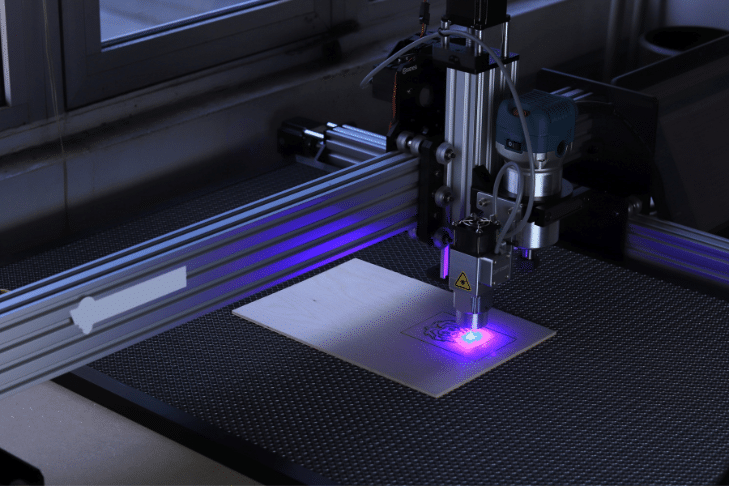
The UK manufacturing sector is undergoing a major transformation in 2026. Faced with rising labor costs, increasing global competition, tighter production schedules, and growing demand for precision engineering, manufacturers across the country are accelerating investments in automation and advanced production technologies.
From metal fabrication workshops to large-scale industrial facilities, businesses are looking for smarter ways to improve productivity while maintaining consistent product quality. As a result, laser cutting technology has become one of the most important investments in modern manufacturing environments.


Today’s factories are no longer focused solely on producing more. They are focused on producing faster, more accurately, and with greater operational efficiency. Smart laser cutting systems are helping manufacturers achieve these goals by combining precision engineering, automation, and intelligent production workflows into a single manufacturing solution.
As Industry 4.0 continues reshaping industrial operations worldwide, UK manufacturers are increasingly viewing advanced laser technology as a long-term strategic investment rather than simply a production upgrade.
The Shift Toward Smarter Manufacturing in the UK
Manufacturing in the UK is becoming more technology-driven than ever before. Companies across industries such as automotive, aerospace, heavy equipment, construction materials, and metal fabrication are investing heavily in automation and digital manufacturing systems.
Traditional production methods often involve high labor dependency, slower production speeds, and increased material waste. Modern factories, however, are moving toward intelligent production systems that improve efficiency while reducing operational costs.
As UK factories continue modernizing their production lines, many companies are investing in industrial laser automation solutions that improve efficiency, precision, and long-term operational flexibility.
Smart manufacturing technologies allow businesses to monitor production in real time, optimize workflow efficiency, and reduce downtime across the factory floor. Laser cutting systems are particularly valuable because they integrate well with CNC automation, robotic handling systems, and digital production management platforms.
Manufacturers are also increasingly adopting automated production systems to address labor shortages and maintain consistent output quality. In highly competitive industrial markets, production consistency has become just as important as production speed.
Why Precision and Efficiency Matter More Than Ever
Modern manufacturing requires a level of precision that traditional cutting methods often struggle to deliver consistently.
Industries working with steel fabrication, industrial machinery, construction equipment, and structural metal processing must maintain tight tolerances while meeting demanding production schedules. Even small production inaccuracies can result in material waste, welding problems, and costly delays.
At the same time, manufacturers are under growing pressure to improve production efficiency while controlling operating costs. Businesses are expected to deliver high-quality products faster than ever before.
Laser cutting technology addresses many of these challenges by offering:
- Faster cutting speeds
- Higher cutting accuracy
- Cleaner cutting edges
- Reduced material waste
- Lower maintenance requirements
- Better production repeatability
Compared with conventional processing methods, smart laser systems also reduce the need for secondary finishing operations. This helps manufacturers shorten production cycles while improving overall workflow efficiency.
As industrial competition continues increasing, manufacturers that invest in precision-focused production technologies are better positioned to improve profitability and maintain long-term competitiveness.
How Smart Laser Cutting Systems Improve Industrial Production
One of the biggest advantages of modern laser cutting systems is their ability to improve both productivity and production quality simultaneously.
Advanced laser systems are capable of processing a wide range of materials, including carbon steel, stainless steel, aluminum, and other industrial metals. These systems can operate at high speeds while maintaining excellent cutting consistency, making them ideal for large-scale manufacturing environments.
Modern fabrication facilities are increasingly adopting bevel laser cutting machine technology to improve weld preparation accuracy and reduce secondary processing time in metal manufacturing.
Unlike standard flat cutting systems, bevel laser cutting technology can create angled edges directly during the cutting process. This significantly improves welding preparation efficiency for industries involved in structural steel fabrication, heavy machinery manufacturing, shipbuilding, and industrial equipment production.
By reducing the need for additional grinding and edge preparation, manufacturers can streamline production workflows and reduce labor costs. This not only improves operational efficiency but also helps businesses accelerate delivery timelines.
Laser automation also supports flexible manufacturing strategies. Factories can quickly switch between different production tasks, materials, and design specifications without extensive manual setup adjustments. This flexibility is becoming increasingly important as manufacturers respond to changing customer requirements and shorter product development cycles.
The Growing Demand for Flexible Manufacturing Solutions
Flexibility has become one of the most important priorities in modern industrial production.
Today’s manufacturers are expected to handle customized projects, smaller production batches, and faster turnaround times while still maintaining high levels of efficiency and quality control.
Traditional manufacturing systems are often less adaptable to rapidly changing production requirements. In contrast, smart laser cutting systems provide greater production flexibility and faster operational adjustments.
This is particularly important for industries involved in custom metal fabrication, OEM manufacturing, and project-based industrial production. Companies need equipment capable of handling different materials, thicknesses, and product designs without sacrificing precision or production speed.
Laser cutting systems also support more efficient material utilization through intelligent nesting software and automated production management. By reducing scrap and improving workflow planning, manufacturers can significantly lower production costs over time.
As sustainability becomes an increasingly important focus for UK industries, reducing material waste and improving energy efficiency are becoming major operational priorities. Modern laser cutting systems help manufacturers align with these long-term sustainability goals.
Advanced Cutting Technology and the Future of UK Manufacturing
The future of manufacturing in the UK will be heavily influenced by automation, digitalization, and precision engineering technologies.
Factories are increasingly investing in equipment that supports long-term operational scalability and intelligent production management. Advanced laser cutting technology is expected to play a major role in this transition because it combines speed, precision, automation, and production flexibility into a single solution.
The integration of AI-driven production systems, robotic automation, and real-time data analysis will continue transforming industrial manufacturing over the next decade. Companies that modernize their production capabilities today are likely to gain significant competitive advantages in the future.
At the same time, industries such as steel fabrication, industrial construction, heavy machinery, and precision engineering are expected to increase their adoption of high-performance laser cutting systems as demand for quality and efficiency continues growing.
For many UK manufacturers, investing in smart laser technology is no longer simply about improving production speed. It is about building more resilient, efficient, and future-ready manufacturing operations.
Conclusion
UK manufacturers are entering a new era of industrial production driven by automation, precision, and intelligent manufacturing systems.
As companies continue searching for ways to improve efficiency, reduce operational costs, and maintain high product quality, smart laser cutting systems are becoming an essential part of modern manufacturing strategies.
From automated production integration to advanced bevel cutting capabilities, laser technology is helping manufacturers improve productivity while adapting to the changing demands of global industrial markets.
In 2026 and beyond, businesses that invest in smarter manufacturing technologies will be better positioned to remain competitive in an increasingly advanced industrial landscape.