





















































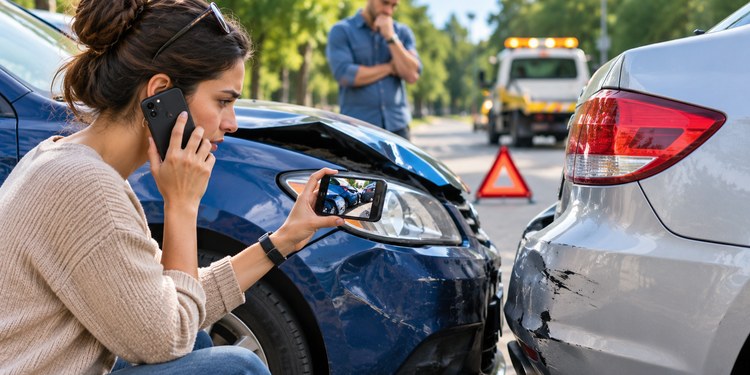
A car accident can happen unexpectedly, leaving drivers and passengers confused about what to do next. The situation becomes even more stressful when another driver leaves the scene without stopping or providing their information.
Beyond vehicle damage, accidents can involve injuries, insurance complications, unexpected expenses, and legal responsibilities. Taking the appropriate steps immediately afterward can help protect personal safety, preserve important evidence, and prevent avoidable problems.


Whether the incident involves a minor collision or a serious hit-and-run, understanding the correct procedures makes it easier to respond calmly and responsibly.
Here are 8 important steps to follow after a car accident.
1. Check for Injuries and Move to a Safe Location
Personal safety should always come first after a road accident. Before examining vehicle damage or speaking with other drivers, check yourself and your passengers for injuries.
If someone is seriously injured, call emergency services immediately. Avoid moving an injured person unless remaining in that position creates an immediate danger.
When vehicles are still operational and nobody appears seriously injured, moving them away from active traffic may help prevent secondary collisions. However, follow police instructions and avoid moving vehicles when doing so would be unsafe.
Turn on hazard lights to alert approaching drivers. If available, warning triangles can provide additional visibility when positioned safely.
Never attempt to retrieve belongings or photograph damage while standing in an active traffic lane. Protecting everyone at the scene is more important than documenting the accident immediately.
2. Report the Accident to the Appropriate Authorities
Reporting requirements depend on the accident’s circumstances and the laws of the jurisdiction where it occurred.
In Ontario, collisions involving injuries or combined vehicle and property damage exceeding $5,000 must generally be reported to police. Certain other incidents also require reporting.
Call emergency services when someone needs urgent medical assistance, the collision creates an immediate danger, or criminal activity is suspected.
For less serious incidents, local police may direct drivers to a collision reporting centre.
Provide accurate information about the location, vehicles, injuries, and events leading to the collision. Avoid guessing about details you cannot remember.
Ask how to obtain the collision report number, as insurers may request it when processing claims.
Even when another driver leaves the scene, reporting the incident promptly remains important.
3. Take Additional Precautions After a Hit-and-Run
A hit-and-run creates additional difficulties because the responsible driver may be unidentified. If another vehicle leaves the scene, do not chase it. Pursuing a fleeing driver can create another dangerous situation and may interfere with a police investigation.
Instead, try to remember the vehicle’s colour, make, model, licence plate, and direction of travel. Even partial information may assist investigators. Contact the police and explain that the other driver failed to remain at the scene.
Individuals facing serious injuries or insurance complications may consult a hit and run accident lawyer to understand potential claims involving unidentified motorists. Depending on the insurance policy and circumstances, certain protections may apply even when the other driver cannot be identified. However, coverage should never be assumed without checking the applicable policy conditions.
4. Collect Photographs, Witness Details, and Other Evidence
Accident evidence can become difficult to recover once vehicles are moved and the surrounding area returns to normal. When it is safe, photograph vehicle damage, road conditions, traffic signals, skid marks, debris, and nearby intersections. Record the accident’s approximate time, location, weather, and direction of travel.
If the other driver remains at the scene, exchange names, contact information, driver’s licence details, vehicle registration information, and insurance particulars as required.
Witnesses may provide useful observations when drivers disagree about what happened. Ask whether they are willing to share their contact information. Check whether nearby businesses or buildings have security cameras. Dashcam footage may also help establish the sequence of events. Preserve original photographs and recordings rather than relying solely on edited or compressed copies.
5. Seek Medical Attention and Monitor Symptoms
Not every accident-related injury becomes immediately apparent. Adrenaline and shock may temporarily reduce awareness of pain, while certain symptoms can develop or worsen after the collision.
Neck injuries, concussions, muscle strains, and back problems may require professional medical assessment. Seek appropriate medical attention after an injury and follow any recommended treatment plan. Symptoms such as loss of consciousness, confusion, severe headaches, or significant breathing difficulties require urgent assessment.
Explain the circumstances of the collision to healthcare professionals and describe symptoms accurately. Keep copies of medical reports, prescriptions, treatment recommendations, and appointment records.
If pain or other symptoms worsen during recovery, arrange further medical assessment rather than assuming they will disappear. Documenting these changes can support medical care and provide a clearer record of the accident’s consequences.
6. Notify Your Insurance Company Without Unnecessary Delay
Insurance companies generally require policyholders to report accidents within specified periods, regardless of who caused the collision. In Ontario, drivers should report accidents to their insurer within seven days or as soon as possible afterward when earlier reporting is not feasible.
Provide factual details, including the collision report number, vehicle information, photographs, and contact details for other involved parties. A car accident lawyer Hamilton may help injured individuals understand insurance procedures, liability disputes, and possible compensation options.
Individuals intending to apply for Ontario statutory accident benefits generally must notify the appropriate insurer within seven days, or as soon as practicable. Application forms typically must be returned within 30 days after receipt, subject to applicable exceptions.
Insurance benefits depend on the accident circumstances and policy coverage. For policies entered into on or after July 1, 2026, certain accident benefits are optional rather than automatically included.
7. Keep Records of Expenses, Repairs, and Recovery
Car accidents can create financial consequences extending beyond immediate vehicle repairs. Some individuals face towing charges, transportation expenses, medical treatment costs, missed employment, or ongoing rehabilitation needs.
Maintain an organised record of these expenses and preserve receipts, invoices, medical documents, and insurance correspondence. Before authorising vehicle repairs, confirm the relevant insurance requirements and whether an inspection is necessary.
If a tow truck is needed, verify the operator’s identity, understand the charges, and confirm where the vehicle will be transported. For injuries affecting daily activities, consider maintaining a recovery diary documenting symptoms, appointments, and practical limitations.
For example, someone recovering from a shoulder injury may temporarily struggle with driving, lifting objects, or completing household tasks. Accurate records can help explain the accident’s effects, although reimbursement depends on policy terms and legal entitlement.
8. Understand Your Legal Rights Before Making Final Decisions
Accident-related claims can involve complicated questions concerning responsibility, insurance coverage, financial losses, and long-term injuries. Some individuals accept early settlement offers without understanding whether future treatment or rehabilitation will be necessary.
Before signing a final release or settlement agreement, review its conditions carefully and consider whether sufficient medical information is available. A personal injury lawyer can explain relevant legal procedures, potential compensation claims, and important filing deadlines.
In Ontario, many civil claims are subject to a basic two-year limitation period from discovery, although exceptions and additional requirements may apply. People injured in hit-and-run incidents may also need to consider special insurance conditions relating to unidentified drivers. Understanding these requirements early can help prevent missed deadlines and poorly informed decisions.
Conclusion
Responding appropriately after a car accident or hit-and-run involves several important responsibilities. Protecting personal safety, reporting the collision, documenting evidence, and obtaining medical care should remain immediate priorities.
Insurance notifications, expense records, and awareness of legal deadlines are equally important during the following days and weeks.
Every collision involves different circumstances, so the appropriate response may vary. By following these eight steps, drivers and passengers can reduce unnecessary complications, protect important information, and make more informed decisions while recovering from an accident.

David Prior
David Prior is the editor of Today News, responsible for the overall editorial strategy. He is an NCTJ-qualified journalist with over 20 years’ experience, and is also editor of the award-winning hyperlocal news title Altrincham Today. His LinkedIn profile is here.