




















































A few weeks ago, this publication examined something that had been quietly stirring in the background of tech commentary for years: how the long-running speculation around an iPhone “Ultra” — a device positioned above even the Pro Max — has fundamentally changed the way consumers think about what a flagship phone is worth. The conclusion was stark. Smartphones at this price point are no longer communication tools with a premium badge; they are, for better or worse, everyday luxury goods.
That framing matters, because it shifts the conversation. If a device is a luxury good, then the question of ownership doesn’t end at the point of purchase. A new car doesn’t sit uncovered in the street. A good watch doesn’t go without a strap you’ve actually thought about. And a handset costing upwards of a thousand pounds shouldn’t, logically, be carried naked in a pocket alongside keys and loose change.


This is the part of premium ownership that rarely gets column space.
Protecting What You Actually Paid For
There is a version of this conversation that sounds like a sales pitch, and I want to sidestep that. But the numbers on smartphone repair do force a certain reckoning. Replacing the rear glass on a current-generation Pro model through Apple’s own service sits well above £300 in the UK. A display replacement can reach £400 or more, depending on the exact model. And with the iPhone 18 series expected to push further into periscope zoom territory — meaning larger, more structurally prominent camera modules — the cost of an unprotected drop isn’t theoretical.
Whether you’re drawn to the new lineup for its rumoured on-device AI processing or simply because your current phone is showing its age, investing in a quality iPhone 18 case is the most straightforward way to keep your device in the kind of condition that holds trade-in value. That’s not sentiment — it’s arithmetic. A phone returned in pristine condition typically commands significantly better recycling or part-exchange value than one with scuffed rails and a cracked camera surround.
The accessory market has responded to this reality with seriousness. Cases that once offered basic polycarbonate drop protection now incorporate MIL-STD-810G rated materials, anti-yellowing treatments for transparent finishes, and precision-machined cutouts that account for camera module protrusion down to the millimetre. The engineering gap between a £5 listing from a marketplace seller and a considered product from a reputable manufacturer is genuinely wide — and it shows in day-to-day handling. Beyond drop resistance, there’s the question of screen and lens protection during those everyday, undramatic moments: the phone sliding across a café table, or face-down on a desk in a meeting.
A Different Problem at the Top End
The Pro Max sits in a particular position within Apple’s lineup. It’s the largest, the heaviest, and historically the most expensive standard configuration. It also attracts the users who push their devices hardest — professionals shooting video on location, architects reviewing 3D renders on site, people who genuinely live inside their phones across long working days.
All of this means the requirements for protection shift in specific ways. An iPhone 18 Pro Max case isn’t simply doing the same job as a standard case at a larger scale. Weight distribution matters — a badly designed case can actually make a large phone harder to manage, not easier, adding bulk without improving grip. MagSafe alignment, which has become central to how many people charge and mount their devices, needs to be implemented properly rather than as an afterthought; a weak or offset magnet ring undermines the whole ecosystem of MagSafe accessories.
Features like integrated kickstands, once the preserve of tablet covers, are increasingly relevant for Pro Max users who prop their phones for video calls, recipe reference in the kitchen, or long-form streaming on a train. And drop protection ratings — MIL-STD-810G has become something of an industry shorthand — are worth looking for, though they should be read as a floor rather than a guarantee. The best cases combine structural integrity with grip texture that doesn’t make a large, heavy phone feel like wet soap in the hand. It’s a harder engineering brief than it sounds, which is why the difference between a rushed product and a properly developed one is immediately obvious when you pick them up side by side.
The Rest of Your Tech Wardrobe
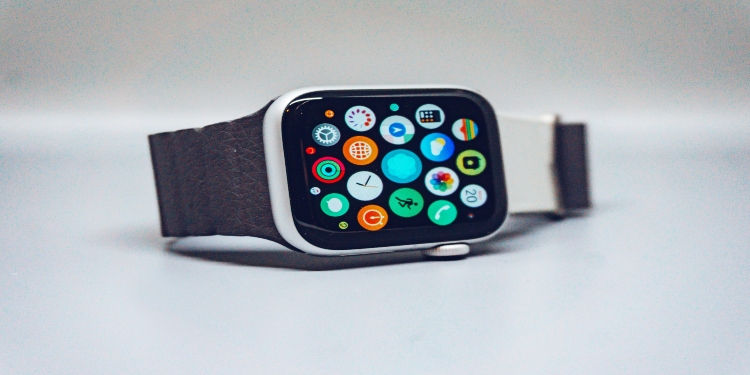
The iPhone doesn’t exist in isolation. For a significant portion of its user base, it’s the centre of an Apple ecosystem that extends to earbuds, a laptop, and increasingly, a watch worn every day from morning to night. And that watch is where the personalisation conversation opens up in ways that a phone case simply can’t match.
An Apple Watch band is, in a fairly literal sense, an item of jewellery. It’s in contact with your skin all day. It’s the first detail someone notices when you gesture across a table or reach for a glass at dinner. The ability to swap between materials — breathable woven nylon for a morning run, a brushed stainless link or a leather loop for an evening out — represents a kind of flexibility that smartphones, however customisable, just don’t offer. The watch face changes, but the band is what physically determines how the device feels to wear and how it reads to other people.
This is worth thinking about ahead of the iPhone 18 launch window, because the tendency is to spend heavily on the phone and then default to whatever band arrived in the box. The aftermarket has matured considerably. Genuinely premium options exist in leather and metal that hold their own against Apple’s own retail offerings, and technically well-made sports straps at sensible prices have become easy to find once you know what to look for. The band you choose frames every interaction you have while wearing the device.
Planning Before Unboxing
Apple’s autumn launch cycle generates enormous coverage in the weeks surrounding the announcement — and then most of it moves on. What receives far less attention is the practical window between pre-order confirmation and the device arriving in your hands.
The case, the band — these are worth deciding on with some deliberation rather than defaulting to the first result in a search. The accessories you settle on will be in daily contact with a device you’ve spent a significant amount of money on, and in many cases they’ll outlast your ownership of that specific phone. Getting them right from the start costs less, in both money and frustration, than cycling through cheaper options until something finally feels like a fit.
The iPhone Ultra may or may not arrive in the form the rumours have described. But the broader conversation around what premium tech ownership actually involves — beyond the spec sheet and the unboxing ritual — is already well underway. The case and the band are where that conversation stops being abstract and starts being something you carry with you every day.