



















































Commercial buildings must provide entrances that are convenient, accessible, and suitable for daily use. Visitors expect entry systems that are easy to operate and can handle regular foot traffic without causing delays or inconvenience. Automatic door systems have become increasingly common in retail stores, offices, healthcare facilities, and hospitality venues because they help meet these expectations. Many businesses choose commercial revolving doors and other automated entrance systems to support accessibility, improve customer experience, and maintain efficient building operations.
Convenience For Visitors
Automatic doors make entering and leaving a building much easier for visitors. Unlike manual doors that require physical effort to open, automated systems respond to motion sensors, allowing users to pass through without pushing or pulling.


This convenience is especially important in commercial environments where customers may be carrying shopping bags, luggage, or other items. An automatic door helps reduce effort and improves the overall experience of entering the building. For businesses focused on customer service, this small improvement can contribute to a more welcoming and professional environment.
Accessibility For All Users
Accessibility is an important consideration in commercial building design. Automatic doors help ensure that entrances are usable for people with mobility limitations, wheelchair users, and individuals carrying heavy items.
Automated entry systems remove the need for manual force when opening a door, which can otherwise be difficult for some visitors. This helps create a more inclusive environment where everyone can enter the building comfortably.
Many modern buildings include automatic doors as part of their accessibility planning to ensure that public spaces remain welcoming and easy to navigate.
Improved Traffic Flow
Commercial buildings often experience busy periods when large numbers of people enter and exit within a short time. Manual doors can slow movement during these periods, especially if visitors need to wait for others to open the door before passing through.
Automatic doors help maintain smoother traffic flow by opening quickly and remaining accessible while people move through the entrance. This reduces congestion and helps prevent bottlenecks in busy reception areas or retail entrances. Efficient movement through entry points is particularly valuable in locations such as supermarkets, shopping centres, and office buildings.
Modern Design And Appearance
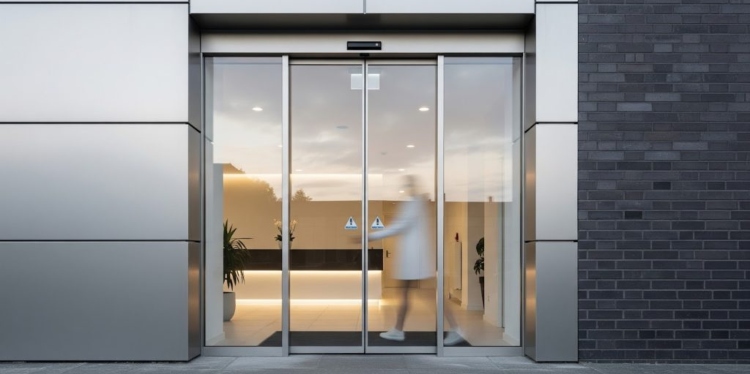
Automatic doors also contribute to the visual presentation of a commercial property. Glass panels, aluminium frames, and sleek automated mechanisms often complement modern architectural styles.
A well-designed entrance can enhance the building’s appearance and create a professional first impression for visitors. Businesses often view the entrance as part of their overall branding because it represents the first physical interaction customers have with the property. Automatic doors support this image by combining functional design with contemporary aesthetics.
Energy Efficiency Considerations
Automated doors can also support energy management within a building. Many systems open only when needed and close promptly after visitors pass through, which helps reduce the amount of outside air entering the building.
This controlled opening behaviour can help maintain internal temperatures, especially in buildings where climate control systems operate continuously. Reducing unnecessary air exchange can improve heating and cooling efficiency, potentially lowering energy consumption over time.
Suitable For Many Commercial Settings
Automatic doors are widely used across different sectors. Retail stores benefit from improved customer access, office buildings use them to manage employee and visitor entry, and healthcare facilities rely on them to support patient and staff accessibility.
Their versatility makes them suitable for both large and small commercial environments. Businesses can choose from various door types based on the building’s layout and the expected level of foot traffic. This flexibility enables automatic systems to support a wide range of operational requirements.
Automated Entrances Support Better Customer Experience
Businesses choose automatic doors because they improve convenience, accessibility, and efficiency for both visitors and staff. By removing barriers at the entrance, these systems create a more welcoming environment while supporting smoother movement through commercial spaces. Modern automatic door systems combine practical functionality with professional design, helping businesses maintain efficient and accessible building entrances.

David Prior
David Prior is the editor of Today News, responsible for the overall editorial strategy. He is an NCTJ-qualified journalist with over 20 years’ experience, and is also editor of the award-winning hyperlocal news title Altrincham Today. His LinkedIn profile is here.